
Blooming
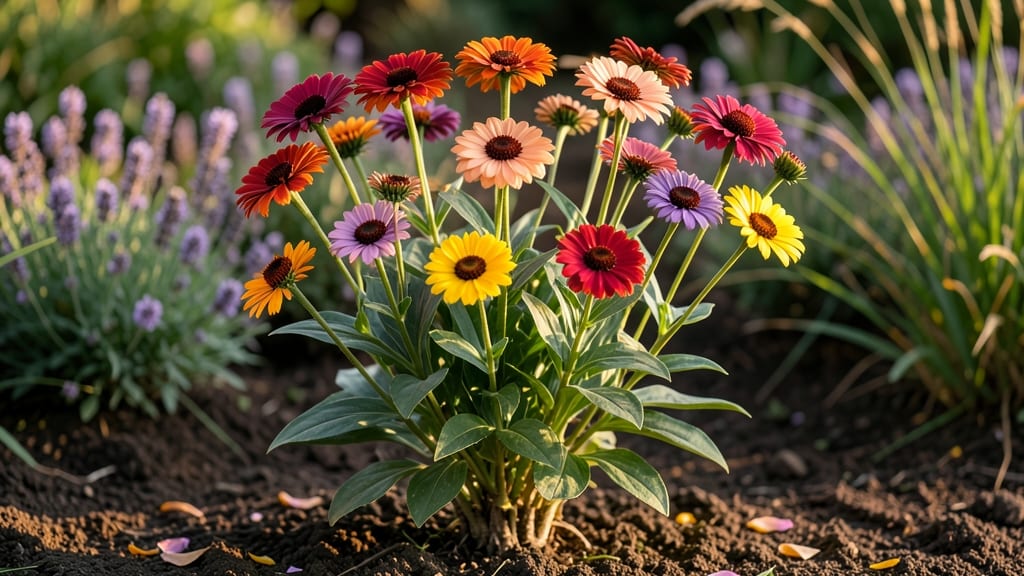
Zinnias do bloom all summer with proper care, creating vibrant displays from early summer through the first frost. Their peak flowering typically spans 6–8 weeks, but consistent deadheading and watering can stretch their season by weeks.
Zinnias thrive in warm weather and actually stop producing blooms when nights dip below 50°F or when heat exceeds 90°F for prolonged periods. 🌸 The key to summer-long color is mimicking their natural cycle—removing spent flowers redirects energy to new buds, while mulching conserves moisture during dry spells.
I’ve seen zinnias in my garden continue blooming until October with this approach, especially when paired with morning sun and afternoon shade in hot climates.
For best results, plant zinnias in well-draining soil with 6–8 hours of sunlight daily and water at the base (not overhead) to prevent fungal issues. Adding a balanced fertilizer every 4–6 weeks gives them the nutrients to keep producing those bright blooms.
The variety also matters—dwarf zinnias may bloom earlier and longer than tall types, while heat-tolerant varieties like 'Benary’s Giant' stay vibrant even in late summer heat.
💡 In This Article
- Zinnia Bloom Cycle: Why Their Season Isn’t Year-Round
- Proven Zinnia Care Tips to Maximize Summer Blooms
Zinnia bloom cycle: why their season isn’t year-round
Zinnias are short-day plants, meaning their flowering triggers when daylight hours shorten—typically starting in late spring to early summer. This biological mechanism explains why they bloom most prolifically during their 6–8 week peak season, usually from June through August in most climates.
The process begins when the plant receives 12–14 hours of daylight and temperatures consistently stay between 60–75°F, conditions that stimulate bud formation. 🌞 Once temperatures climb above 90°F or drop below 50°F, the plant conserves energy by halting new bloom production, focusing instead on survival.
The plant’s response to heat and cold isn’t just about temperature—it’s a survival strategy. Zinnias originate from dry, warm regions of Mexico, where they evolved to thrive in hot, sunny climates with brief rainy seasons.
Their natural lifecycle includes a dormancy phase when conditions become extreme, which is why they often decline in late summer or early fall. Even in ideal conditions, the plant’s energy reserves deplete after 6–8 weeks of continuous blooming, leading to a natural slowdown unless you intervene with proper care.
Daylight sensitivity also plays a role in their seasonal behavior. As summer progresses, the gradual reduction in daylight hours signals the plant to prepare for dormancy.
This is why zinnias often stop blooming abruptly in late summer—it’s not just heat stress, but the plant’s internal clock responding to shorter days. 🌅 For example, in the northern hemisphere, zinnias planted in May might bloom until September, but by October, the decreasing daylight triggers a decline in new flowers, even if temperatures remain mild.
Another key factor is the plant’s water and nutrient demands. During peak bloom, zinnias require 1–1.5 inches of water per week to sustain their rapid growth and flower production. When water becomes scarce—common in late summer—roots struggle to absorb nutrients, leading to stunted growth and fewer blooms.
This is why consistent watering (especially at the base) is critical to extending their season. Without adequate moisture, zinnias prioritize root development over flower production, further shortening their bloom cycle.
Heat stress also affects zinnias at a cellular level. High temperatures cause the plant’s stomata (pores on leaves) to close to prevent water loss, which disrupts photosynthesis and reduces energy available for blooming.
This is why zinnias in hot, dry climates often benefit from afternoon shade or mulching to retain soil moisture. 💧 Even a 2–3 inch layer of mulch can keep roots cooler and reduce water evaporation, helping zinnias continue blooming well into fall.
Finally, the variety of zinnia matters. Some types, like 'Benary’s Giant', are bred for heat tolerance and may bloom longer than 'Thumbelina' dwarf varieties. Heat-tolerant zinnias can handle temperatures up to 95°F for short periods, while others may wilt or stop blooming when thermometers rise above 85°F.
Choosing the right variety for your climate is one of the simplest ways to extend their bloom season naturally.