
Blooming
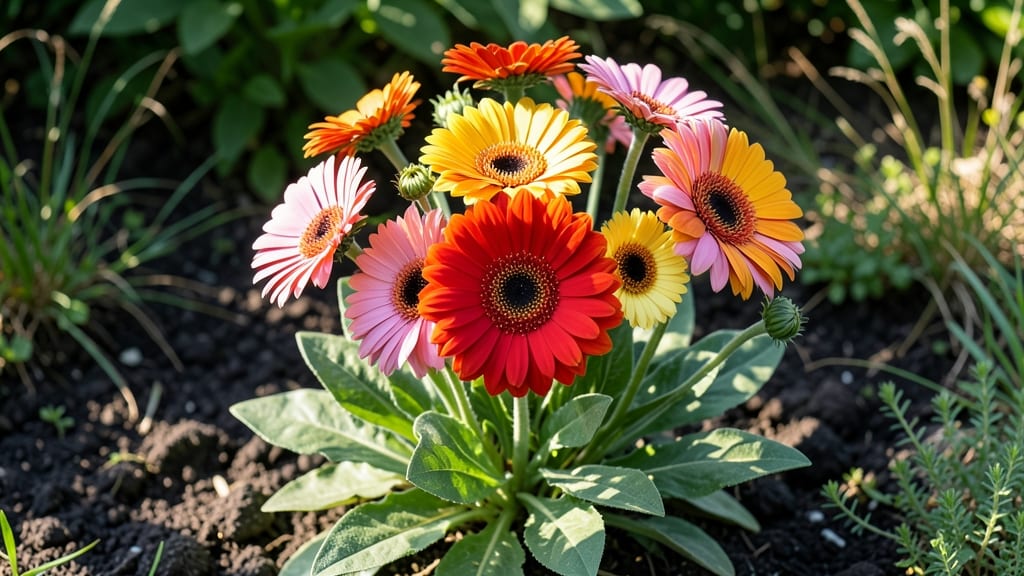
Gerber daisies bloom all summer when given proper care, thriving in warm conditions but struggling in extreme drought or temperatures consistently above 90°F. Removing spent blooms and maintaining steady moisture keeps them flowering until fall frost.
These hardy perennials love sunny, hot conditions but need smart care to handle summer's peak intensity. 🔥 The secret lies in balancing water—deep but infrequent soaks (about 1 inch per week) prevent root stress while keeping blooms vibrant.
I've seen them push through 95°F heat waves when shaded slightly in the afternoon, though their color intensity fades faster under extreme conditions. The key is monitoring soil moisture with your finger rather than relying on a schedule.
Deadheading isn't just about looks—it redirects the plant's energy from seed production back to new blooms. I recommend using clean, sharp pruners to snip stems just above the next set of leaves, which also prevents fungal issues.
For late-season bloomers, a light application of balanced fertilizer (10-10-10) in early summer gives them the nutrients they need to keep going until frost.
💡 In This Article
- Heat Tolerance Limits for Gerber Daisies
- Late-Season Care to Prolong Gerber Daisy Blooms
Heat tolerance limits for gerber daisies
Gerber daisies thrive in warmth but have precise temperature thresholds that trigger stress responses. Their ideal range sits between 60°F and 85°F, where photosynthesis and nutrient uptake peak. When temperatures climb above 90°F, the plant's stomata (tiny leaf pores) close to conserve moisture, which immediately reduces flower production.
This isn't just wilting—it's a survival mechanism that shifts energy from blooms to root protection.
The real damage happens when heat combines with low humidity. At 95°F with 40% humidity or less, leaves develop crispy brown edges from transpiration overload. I've noticed gerber daisies in containers dry out 2-3 times faster than in-ground plants because their roots can't access deeper moisture.
The flowers themselves also lose vibrancy—the deep reds and yellows fade to pale pinks as pigments break down under prolonged heat stress. 🌡️
What most gardeners miss is how humidity acts as a buffer. In coastal climates where humidity stays above 50%, gerber daisies handle 95°F better because the air holds moisture longer against the leaves.
The opposite happens in desert regions where dry heat forces plants into dormancy-like states. Even with perfect watering, the lack of atmospheric moisture means the plant's cooling system (transpiration) fails.
You'll spot early warning signs before flowers fade: leaves curl upward at the edges, new buds drop before opening, and stems develop a rubbery texture. These are clear signals the plant is prioritizing survival over blooming.
The good news? Gerber daisies bounce back quickly when temperatures drop—often resuming full bloom within 5-7 days of cooler weather. This resilience is why they're perfect for summer gardens when paired with afternoon shade.
Consider this comparison: A gerber daisy in 85°F with 60% humidity might produce 30-40 blooms per season, while the same plant in 100°F with 30% humidity could struggle to produce 10.
The difference isn't just about water—it's about the plant's ability to maintain cellular functions under thermal stress. 🌞