
Blooming
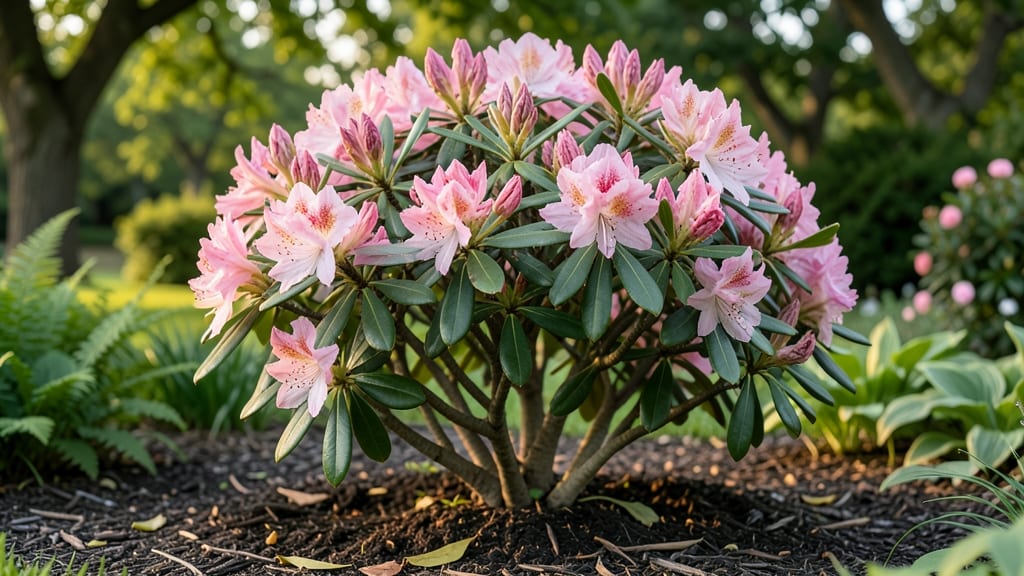
Rhododendrons do not bloom all summer—most varieties flower intensively for 2-4 weeks in spring, with select late-blooming types like 'PJM' or 'Nova Zembla' extending their display into early summer. Even with proper deadheading, these plants won't produce continuous blooms throughout the entire season.
Rhododendrons are seasonal bloomers, with their flowering cycles tightly linked to environmental cues like temperature and daylight. 🌸 Most varieties follow a spring bloom window—typically April through May—when days lengthen and warmth triggers bud opening.
The late-blooming cultivars you mentioned ('PJM' or 'Nova Zembla') simply shift this window later, but they still follow the same biological rhythm.
What's fascinating is how some gardeners report a second flush of smaller blooms later in summer, though this isn't true year-round flowering—just a secondary response to ideal growing conditions.
Here's the key insight: these plants are not tropical and won't bloom continuously like hibiscus or bougainvillea. Their energy is focused on a single spectacular display per season, with some varieties stretching that display into early summer.
The deadheading technique you'll see recommended works by redirecting the plant's energy from seed production back into foliage growth, which can sometimes trigger a modest second bloom—but it's still limited by the plant's natural cycle.
💡 In This Article
- Rhododendron Blooming Seasons by Variety
- Deadheading and Care Tips for Longer Rhododendron Blooms
Rhododendron blooming seasons by variety
Rhododendrons follow precise biological clocks tied to photoperiodism—the plant's response to daylight length. Early bloomers like 'Catawbiense' or 'Roseum Elegans' typically open buds when daytime exceeds 12-14 hours in late winter/early spring, triggered by rising temperatures above 40°F.
These varieties peak in March-April in most climates, with buds forming the previous summer during a critical 60-90 day cooling period below 65°F. 🌱 The science is fascinating: these plants need winter chilling hours to break dormancy, similar to how apples require winter cold to flower.
Mid-season varieties such as 'Elizabeth' or 'Anna Rose' bloom 2-3 weeks later, shifting their peak to late April-early May. These cultivars often produce larger, more vibrant flowers but require slightly warmer soil temperatures (50-55°F) to initiate bud opening.
The late bloomers you mentioned—'PJM' and 'Nova Zembla'—extend this window into May-June, but their blooms still follow the same photoperiod rules, just with a 3-4 week delay. What's unique about these late types is their ability to tolerate slightly warmer spring conditions without bud freeze damage.
The plant's internal clock also responds to hormone signals called florigen, which travels from leaves to buds when daylight exceeds the plant's specific threshold. This is why rhododendrons in northern latitudes, where days lengthen dramatically in spring, often bloom earlier than southern plants where temperatures rise faster.
In USDA Zone 7, for example, 'PJM' might bloom in early May, while the same variety in Zone 5, could wait until late May due to cooler spring temperatures. 🌤️
Climate plays a crucial role in bloom timing variations. Coastal regions with moderate temperatures often see extended blooming periods because temperature swings are less extreme. Inland areas may experience bud blast, where sudden cold snaps after bud formation cause flowers to drop before opening.
This is why gardeners in Zone 6, often plant late bloomers—they're less vulnerable to late spring frosts that can devastate early varieties. The 10°F temperature difference, between day and night during bud formation also affects bloom quality, with consistent temperatures producing more vibrant flowers.
What most gardeners don't realize is that rhododendron blooming cycles are also influenced by the previous year's growing conditions. Plants that received balanced fertilization, particularly with phosphorus and potassium, during the prior summer and fall, will develop stronger flower buds for the following season.
This is why professionals recommend a slow-release fertilizer, applied in early autumn, to support next year's blooms. The root system needs 6-8 weeks, to process these nutrients before winter dormancy begins.
For those seeking extended seasonal interest, consider planting a mixed variety collection, combining early, mid, and late bloomers. This creates a 3-4 week continuous display, though still not year-round.
The key is selecting varieties with complementary bloom periods, such as pairing 'Catawbiense' (early) with 'Nova Zembla' (late), which can create a near-continuous*, though staggered, floral showcase. 🌺