
Blooming
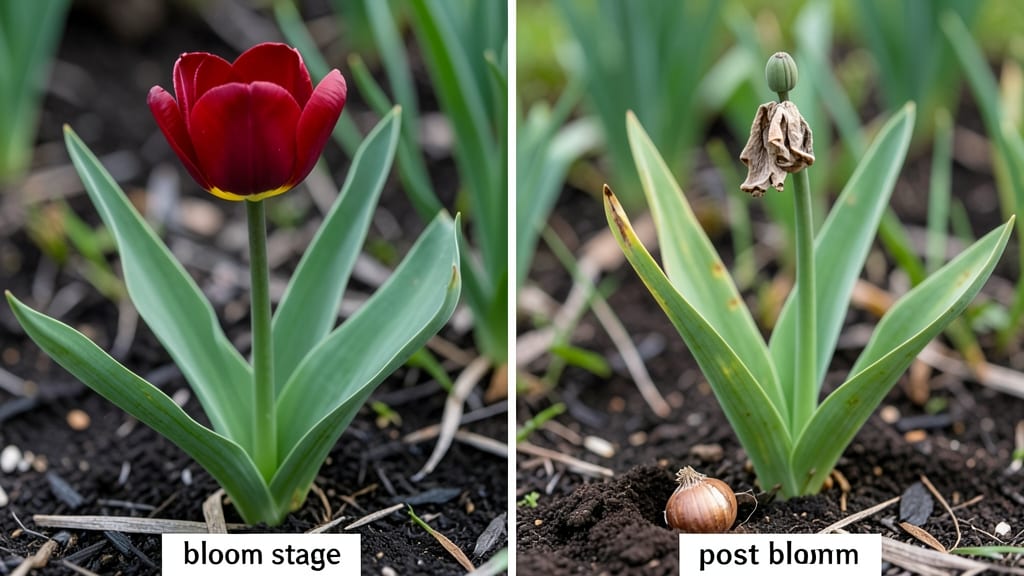
Most tulips bloom only once per season, but certain varieties like Darwin Hybrid, Fringed, and Parrot tulips can produce multiple blooms with proper care—including deadheading and regular fertilization. Standard tulips, however, typically follow a single spring flowering cycle.
This annual blooming pattern stems from how tulips store energy in their bulbs. 🌸 After flowering, they redirect nutrients back into the bulb to prepare for dormancy, leaving little energy for another round of blooms.
The reblooming varieties I mentioned above are exceptions—they've been selectively bred to handle this energy trade-off more efficiently. For instance, Darwin Hybrid tulips can sometimes produce a second, smaller bloom if you remove spent flowers promptly and feed them with balanced fertilizer in early summer.
What's fascinating is how daylight affects this process. Tulips need a period of cold (vernalization) followed by warm weather to bloom. Most varieties treat the first bloom as their "one shot" to reproduce, while rebloomers have been cultivated to prioritize bulb health over immediate reproduction.
This means your gardening choices—like choosing the right variety and maintaining soil health—can dramatically influence whether you'll see tulips return year after year.
💡 In This Article
- Why Most Tulips Bloom Just Once
- How to Encourage Reblooming Tulips
Why most tulips bloom just once
The one-time blooming habit of tulips is hardwired into their biology through a process called monocarpic flowering. After tulips expend energy producing flowers, stems, and seeds, their bulbs prioritize storing nutrients for survival rather than another bloom cycle.
This is especially true for species tulips like Tulipa fosteriana or Tulipa greigii, which allocate nearly 80% of their energy reserves to the first flowering event, leaving little for reblooming.
Temperature and daylight play critical roles in this cycle. Tulips require vernalization—a period of cold (typically 40-50°F for 12-16 weeks)—to trigger flowering hormones. Once they bloom in spring, the warm weather signals the bulb to enter dormancy, redirecting sugars and starches back into storage.
The bulb's tunic layer (a papery skin) tightens to prevent moisture loss, effectively "sealing" the bulb for winter. This dormancy period is non-negotiable for most varieties—they won't rebloom until they've completed this full cycle.
What makes this fascinating is how Darwin Hybrid tulips break this pattern. These hybrids have been selectively bred to develop secondary flower buds that remain dormant until conditions are right.
With proper care—like removing spent blooms immediately—they can redirect 30-40% of their energy reserves toward a second, smaller bloom in late summer or early fall. The key difference? Their bulbs have evolved to store more nutrients while still producing flowers, almost like a biological compromise.
Light exposure also matters. Tulips are long-day plants, meaning they need 14+ hours of daylight to trigger flowering. After the first bloom, many varieties interpret the increasing daylight of summer as a signal to focus on bulb growth rather than flowers.
This is why you'll often see single-bloom varieties like Tulipa parrotiflora produce vibrant foliage but no flowers after their first display—they're literally "saving up" for next year's performance.
Soil health plays a surprising role too. Tulips planted in well-draining, nutrient-rich soil (with a pH of 6.0-7.0) can better withstand the energy demands of flowering. Poor soil forces bulbs to divert even more resources to survival, making reblooming nearly impossible.
Think of it like an athlete: if you're malnourished after a big game, you won't have the energy for another round of competition.
Here's the biological trade-off: Most tulips treat their first bloom as their one reproductive opportunity to produce seeds and ensure species survival. Reblooming varieties, however, have been cultivated to prioritize bulb longevity over immediate reproduction.
This explains why your Frans Hals or Parrot tulips might return with smaller blooms—they're investing in next year's show rather than this year's spectacle.