
Blooming
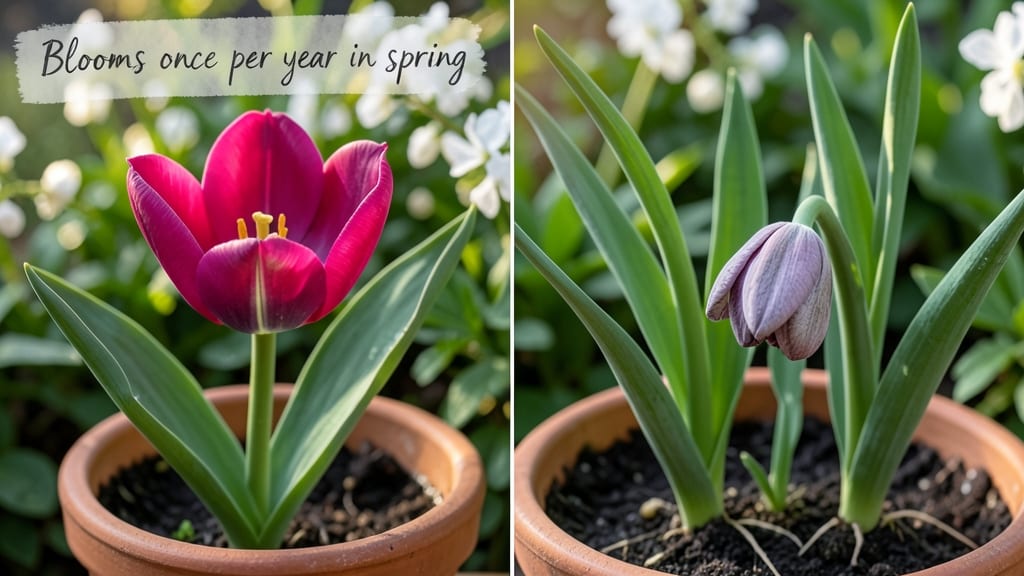
Tulips do only bloom once a year by nature, but some varieties like Darwin Hybrid and species tulips can produce multiple blooms per season with proper growing conditions. Many bulbs also develop secondary stems that extend their flowering period.
Do tulips only bloom once a year? Yes, most tulips follow a strict one-bloom-per-year cycle because their energy reserves get completely depleted after flowering. 🌱 However, certain hybrids and species tulips have evolved to store more nutrients, allowing them to push out new stems under ideal care. The key difference lies in their bulb size and root system—larger bulbs with deeper roots can sustain multiple blooms. For example, Darwin Hybrid tulips often produce 3-5 flowers per stem, while Parrot tulips may rebloom if given consistent moisture and sunlight.
This reblooming ability isn't automatic—it requires specific growing conditions. Gardeners who want repeat blooms need to focus on three critical factors: soil fertility, water consistency, and proper dormancy periods. 💫 The trade-off?
Forcing tulips to rebloom can weaken the bulb over time, so it's important to balance aesthetic rewards with long-term bulb health. Many gardeners find that while the first bloom is always strongest, subsequent blooms can still be stunning with the right care.
💡 In This Article
- Why Most Tulips Bloom Just Once: The Science Behind Their Lifecycle
- How to Encourage Reblooming Tulips: 3 Proven Care Strategies
Why most tulips bloom just once: the science behind their lifecycle
Tulips follow a strict one-bloom-per-year cycle because their flowering process completely drains their energy reserves. When a tulip blooms, it diverts nearly all its stored nutrients—primarily starches converted from sunlight during photosynthesis—to develop the flower stem, petals, and reproductive structures.
This depletion is similar to how a marathon runner exhausts their glycogen stores after a race. 🌱 The bulb's energy reserves, typically stored as starch in its scales, get reduced by 50-70% after flowering, leaving little fuel for subsequent growth unless replenished.
The biological mechanism involves a complex interplay of hormones and environmental cues. Tulips are long-day plants, meaning they require 12-16 hours of daylight to trigger flowering. Once the bloom cycle begins, the plant prioritizes reproduction over vegetative growth, shutting down leaf production to conserve energy.
This is why you often see tulip leaves yellowing and dying back shortly after flowering—a natural response to redirect remaining nutrients to the bulb for next year's growth. The trade-off is that this process leaves the bulb temporarily weakened, unable to support another flowering cycle without intervention.
Comparing tulips to other perennial bulbs like daffodils highlights this difference. Daffodils store energy more efficiently in their bulbs, allowing them to produce multiple blooms per season. Tulips, however, have evolved with a more energy-conservative strategy, prioritizing one spectacular bloom over prolonged but smaller displays.
This adaptation makes sense ecologically—tulips native to Central Asia's steppes would benefit from putting all their resources into a single, vibrant bloom to attract pollinators during their brief growing window. 💫
There's a critical distinction between flowering stems and reblooming. Most tulips produce one primary stem with a single flower, but some varieties develop secondary stems from the same bulb. These side shoots often appear after the main bloom has faded and may produce smaller flowers.
However, these aren't true reblooms—they're the bulb's last attempt to maximize reproductive success before entering dormancy. True reblooming, where a bulb produces a full second bloom from the same stem, requires specific genetic traits found only in certain hybrids and species tulips.
The stress response is another key factor. When you force a tulip to rebloom, you're essentially asking it to perform a second marathon after the first one. This creates oxidative stress in the bulb's cells, similar to how human muscles experience micro-tears after intense exercise.
While some varieties can recover with proper care, this process accelerates bulb aging. For example, a Darwin Hybrid tulip that reblooms might see its lifespan reduced by 2-3 years compared to one that follows the natural one-bloom cycle. 🌟
Understanding this lifecycle helps explain why gardeners often see dramatic differences between tulip varieties. Species tulips like Tulipa greigii or Tulipa tarda naturally produce multiple flowers per stem because their wild ancestors evolved in harsher climates where reliable blooming required more efficient energy storage.
These varieties can develop 3-5 flowers per stem under ideal conditions, while common garden tulips typically produce just one. The difference comes down to bulb size—larger bulbs can store more starch and support additional growth cycles.