
Blooming
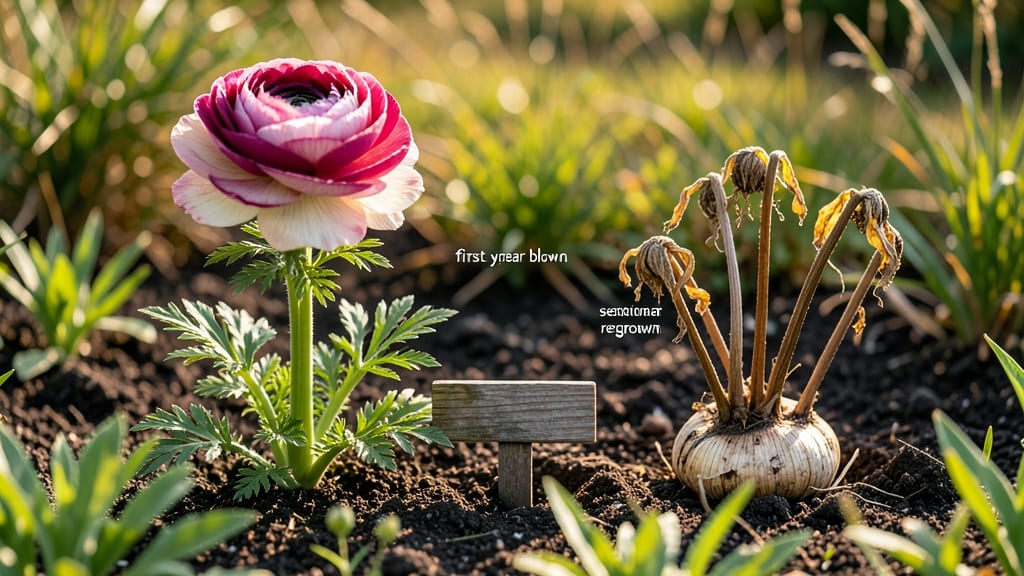
Ranunculus do not bloom every year as perennials in most climates, dying back to their corms after flowering and requiring winter dormancy. In warmer zones (USDA 7-10), they may rebloom annually, but cold winters typically kill foliage, forcing replanting each spring.
Ranunculus behave like annuals in cooler climates because their underground corms enter dormancy after blooming, surviving only as dormant bulbs until spring. 🌱 In regions with hard freezes (USDA zones 3-6), the foliage dies completely, leaving gardeners to replant each season.
Even in milder zones, consistent cold snaps can trigger this cycle, making them act more like temporary perennials than true repeat bloomers.
What's fascinating is how these flowers adapt: in frost-free areas, they'll often produce a second flush of blooms if given proper care.
I've seen gardeners in California and Florida coax multiple bloom cycles from the same corms by maintaining consistent moisture and sunlight—proof that with the right conditions, ranunculus can defy their usual one-season reputation.
💡 In This Article
- Why Ranunculus Act Like Annuals in Most Gardens
- How to Extend Ranunculus Blooms Across Seasons
Why ranunculus act like annuals in most gardens
Ranunculus behave like annuals because their underground corms—thick, fleshy storage organs—enter a strict dormancy cycle after flowering. Unlike true perennials that maintain active growth year-round, ranunculus corms shut down completely once blooms fade, dropping foliage to conserve energy.
This process is triggered by cool temperatures (below 50°F) and shorter daylight hours, mimicking their native Mediterranean climate where summer drought forces dormancy.
The key difference lies in their hardiness zone tolerance. In USDA zones 3-6 (where winters drop below 10°F), the corms often suffer frost damage or fail to regenerate foliage in spring, forcing gardeners to replant.
Even in milder zones 7-10, inconsistent cold snaps can disrupt their natural cycle. For example, a 20°F freeze in Florida might kill back foliage, while a frost-free winter in Southern California allows them to persist year-round. 🌡️
Botanically, this dormancy isn't laziness—it's survival. Ranunculus corms store nutrients like starches and sugars, but they need 6-8 weeks of cool (40-50°F) soil temperatures to "reset" before regrowing. Without this, they remain dormant indefinitely.
In tropical climates, where temperatures stay above 60°F year-round, they can continue blooming if given consistent moisture and sunlight, acting more like perennials.
What's often misunderstood is that ranunculus can rebloom in the same season if deadheaded properly (removing spent blooms) and given 6+ hours of sunlight daily. However, this second flush is typically smaller and less vigorous than the initial bloom.
The plant's energy is already divided between corm storage and new growth, making annual replanting the more reliable choice for most gardeners.
Consider this: in their native habitats, ranunculus grow in ephemeral wetlands that dry completely in summer. Their corms evolved to survive these harsh conditions by shutting down entirely—an adaptation that explains why they struggle in humid, temperate climates where moisture persists year-round.
This is why you'll see them thriving in container gardens with controlled conditions, but often failing in open-ground plantings in colder regions.
For gardeners in zones 7-9, the solution lies in microclimate management. Planting near south-facing walls or using row covers can protect them from unexpected frosts, while mulching with straw or pine needles insulates corms during winter.
Even a 10°F temperature drop can trigger dormancy, so these small adjustments make a big difference in extending their lifespan.