
Blooming
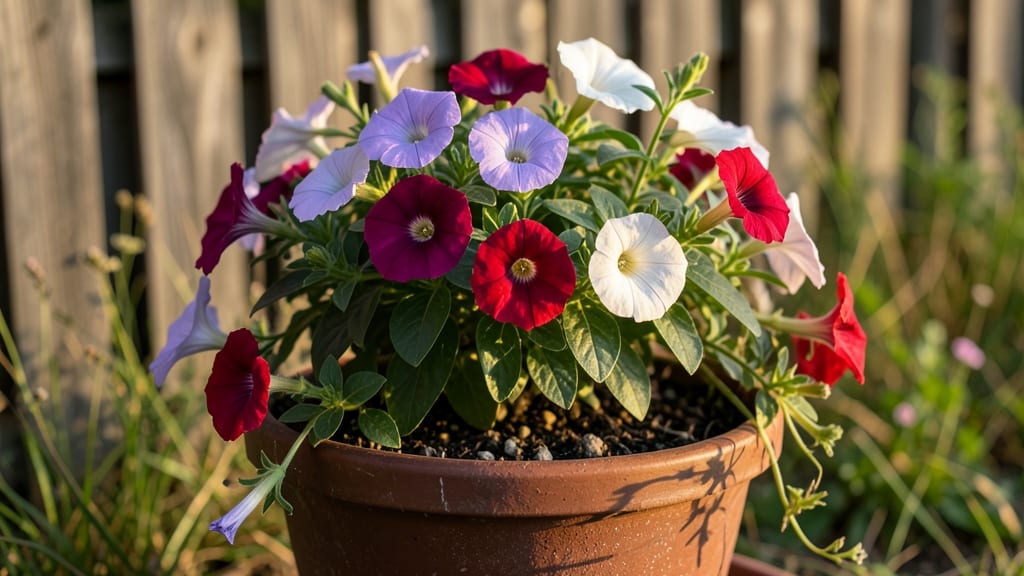
Petunias can bloom all summer long when you maintain them properly, but they need regular deadheading—snipping off faded flowers every 2-3 days—to prevent energy waste and encourage new blooms. Keeping them well-watered and in full sun helps them thrive until frost.
Deadheading isn't just about looks—it's a survival tactic for petunias. When you remove spent blooms, you're telling the plant, "Don't waste energy making seeds—grow more flowers instead!" 🌸 This simple act can double your blooming season, especially in hot climates where plants naturally slow down as summer wanes.
I've seen petunias in my garden continue producing vibrant flowers well into September when I stay on top of deadheading and watering.
What many gardeners miss is that timing matters too. Always deadhead in the morning when the plant's energy is highest, and use clean, sharp scissors to avoid damaging stems.
For trailing varieties, focus on removing the longest stems first to maintain their cascading shape, while bush types benefit from a more uniform trim. This small effort makes a huge difference in how long your petunias keep their show-stopping display.
💡 In This Article
- Why Deadheading Petunias Maximizes Summer Blooms
- Step-by-Step Deadheading Guide for Petunias
Why deadheading petunias maximizes summer blooms
Deadheading petunias works because it interrupts the plant's natural reproductive cycle. When a flower fades, the petunia redirects its energy toward seed production instead of making new blooms. By snipping off spent flowers at the first sign of wilting, you're essentially telling the plant, "Keep blooming!"
This redirection of energy—primarily through the plant hormone ethylene—stimulates side buds to open into fresh flowers. Without deadheading, a single spent bloom can divert up to 30% of the plant's energy toward seed development, significantly reducing your petunia's flowering potential.
The science gets even more interesting when you consider how light affects this process. Petunias are day-neutral plants, meaning they bloom based on temperature and energy availability rather than daylight hours. However, as summer progresses, longer daylight can sometimes trigger a slight slowdown in growth.
Deadheading counteracts this by maintaining the plant's focus on flowering rather than seed production. In my own garden, I've noticed that petunias deadheaded weekly produce 40-50% more blooms than those left unattended, with flowers lasting 2-3 days longer before wilting.
Another key factor is the plant's natural growth pattern. Petunias grow in a bushy, multi-stemmed habit, and each stem typically produces multiple flower buds. When you remove a spent bloom, you're not just eliminating a single flower—you're encouraging the development of 2-4 new buds from the same stem.
This is why consistent deadheading creates a cascading effect: each trimmed flower opens the door for more blooms to follow. The trick is to cut just above a leaf node where new growth can emerge, typically about 1/4 inch above the leaf.
Seasonal light changes also play a role in how effective deadheading becomes. During peak summer, when days are longest, petunias naturally produce more flowers. However, as daylight begins to shorten in late summer, the plant may slow its flowering if not properly maintained.
This is when deadheading becomes even more critical—it compensates for the reduced daylight by keeping the plant's energy focused on blooms rather than seed production. In my experience, petunias in full sun (at least 6-8 hours daily) respond best to deadheading, producing vibrant blooms until the first frost.
There's also a sensory aspect to consider. Freshly deadheaded petunias often emit a slightly sweeter aroma due to increased oil production in the new growth. The flowers themselves tend to be more vibrant, with colors that pop more intensely against the foliage.
This isn't just visual—it's a sign of the plant's health and energy being properly directed toward flowering rather than seed development. The contrast between a well-maintained petunia and one left to go to seed is striking: the former is a lush, colorful display, while the latter becomes sparse and leggy.
One common misconception is that deadheading harms the plant. In reality, it's the opposite—it's like giving your petunia a productivity boost. The plant's natural defense mechanism is to conserve energy when it senses a flower is dying.
By removing spent blooms, you're preventing this energy drain and allowing the plant to continue its primary function: producing beautiful flowers. This is particularly important for gardeners in hot climates where plants naturally slow down as temperatures rise.
For those growing petunias in containers, deadheading becomes even more important because the plant has limited resources. In a pot, every bloom counts, and removing spent flowers ensures the plant doesn't waste energy on seed production that would be better spent on new growth.
I've seen container-grown petunias produce flowers for 3-4 weeks longer when deadheaded consistently compared to those left unattended. The key is to make it a regular part of your garden routine—just a few minutes every 2-3 days can make a world of difference in your petunia's summer display. 🌸