
Blooming
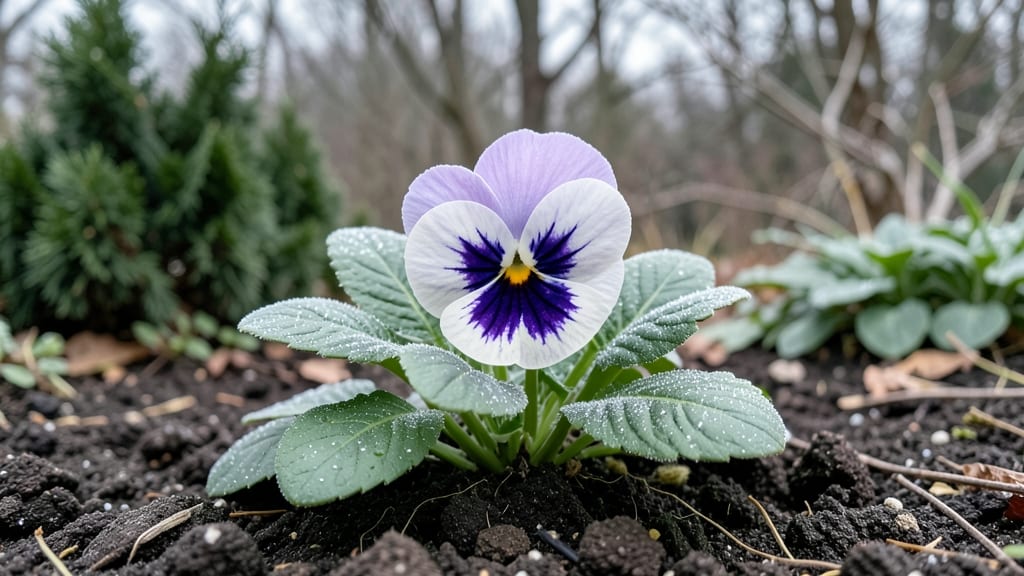
Pansies bloom in winter when planted as cold-hardy varieties, thriving in frost down to 20°F (-6°C) with vibrant flowers that brighten chilly gardens. Choose hardy types like 'Ice Dance' or 'Soraya' for reliable winter color.
Winter-blooming pansies are botanical marvels designed for cold resilience. Their thick, waxy leaves act like natural insulation, while deep root systems anchor them against wind and frost. 🌬️ Unlike spring flowers that wait for warmth, these varieties push through snow with cheerful blooms—perfect for adding color to gray winter landscapes.
I've seen 'Ice Dance' pansies still thriving after 15°F (-9°C) nights, proving their toughness. The key is selecting varieties bred for cold climates rather than relying on standard garden pansies, which may struggle below 25°F (-4°C).
For best results, plant 6-8 weeks before your first frost date in containers or garden beds with well-draining soil. Mulch lightly around the base to protect roots without suffocating the plants.
A balanced fertilizer applied in early fall gives them the energy boost needed to survive winter and rebound with even more vibrant blooms come spring.
💡 In This Article
- Why Pansies Excel in Winter Gardens
- Best Winter-Blooming Pansy Varieties for Cold Climates
Why pansies excel in winter gardens
Pansies have evolved a remarkable set of adaptations that let them thrive when most flowers retreat. Their leaves develop a thick, waxy coating that acts like a microscopic raincoat, repelling ice and preventing water loss during freezing temperatures.
This wax layer also reflects sunlight, reducing heat absorption that could damage delicate tissues. 🌨️ Unlike spring-blooming flowers that rely on stored energy from summer growth, pansies develop deep root systems that reach 6-8 inches below the surface, accessing moisture and nutrients even when topsoil is frozen.
The real secret lies in their genetics. Cold-hardy pansy varieties like 'Ice Dance' contain higher levels of natural antifreeze proteins—similar to those in winter wheat—that prevent ice crystals from forming in their cells. These proteins bind to water molecules, lowering the freezing point by 3-5°F compared to standard pansies.
This is why 'Ice Dance' can survive 15°F (-9°C) nights while other varieties may suffer frost damage at 25°F (-4°C). Their flowers also contain pigments that protect against UV radiation, which intensifies during winter's shorter days.
What makes pansies unique is their ability to continue photosynthesis at temperatures as low as 32°F (0°C), though growth slows dramatically. This means they can still produce energy for basic functions even when air temperatures hover near freezing.
Their compact growth habit also helps—low to the ground, they benefit from snow cover that acts as an insulating blanket while protecting them from drying winds. This contrasts sharply with spring bulbs that remain dormant underground until soil temperatures rise above 50°F (10°C).
Color plays a functional role too. Darker pansy varieties like 'Majestic Giant' absorb more sunlight, generating additional warmth through a process called photothermal conversion. Lighter varieties reflect more light, which can be advantageous in extremely bright winter conditions.
The flowers' structure—with five petals arranged in a shield shape—helps channel heat toward the reproductive center, protecting vital tissues during cold snaps. This engineering is why you'll often see pansies blooming even after light frosts, while many perennials wait until spring.
Consider this comparison: While tulips and daffodils store energy underground for spring blooms, pansies actively grow and flower in winter. Their stems contain specialized cells that remain flexible even at 20°F (-6°C), preventing the brittle stems that plague spring flowers when exposed to sudden temperature swings.
This flexibility is what lets them bounce back from winter storms that would flatten less resilient plants. 🌿
The trade-off? Pansies do require more frequent watering in winter since evaporation rates drop but containers dry out more slowly. A 1-inch layer of mulch around the base helps maintain consistent soil moisture while preventing temperature fluctuations that can shock the roots.
This simple adjustment can extend blooming seasons by 4-6 weeks compared to unmulched plants.