
Blooming
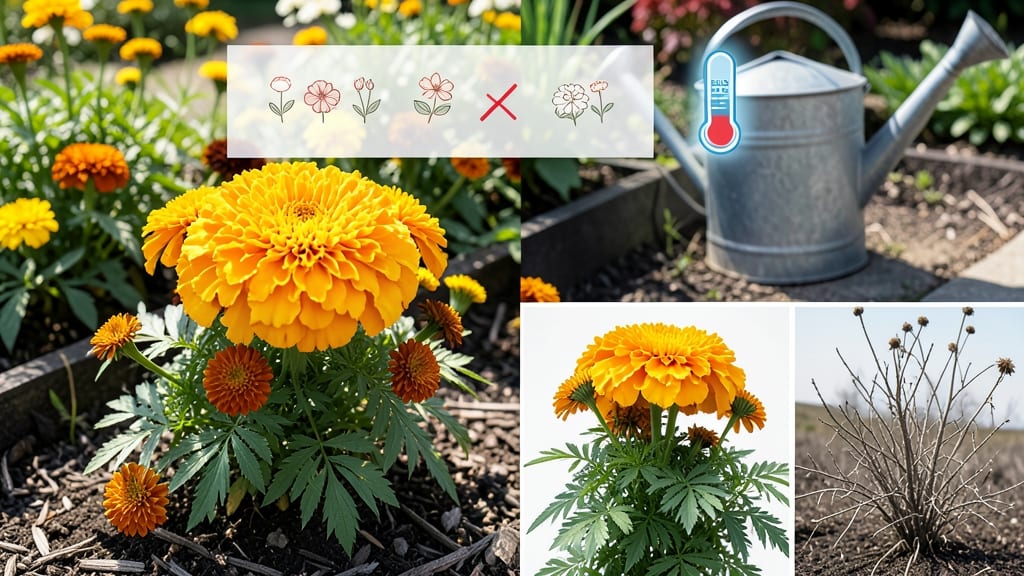
Marigolds don't bloom all year in most climates, but they can flower continuously in tropical zones (USDA 10-12) and extended-season gardens in mild winters (USDA 8-9) with the right care. Cold weather or frost usually forces dormancy, requiring replanting in cooler areas.
Marigolds thrive in warm climates where frost is rare, but even then, they need consistent care to keep blooming. 🌿 In USDA zones 10-12, you can enjoy near-year-round flowers by deadheading spent blooms and providing balanced fertilizer.
For cooler zones, try overwintering potted marigolds indoors or planting cold-hardy varieties like 'Bonanza Yellow' in late spring. The key is understanding your local frost dates and adjusting planting schedules accordingly.
What's fascinating is how daylight hours affect blooming. Marigolds need at least 6-8 hours of sunlight daily, and shorter winter days can slow production. I've found that using grow lights or moving containers to sunnier spots can extend the blooming season by weeks.
For gardeners in zones 8-9, staggered planting—every 4-6 weeks—creates a cascading effect of color that feels almost continuous.
💡 In This Article
- Climate Zones Where Marigolds Stay in Bloom Longer
- Year-Round Marigold Gardening Hacks for Cooler Climates
Climate zones where marigolds stay in bloom longer
Marigolds thrive in warm climates because their blooming cycle is directly tied to temperature and daylight. In tropical zones (USDA 10-12), where winter temperatures rarely drop below 50°F, marigolds can bloom year-round with minimal dormancy.
The key mechanism here is their response to photoperiod—marigolds need 10-12 hours of daylight to trigger flowering, which is naturally available in these zones. Varieties like 'Tangerine Gem' or 'Crackerjack' are bred to handle this consistent warmth, producing flowers in 6-8 weeks after planting, then continuously if deadheaded.
In milder zones (USDA 8-9), marigolds experience seasonal slowdowns due to cooler temperatures and shorter daylight. For example, in Southern California, marigolds may bloom from March through November, but production drops sharply when nights dip below 55°F.
The science behind this is the plant's internal clock—colder nights reduce chlorophyll production, slowing growth and flower development. However, everblooming hybrids like 'Bonanza' can push this window by 2-3 months through selective breeding for cold tolerance.
Frost is the ultimate blooming killer for marigolds, as it triggers dormancy by damaging cell membranes in the stems. Even a light frost (32°F) can cause buds to drop, and temperatures below 28°F will kill the plant entirely.
This is why gardeners in zones 8-9 often treat marigolds as annuals, replanting every 4-6 weeks to maintain color. The exception is container-grown plants, which can be moved indoors during cold snaps to preserve blooms.
Daylight hours also create a 6-week lag in cooler zones. When autumn arrives and daylight drops below 10 hours, marigolds stop producing flowers entirely, even if temperatures remain mild.
This is why tropical zones have such an advantage—they maintain consistent 11-12 hour days year-round, allowing marigolds to follow their natural blooming rhythm without interruption. In contrast, zone 9 gardens might see only 50% of the flowering potential compared to tropical counterparts.
One fascinating adaptation is how marigolds in warm climates develop a shorter juvenile phase—the time between germination and first bloom. In USDA 11, this can be as quick as 35 days compared to 50+ days in zone 8.
This faster maturation means more blooms per growing season, creating that lush, continuous display. The trade-off? These fast-growing varieties often have shorter individual bloom times (about 7-10 days per flower) compared to cooler-climate marigolds that hold blooms for 2 weeks.
For gardeners in marginal zones, the secret to extending blooms lies in microclimate manipulation. South-facing walls, black plastic mulch to raise soil temperatures, and windbreaks can create 5-10°F warmer conditions than the surrounding area.
I've seen marigolds planted against brick walls in zone 8 continue blooming 2 months longer than those in open beds. The warmth from the wall keeps roots active and stimulates flower production.
What most people don't realize is that marigolds actually prefer warmth more than sunlight—they'll bloom with just 6 hours of direct sun if nighttime temperatures stay above 60°F.
This is why they thrive as container plants on patios or balconies, where reflected heat from buildings can extend the season. In tropical zones, this means you can grow marigolds in partial shade near buildings and still get 90% of their full blooming potential. 🌟