
Blooming
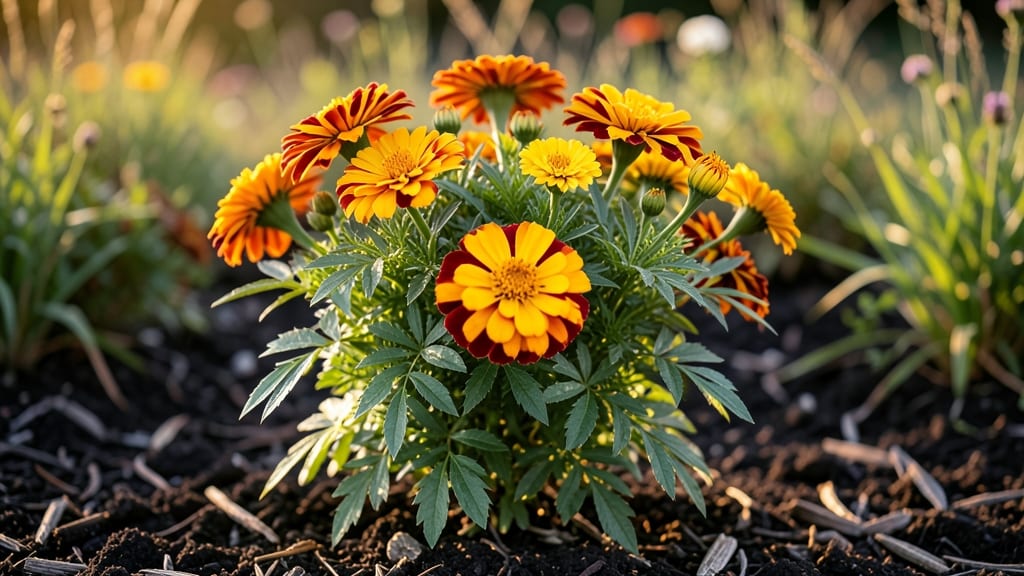
Marigolds do bloom all summer in most climates, particularly French and African varieties, thriving in heat zones 3–11 with full sun exposure and well-drained soil. Regularly removing spent blooms keeps them flowering until the first frost.
These vibrant flowers are summer's workhorses, with French marigolds offering delicate petals and African varieties delivering bold, long-lasting blooms. 🌻 The key to their summer-long performance lies in their heat tolerance—most varieties handle temperatures up to 90°F without stress, while consistent moisture prevents early wilting.
In cooler climates, mulching around the base helps maintain soil warmth, while in hot zones, afternoon shade prevents leaf scorching.
What sets marigolds apart is their resilience—unlike many annuals, they continue producing blooms until frost, provided you maintain their care routine.
The deadheading practice isn't just about looks; it redirects the plant's energy from seed production back to flower growth, which can extend the blooming window by 4-6 weeks in ideal conditions.
💡 In This Article
- Marigold Bloom Duration by Variety and Climate
- Extending Marigold Blooms: Pruning and Soil Tips
Marigold bloom duration by variety and climate
Marigolds exhibit dramatic differences in bloom duration based on their variety and native climate preferences. French marigolds (Tagetes patula), known for their dainty, pom-pom-shaped flowers, typically bloom from early summer through fall in zones 3–11 but may show signs of fatigue by late August if not properly maintained.
Their compact growth (12–18 inches tall) makes them ideal for borders, but their shorter stature means they're more vulnerable to heat stress above 85°F without afternoon shade.
African marigolds (Tagetes erecta), the heavyweights of the group, can continue flowering until frost in optimal conditions, often producing 100+ blooms per plant over their 3–4 month peak season. Their heat tolerance extends to 95°F, and their towering stems (2–4 feet) make them excellent cut flowers.
Mexican marigolds (Tagetes lucida), meanwhile, thrive in zones 8–11 with their feathery foliage and citrus-scented blooms, often extending their season into early winter in frost-free regions.
The real secret lies in their photoperiod sensitivity. Most marigolds are day-neutral plants, meaning they bloom continuously as long as daylight exceeds 12 hours and temperatures stay moderate. When nights dip below 50°F or days exceed 100°F, however, their metabolic processes slow, leading to premature dormancy.
This is why gardeners in zone 9 often see African varieties bloom until November, while those in zone 5 may only get 6–8 weeks of continuous flowering before frost.
Soil temperature plays an equally critical role. Marigolds prefer soil temps between 65–80°F for optimal root activity. When soil cools below 55°F, nutrient uptake slows dramatically, causing buds to abort.
This is why mulching with 2–3 inches of straw or shredded leaves in early fall can add 2–4°F to soil temperature, potentially extending the bloom window by 10–14 days in marginal climates.
Drought tolerance varies by variety too. African marigolds can withstand 3–4 weeks of dry conditions once established, while French types wilt visibly after just 7–10 days without water.
The key is deep watering at the base (1–2 inches per week) rather than frequent shallow watering, which encourages shallow root growth and makes them more susceptible to heat stress.
What most gardeners don't realize is how humidity affects bloom quality. In high-humidity zones (like the Southeast), marigolds are prone to powdery mildew, which weakens stems and reduces flowering. Spacing plants 12–18 inches apart improves air circulation, while morning watering prevents fungal spores from thriving overnight.