
Blooming
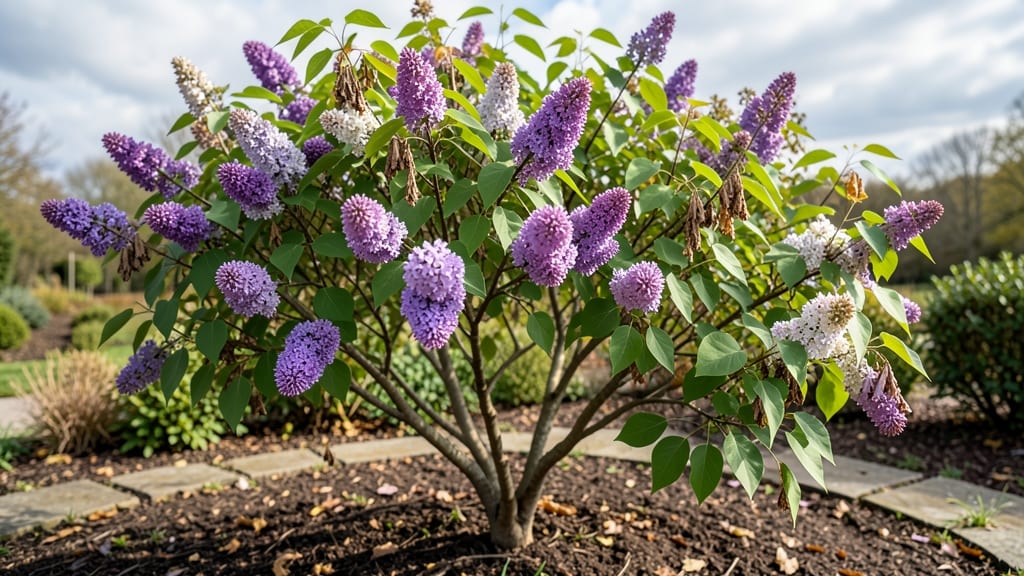
Lilacs do not bloom all summer—they produce a short, intense flowering season typically lasting 1-2 weeks in spring, with some varieties reblooming briefly in late summer if pruned correctly. Their blooms are sensitive to temperature and daylight changes, limiting extended flowering.
Lilacs are famous for their dramatic spring show, but their brief bloom period isn't just a quirk—it's hardwired into their biology. 🌸 The flowers emerge when days lengthen and temperatures stabilize, triggered by a perfect storm of environmental cues.
Once they fade, the plant shifts focus to seed production, leaving little energy for a prolonged display. Even reblooming varieties like 'Miss Kim' only produce secondary blooms under ideal conditions, usually just a few weeks in late summer.
What makes this even more interesting is how location plays a role. Lilacs planted in cooler climates often bloom earlier and more prolifically than those in hotter regions, where heat stress can shorten their window.
The key to extending their season lies in understanding these natural rhythms—pruning at the right time or selecting heat-tolerant cultivars can coax a few extra weeks of color, but don't expect a summer-long spectacle.
💡 In This Article
- Why Lilacs Have a Brief, Seasonal Bloom Cycle
- How to Encourage Longer Lilac Blooming Seasons
Why lilacs have a brief, seasonal bloom cycle
Lilacs' short bloom period is governed by a complex interplay of plant hormones and environmental cues. The process begins with vernalization, where lilacs require cold winter temperatures to break dormancy and initiate flower buds.
Once spring arrives, increasing daylight triggers the production of florigen, a hormone that signals the plant to bloom. This hormonal shift happens rapidly—typically within 7-14 days—resulting in that dramatic, concentrated burst of flowers.
The flowers themselves are incredibly sensitive to temperature fluctuations. Lilacs thrive in 50-70°F ranges, but even brief heatwaves above 80°F can cause buds to abort or flowers to wilt prematurely. 🌸 This temperature sensitivity explains why northern climates often see longer bloom periods—cooler springs allow for more stable conditions.
Late-blooming varieties like 'Charles Jolivet' may extend the season by 3-5 days, but they still follow the same hormonal timeline, just delayed.
Here's where it gets fascinating: once lilacs finish blooming, their energy shifts entirely to seed production. The plant prioritizes reproductive success over prolonged flowering, which is why you rarely see lilacs with both abundant blooms and healthy seed pods simultaneously.
This biological trade-off is hardwired into their genetics as a survival strategy—ensuring they reproduce efficiently rather than spreading their resources thin across a longer season.
Daylight length plays an equally crucial role. Lilacs are long-day plants, meaning they need 14+ hours of daylight to trigger flowering. As summer progresses and days shorten, the plant receives the signal to conserve energy.
This is why even reblooming varieties like 'Miss Kim' only produce secondary blooms in late summer—typically just 2-3 weeks—before the daylight becomes insufficient to sustain another full cycle.
Consider this comparison: Early-blooming varieties like 'Sybille' may start flowering in late April, while late varieties like 'President Lincoln' peak in mid-May.
The difference isn't in duration but in timing—both still follow the same 1-2 week bloom window because their hormonal clocks are synchronized with the same environmental triggers. The only variable is when that clock starts ticking.
What most gardeners don't realize is that even the most vigorous lilacs can't escape this biological constraint. The plant's entire growth cycle is programmed to prioritize one intense flowering period over extended, weaker displays.
This is why you'll never see a lilac bush covered in blooms from spring through fall—it simply doesn't have the physiological capacity to sustain that level of floral production continuously. 🌿