
Blooming
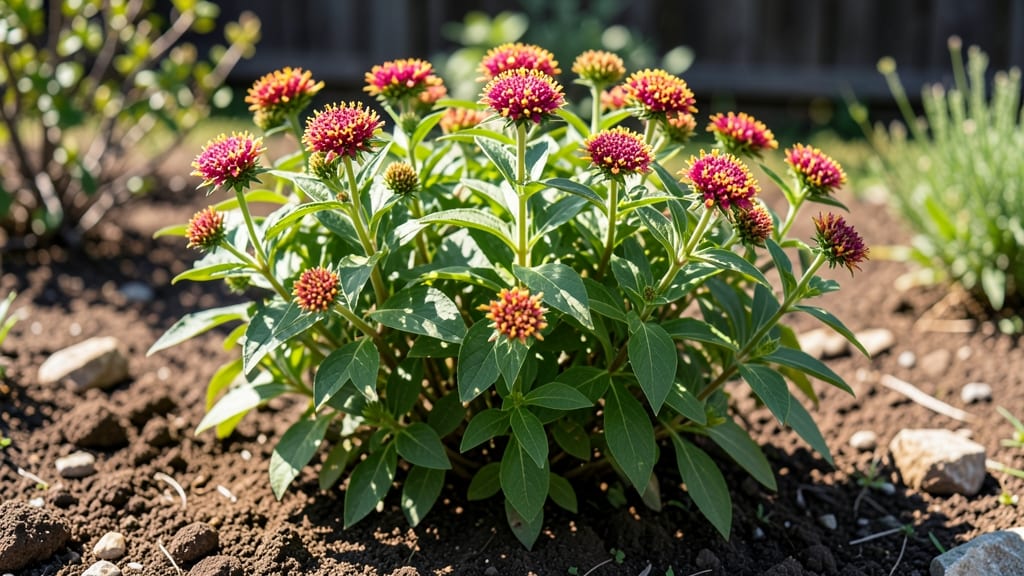
Lantana blooms all summer and often into fall, producing vibrant clusters of flowers continuously through warm weather due to its heat-tolerant, drought-resistant nature and prolific flowering cycle. Pruning encourages extended blooming seasons in some varieties.
Lantana's ability to bloom continuously throughout summer comes from its unique biology.
Unlike many plants that rely on seasonal cues, lantana produces flowers in response to warm temperatures rather than day length, making it a reliable summer performer. 🌸 This heat-loving shrub thrives in full sun and dry conditions, which triggers its prolific flowering habit.
Many gardeners swear by lantana because it rewards them with months of colorful blooms with minimal care.
What makes this plant particularly special is its ability to rebloom after deadheading spent flowers. The more you prune back leggy growth, the bushier and more productive the plant becomes.
Some varieties even continue flowering into early autumn before slowing down with cooler weather. This makes lantana an excellent choice for gardeners looking to add long-lasting color to their landscapes.
💡 In This Article
- Why Lantana Flowers Nonstop in Summer Heat
- Tips to Maximize Lantana’s Summer Bloom Time
Why lantana flowers nonstop in summer heat
Lantana's continuous summer blooms stem from its day-neutral flowering habit, meaning it produces flowers based on temperature rather than daylight hours. Unlike many plants that rely on long summer days, lantana's genetic makeup triggers blooming when temperatures stay consistently above 70°F.
This adaptation allows it to flower prolifically in hot climates where other plants might struggle, creating its reputation as a summer showstopper.
The plant's semi-evergreen to evergreen growth habit also plays a role. Lantana grows as a woody shrub with multiple stems, each capable of producing flower clusters. When one stem finishes blooming, others take over, creating an overlapping flowering cycle.
This sequential blooming ensures vibrant clusters appear continuously. Some varieties like 'New Gold' or 'Bandana' can produce 100-200 flowers per stem during peak season, with each cluster containing 15-30 individual blossoms!
Lantana's drought resistance further supports its summer flowering. The plant has evolved succulent stems that store water, allowing it to thrive with minimal irrigation. When watered appropriately (about 1 inch per week during active growth), the plant focuses energy on flower production rather than stress responses.
The bright colors—ranging from yellow to orange, pink, and purple—actually help attract pollinators, which in turn stimulates more flowering as the plant receives cross-pollination benefits.
Interestingly, lantana's flowering mechanism involves a short-day neutral response combined with heat sensitivity. While it doesn't require short days like chrysanthemums, warmer temperatures (especially above 80°F) accelerate its blooming cycle. This is why lantana often continues flowering into early fall until temperatures drop below 50°F at night.
The plant's ability to handle heat stress while maintaining flower production makes it uniquely suited for summer landscapes.
One fascinating botanical detail is how lantana's flower buds develop. Unlike many plants that form buds in spring, lantana produces continuous flushes of buds throughout the growing season. Each flower cluster starts as a compact bud that unfurls over 3-5 days, revealing its tubular-shaped blossoms.
This rapid bud development contributes to the plant's ability to maintain constant color throughout summer, with new flowers emerging even as old ones fade.
The plant's sympodial growth pattern—where growth occurs at the tips of branches—also supports its flowering habit. When you prune lantana, you encourage new growth from lower buds, which then produce more flower clusters.
This is why regular pruning (every 4-6 weeks** during growing season) can actually extend the blooming period by stimulating fresh growth and preventing legginess.