
Pruning
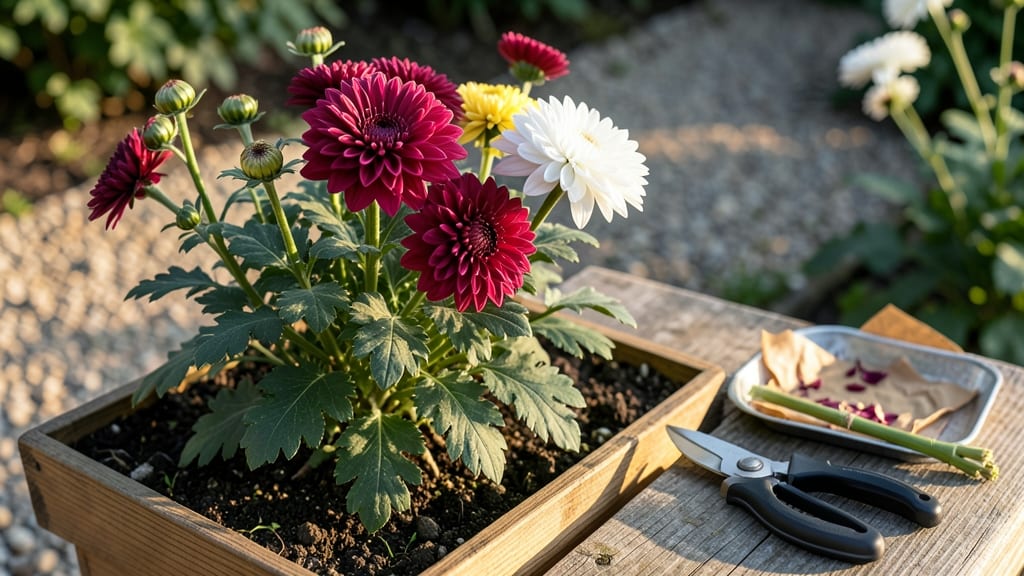
Will mums rebloom after deadheading? Only if you're growing reblooming varieties like 'Dynasity' or 'Florist' types, which need precise late-summer pruning and ongoing care to produce new buds. Single-bloom mums typically flower once in fall and won't return without special winter protection.
Deadheading mums triggers reblooming through a hormonal process called florigen production, which signals the plant to produce new flower buds. 🌸 The key difference between reblooming and non-reblooming varieties lies in their genetic programming—rebloomers like 'Dynasity' have been bred to respond to light cues and pruning, while single-bloomers focus all their energy on that one fall display.
For best results, I always prune rebloomers in late summer (after the first flush of blooms) and fertilize with high-phosphorus formulas to support flower production.
What many gardeners overlook is that reblooming mums need consistent moisture and protection from extreme heat. Without proper care, even the best varieties may produce only a few scattered blooms.
I've found that mulching helps maintain soil moisture while keeping roots cool—a simple trick that makes a big difference in extended bloom times.
💡 In This Article
- How Deadheading Affects Mum Flower Cycles
- Best Reblooming Mum Varieties and Care Tips
How deadheading affects mum flower cycles
Deadheading mums works through a botanical process called florigen production—a plant hormone that triggers flower bud formation.
When you remove spent blooms, you're essentially signaling the plant to redirect its energy toward producing new flowers instead of seed development. 🌸 In reblooming varieties like 'Dynasity', this process can repeat multiple times throughout the season, while non-rebloomers like 'Mammoth' focus all their energy on that single fall display.
The key difference lies in their genetic programming: rebloomers have been selectively bred to respond to light cues and pruning.
Timing is everything when deadheading for reblooming. The optimal window is late summer—typically after the first flush of blooms but before mid-August in most climates. This timing ensures the plant has enough warm-season growth to support new buds before cooler temperatures arrive.
Light exposure plays a critical role too: reblooming mums need 12-14 hours of daylight to trigger florigen production. In areas with shorter fall days, you might see fewer repeat blooms unless you supplement with grow lights.
What most gardeners miss is how deadheading affects the plant's root system. Each time you remove a spent bloom, you're stimulating new lateral shoots from the base. These shoots require proper nutrition to develop into strong stems that can support multiple blooms.
That's why reblooming mums need high-phosphorus fertilizer (like 5-10-10) every 4-6 weeks during the growing season—phosphorus is essential for flower development and root growth.
Here's what happens if you deadhead too early or too late: Pruning before the first blooms open can shock the plant, while waiting too long (after mid-September) gives the plant insufficient time to develop new buds before winter.
The ideal approach is to remove only fully spent blooms—those with brown centers—while leaving partially open flowers intact to continue photosynthesizing and supporting the plant.
Consider these key factors when deadheading for reblooming:
- Variety matters: Rebloomers like 'Bright Lights' or 'Fantasia' can produce 3-4 flushes of blooms, while single-bloomers like 'Pink Beauty' won't rebloom without winter care
- Pruning technique: Use clean, sharp shears to cut just above a set of leaves or bud to encourage new growth
- Seasonal timing: Late summer pruning (after first blooms) gives best results for fall reblooming
The science behind reblooming mums involves photoperiodism—the plant's response to changing daylight hours. As days shorten in fall, reblooming varieties produce more florigen, but this process requires the plant to be in peak health.
That's why consistent watering (about 1-1.5 inches per week) and proper mulching are essential—they help maintain soil moisture and temperature, creating optimal conditions for new bud formation. 🌿