
Blooming
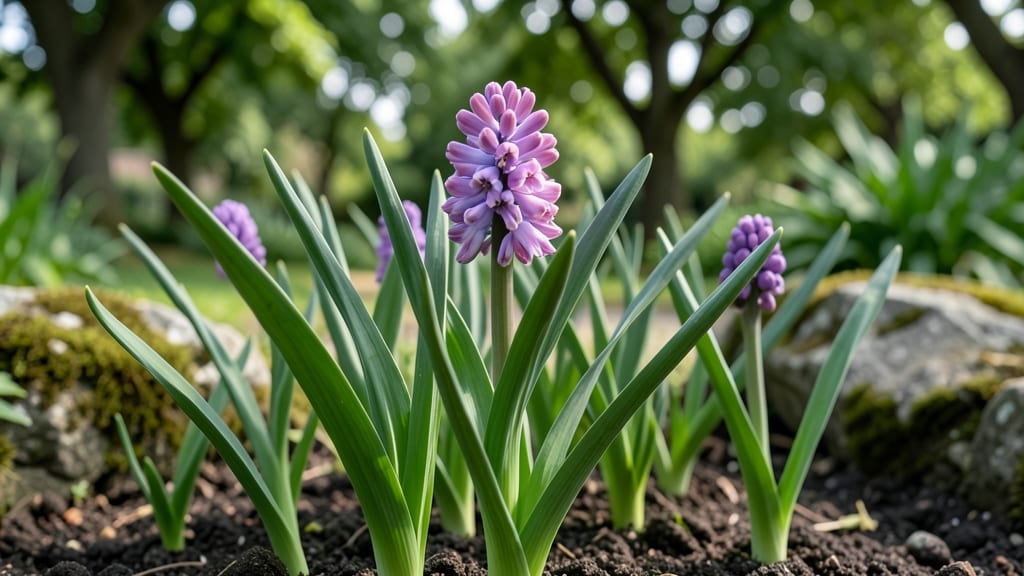
Hyacinths do not bloom all summer: they produce vibrant flowers exclusively in early spring—typically March to May—before entering a natural dormancy period. Even with proper care, their blooming window remains brief each year.
Hyacinths are spring's star performers, designed by nature to burst into color when days grow longer and temperatures rise just enough to wake their bulbs from winter rest. 💫 Their flowering cycle is genetically programmed to last just 2-4 weeks, after which the plant redirects energy to bulb replenishment.
Unlike some perennials that stretch blooms across seasons, hyacinths prioritize one spectacular show—though deadheading spent blooms and feeding them well can sometimes coax a modest second display later in summer.
What makes this cycle fascinating is how closely it mirrors their natural habitat. In the Mediterranean regions where hyacinths originated, spring rains and mild temperatures create the perfect bloom trigger.
When you mimic these conditions—like providing well-draining soil and avoiding summer heat stress—you're essentially giving your hyacinths a taste of their ancestral home, which helps maintain their vigor for next year's performance.
💡 In This Article
- Hyacinth Bloom Cycle: Why Spring Dominates Their Flowering Season
- Maximizing Hyacinth Blooms: Deadheading, Fertilizing, and Seasonal Care Tips
Hyacinth bloom cycle: why spring dominates their flowering season
Hyacinths follow a strict biological clock tied to photoperiodism and temperature cues. Their bulbs require a period of vernalization—a cold treatment during winter—to break dormancy. Once temperatures rise to 50-60°F and daylight lengthens past 12 hours, the bulbs trigger flower production through a hormone cascade involving gibberellins.
This precise timing explains why their blooms peak in early spring, aligning with nature's signal that winter has passed and growing conditions are optimal.
The process begins when chilly winter temperatures (40-50°F) activate genes that prepare the bulb for growth. As spring approaches, longer daylight periods stimulate chlorophyll production in leaves, which then photosynthesize to fuel flower development.
Unlike tulips (which bloom slightly later) or daffodils (which often stretch into early summer), hyacinths have a shorter critical day length—meaning they respond more aggressively to the first signs of spring.
Their flowers emerge in dense clusters because the bulb's energy is concentrated into a single, spectacular display rather than spread out over months.
What's fascinating is how this cycle mirrors their Mediterranean origins. In wild hyacinth populations, spring rains and mild temperatures create the perfect bloom trigger. When you plant hyacinths in containers or garden beds, replicating these conditions—like providing well-draining soil and avoiding summer heat stress—helps maintain their natural rhythm.
The trade-off? Their energy reserves are depleted after blooming, which is why they need 6-8 weeks of rest before next year's performance. 🌱
This biological imperative explains why summer blooms are rare. Even with ideal care, hyacinths prioritize bulb replenishment over extended flowering.
The few cases where they rebloom occur when gardeners provide consistent moisture and balanced fertilizer (like 10-10-10) immediately after deadheading, which can trick the plant into a second growth spurt—but this is the exception, not the rule.
For comparison, consider tulips: they also bloom in spring but often produce smaller, secondary flowers later in the season. Hyacinths, however, are more conservative with their energy. Their single spectacular bloom is nature's way of ensuring maximum reproductive success in their short window of opportunity.
This is why forcing hyacinths indoors in winter (by chilling bulbs for 12-16 weeks) works—you're essentially tricking them into thinking spring has arrived early.
Understanding this cycle helps explain why summer blooms are nearly impossible without artificial intervention. The plant's entire physiology is geared toward a spring-only performance, making their seasonal limitations a fascinating example of botanical adaptation. 🌸