
Blooming
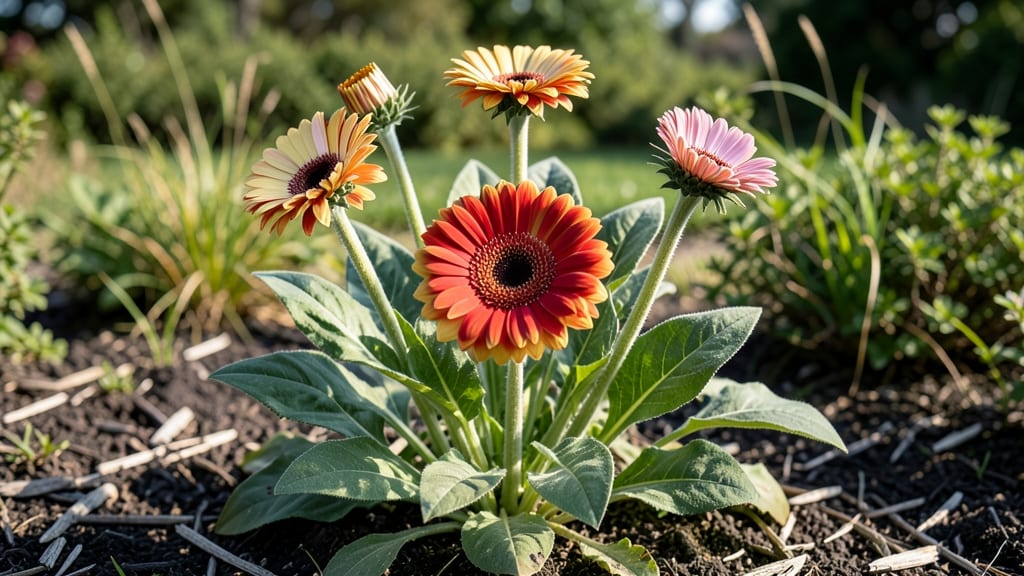
Gerbera daisies bloom all summer with proper care, though reblooming varieties like 'Mambo' and 'Pavot' keep producing flowers continuously, while single-season types need deadheading or pruning to encourage new blooms. Their flowering can be disrupted by cold snaps or insufficient water.
Gerbera daisies thrive in summer's warmth, but their performance varies by type. Reblooming varieties are bred to produce flowers throughout the season, while others may need encouragement. 🌸 The key is consistent care—removing spent blooms and maintaining even moisture helps sustain their vibrant displays.
I've seen 'Mambo' gerberas continue blooming until frost, while some single-season types may only last a few weeks without intervention.
What sets rebloomers apart is their genetic ability to produce new buds continuously, but even they need balanced nutrients and protection from extreme heat. A light layer of mulch can help retain moisture during dry spells, and morning watering prevents fungal issues.
When temperatures drop below 50°F, their growth slows, so moving potted plants indoors or covering garden beds can extend their season.
💡 In This Article
- How Gerbera Daisy Varieties Differ in Summer Blooming
- Tips to Extend Gerbera Daisies’ Summer Flowering Season
How gerbera daisy varieties differ in summer blooming
Gerbera daisies fall into two main categories based on their genetic makeup and flowering habits: reblooming and single-season varieties. Rebloomers like 'Mambo' and 'Pavot' are specifically bred to produce continuous flowers throughout summer, thanks to their ability to form new buds from basal growth points even after previous blooms fade.
This trait stems from their hybrid genetics, which include traits from both wild and cultivated species that naturally produce multiple flowering cycles per season.
The key difference lies in their root systems and energy storage. Reblooming varieties develop stronger, more extensive root networks that store more carbohydrates, allowing them to recover quickly after each bloom cycle.
Single-season types, like 'Safari' or 'Luna', typically produce one massive flush of flowers before their energy reserves are depleted.
These varieties often have less robust root systems and allocate more energy to initial bloom production rather than continuous regeneration. 🌿 The distinction becomes visible when you compare their growth habits: rebloomers maintain a compact, bushy form with multiple flowering stems, while single-season types may elongate and become leggy after their first bloom.
Environmental triggers also play a role in their blooming patterns. Rebloomers respond to consistent day lengths and temperatures between 65-75°F, which stimulates their hormonal pathways to produce new flowers.
Single-season types often require a period of cooler temperatures or shorter days to initiate their initial bloom cycle, after which they focus all their energy on that single production.
This is why rebloomers thrive in summer's long daylight hours while single-season types may struggle to produce a second round of blooms without intervention.
Another critical factor is their response to deadheading. Rebloomers continue producing flowers even without deadheading because their genetic programming prioritizes continuous blooming. Single-season types, however, may produce a few scattered blooms after deadheading, but their overall performance remains limited compared to their reblooming counterparts.
The difference becomes particularly noticeable in late summer when rebloomers maintain vibrant displays while single-season types begin to decline.
Consider the 'Pavot' series, for example, which can produce up to 12-15 blooms per plant over a 3-month summer period. In contrast, a single-season variety like 'Safari' might produce 8-10 blooms in its initial flush before requiring significant recovery time.
This genetic difference explains why gardeners often choose reblooming varieties for continuous summer color displays, while single-season types are sometimes preferred for their larger, more dramatic individual blooms.
The botanical mechanism behind continuous blooming involves a complex interplay of hormones, particularly gibberellins and auxins, which regulate bud formation and stem elongation. Reblooming varieties have been selectively bred to maintain a balance between these hormones, allowing them to produce new flowers without entering a prolonged dormancy phase.
This hormonal balance is what enables them to keep producing vibrant blooms throughout the summer heat, while single-season types often enter a natural decline after their initial flowering period.