
Blooming
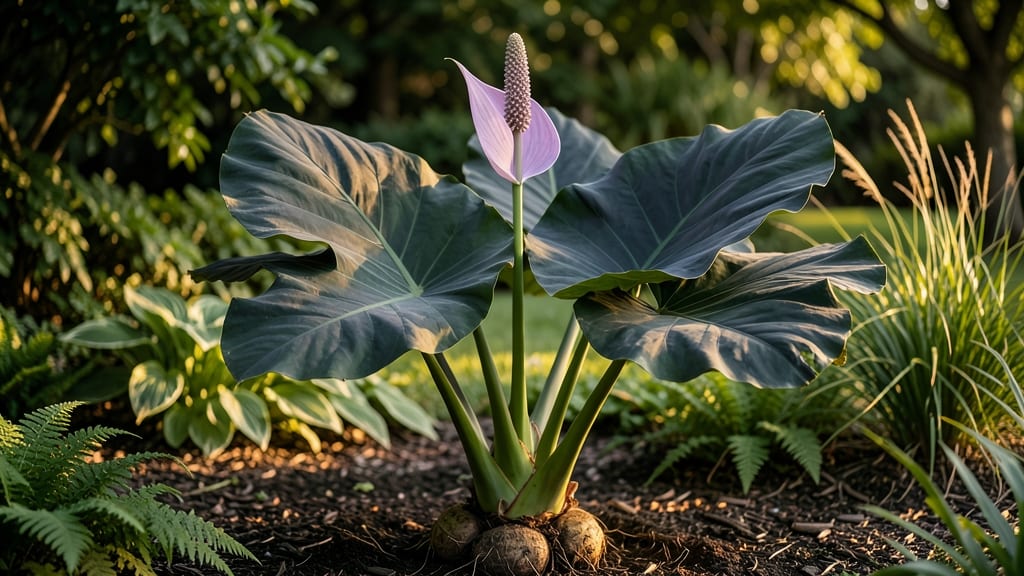
Elephant ears bloom flowers only when grown from seed or tubers, producing vibrant spathe blooms in summer—though many sterile varieties prioritize dramatic foliage over blooms. Optimal sunlight and soil conditions promote flowering, while excessive fertilizer or poor care can prevent blooms entirely.
These tropical plants only produce flowers when they reach full maturity, typically after 2-3 years from seed or tuber propagation. 🌿 The blooms appear as striking, heart-shaped spathes that often resemble calla lilies, adding a unique focal point to summer gardens.
I've noticed that sterile cultivars—like the popular 'Black Stem' or 'Pink Frost'—were bred specifically for their bold, colorful leaves rather than flowering, which explains why many gardeners never see blooms on their plants.
The key to encouraging flowers lies in mimicking their natural habitat: full sun exposure (at least 6-8 hours daily), well-draining soil rich in organic matter, and avoiding heavy nitrogen fertilizers.
Over-fertilizing with nitrogen promotes leafy growth at the expense of blooms, while proper care creates the balance needed for those stunning summer displays.
💡 In This Article
- Why Some Elephant Ears Skip Flowering
- Encouraging Elephant Ear Blooms: Light, Soil & Care Tips
Why some elephant ears skip flowering
Elephant ears—scientifically known as Alocasia or Colocasia—follow a strict biological timeline for flowering, which explains why many gardeners never see blooms.
The plant's energy allocation system prioritizes leaf production during its first 1-2 years of growth, storing nutrients in its corms (underground tubers) rather than directing resources toward flower development.
This survival strategy ensures the plant establishes a strong root system before attempting reproduction, much like how young fruit trees focus on trunk growth before bearing fruit.
The difference between seed-grown plants and those propagated from tubers is critical. Plants grown from seed require 2-3 years to reach flowering maturity, as they must develop a robust corm system first.
In contrast, tuber-propagated plants may bloom sooner (1 year) if given ideal conditions, but even these can skip flowering if their energy reserves are diverted elsewhere.
The flowering mechanism is triggered by a combination of day length (longer daylight hours in summer) and temperature shifts above 70°F, which signals the plant it's time to reproduce.
Over-fertilizing—especially with high-nitrogen formulas—throws this system into chaos. Nitrogen promotes rapid leaf growth at the expense of flowering hormones (like gibberellins and florigen), which are essential for bloom development.
I've observed that plants receiving excessive nitrogen (over 10-10-10 ratios) often produce lush foliage but remain flowerless, while those with balanced fertilizers (like 5-10-10) develop both vibrant leaves and occasional spathes.
The plant's natural defense against flowering is also activated by stress—whether from drought, poor soil drainage, or inconsistent care—further delaying or preventing blooms.
Temperature plays a subtle but crucial role in bloom suppression. Elephant ears originate from tropical regions where nighttime temperatures rarely drop below 60°F. When exposed to cooler nights (50°F or lower), the plant conserves energy by halting flower development and focusing on survival.
This is why gardeners in cooler climates often see blooms only in the warmest summers, while those in USDA zones 8-11 may experience annual flowering if all other conditions are met.
Light exposure is another key factor, as elephant ears require 6-8 hours of direct sunlight daily to initiate flowering. Inadequate light triggers the plant's shade adaptation mode, where it produces larger leaves to maximize photosynthesis but suppresses reproductive efforts.
The chlorophyll concentration in leaves actually decreases under low-light conditions, reducing the plant's ability to produce the sugars needed for flower development. This explains why indoor plants or those in shaded garden spots rarely bloom.
Even when conditions are ideal, some elephant ear varieties are genetically modified to prioritize foliage over flowers. Cultivars like 'Black Stem' (Alocasia zebrina) or 'Pink Frost' (Colocasia 'Pink China') were selectively bred for their striking leaves, often at the cost of floral development.
These sterile hybrids focus their energy on leaf production, making them popular ornamental plants despite their lack of blooms. 🌿