
Blooming
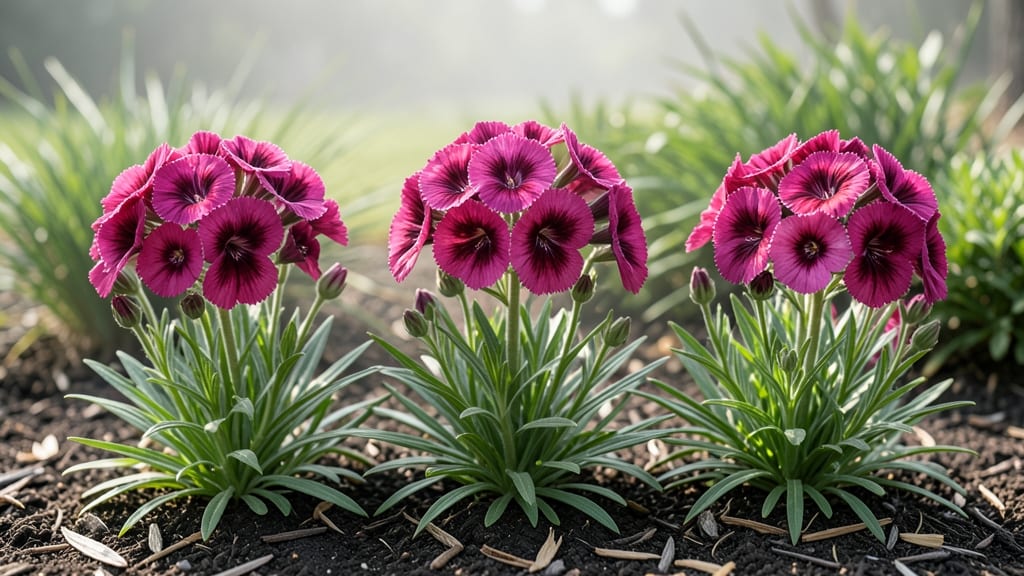
Dianthus flowers don't bloom continuously all summer—most varieties produce vibrant blooms in 4-6 week cycles, with seasonal regrowth triggered by cooler weather or proper care.
Dianthus blooms follow a natural rhythm tied to daylight and temperature shifts. 🌿 Unlike some perennials, they conserve energy by focusing blooms in bursts rather than nonstop. For example, Sweet Williams often peak in spring, while Cottage Pinks may rebloom in late summer when nights cool down.
This pattern explains why gardeners sometimes see "bloom droughts" mid-summer—it's not neglect, but biology!
Your care routine can shift these cycles slightly. Deadheading spent blooms redirects energy to new growth, while balanced fertilizer (like 10-10-10) supports longer flushes. In hot climates, afternoon shade prevents stress that could shorten bloom periods. The key is working with their natural timing rather than forcing continuous flowers.
💡 In This Article
- Dianthus Bloom Cycles: Seasonal Patterns by Variety
- Extending Dianthus Blooms: Pruning and Care Tips
Dianthus bloom cycles: seasonal patterns by variety
Dianthus blooms operate on a biological clock tied to photoperiodism—the plant's response to daylight length. Most varieties follow a spring-to-early summer peak (May-June) because longer daylight hours trigger flowering hormones.
For example, Sweet Williams (Dianthus barbatus) often bloom for just 3-4 weeks in this window, then enter a dormant-like state where they focus on foliage growth rather than flowers.
This isn't laziness—it's energy conservation. 🌸 The plant stores nutrients in its roots during this time, preparing for potential late-summer reblooms when days shorten again.
Temperature plays a surprising role too. Cottage Pinks (Dianthus gratianopolitanus) thrive in cooler climates (zones 3-8) and may produce a second flush in late August-September when nighttime temperatures dip below 75°F.
In tropical regions (zones 9-11), heat stress above 90°F can halt blooming entirely, forcing gardeners to provide afternoon shade. Even within the same species, tall garden dianthus (like 'Firewitch') often bloom 2-3 weeks later than their shorter cousins because their stems require more energy to develop.
The science gets even more interesting with vernalization—a cold period some varieties need to flower. Many perennial dianthus benefit from winter chilling (below 40°F for 6-8 weeks), which breaks dormancy and primes them for spring blooms.
This explains why potted dianthus often struggle to rebloom indoors—they lack this natural cold trigger. 🌡️ In contrast, annual varieties like Pinks (Dianthus chinensis) focus all energy on a single 4-6 week bloom cycle since they complete their life cycle in one season.
Regional adaptations create dramatic differences. In Mediterranean climates, dianthus may bloom in winter (November-February) when other gardens are dormant, while Pacific Northwest varieties often produce two flushes—spring and fall—thanks to mild summers.
The key takeaway? Dianthus aren't trying to disappoint—they're following ancient survival strategies honed over millennia to maximize blooms when conditions are optimal for pollinators.
Here's how to spot your variety's pattern:
- Spring-only bloomers: Typically Sweet Williams or border dianthus (single flush)
- Spring + fall bloomers: Cottage Pinks or perennial Pinks (two flushes)
- Heat-sensitive varieties: May bloom only in cooler months (ideal for tropical zones)
Pro tip: Observe your plants' leaf color shifts—healthy foliage turning slightly darker green before new blooms signals the plant is preparing for its next flush. This visual cue often appears 3-4 weeks before new buds form. 🌿