
Flowers
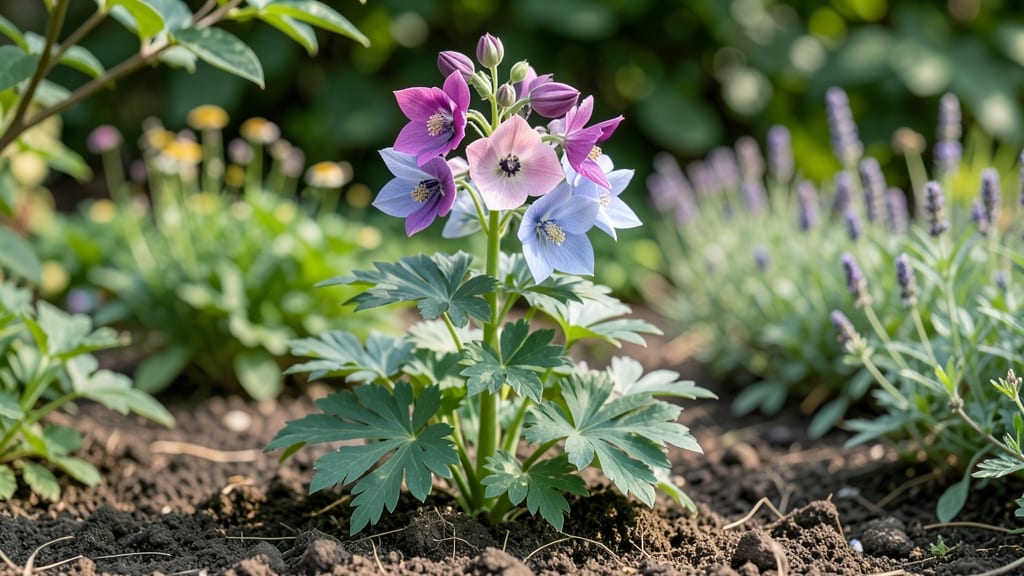
Columbine flowers do not bloom all summer long; they primarily flower in spring and early summer, though certain varieties may produce late-summer blooms with proper care in zones 5-8. Regular deadheading and consistent moisture help extend their flowering period.
Columbines are cool-season plants that naturally slow down their blooming as temperatures rise. 🌸 Their peak flowering occurs when days are longer but still mild, usually between April and June.
Some heat-tolerant varieties like Columbine 'Queen of Hearts' can surprise you with sporadic late-summer blooms if you maintain regular watering and provide afternoon shade during peak heat. The key is mimicking their native mountain habitat conditions—moisture retention and cooler roots.
What many gardeners don't realize is that columbines actually store energy during their primary bloom cycle. This energy reserve allows them to produce secondary blooms later if conditions remain favorable. In zones 9-10, where summers are consistently hot, most columbines will go completely dormant until fall rains return.
The good news? With proper care, you can coax a second round of blooms by keeping the soil consistently moist and removing spent flowers promptly.
💡 In This Article
- Columbine Bloom Cycles and Heat Zone Adaptations
- Extending Columbine Blooms: Watering, Pruning, and Soil Tips
Columbine bloom cycles and heat zone adaptations
Columbines follow a natural bloom cycle tied to photoperiodism—their response to daylight length. These flowers evolved in mountainous regions where spring brings mild temperatures and longer days, triggering their primary flowering period between April and June.
The key mechanism is their sensitivity to vernalization, a process where cool winter temperatures and increasing daylight length prepare the plant for bloom. Once temperatures consistently exceed 80°F, most columbine varieties enter a stress response, slowing metabolism and reducing flower production.
Their native habitats often include rocky outcrops with partial shade, where afternoon sun is filtered through tree canopies. This explains why columbines in heat zones 5-8 often perform better with afternoon shade—direct midday sun can raise soil temperatures to 95°F+, causing root stress.
The 'Jackie' columbine, for example, can handle slightly more heat than others, but even it shows reduced blooming when soil temperatures exceed 85°F for extended periods. 🌿 What's fascinating is how these plants store carbohydrates in their roots during peak bloom, creating an energy reserve that can fuel secondary flowering if conditions improve.
In cooler microclimates (like northern slopes or near water features), columbines often exhibit prolonged blooming because the soil stays cooler. The 'Strain' columbine variety, for instance, can produce sporadic blooms through late summer in zone 6 gardens if given consistent moisture.
The secret lies in maintaining soil moisture at 40-50% capacity—drought stress triggers dormancy by disrupting the plant's hormonal balance, specifically reducing gibberellins (hormones that promote flowering).
Heat zone adaptations vary dramatically: In zones 9-10, most columbines go completely dormant during summer, only resuming growth with fall rains. The 'Blue Bird' variety is an exception, sometimes producing a few late-summer blooms if shaded by 30-50% during peak afternoon heat.
What's crucial is that these plants prioritize root health over flowering—when roots experience heat stress, the plant redirects energy to survival rather than reproduction.
Consider this comparison: A columbine in zone 5 with afternoon shade might bloom for 8-10 weeks in spring, while the same plant in zone 9 without shade may only bloom for 3-4 weeks before going dormant.
The difference comes down to root zone temperature—keeping roots below 80°F is the golden rule for extending blooming seasons. Mulching with 2-3 inches of organic matter can drop soil temperatures by 5-10°F, making a significant difference in hotter climates.