
Planting
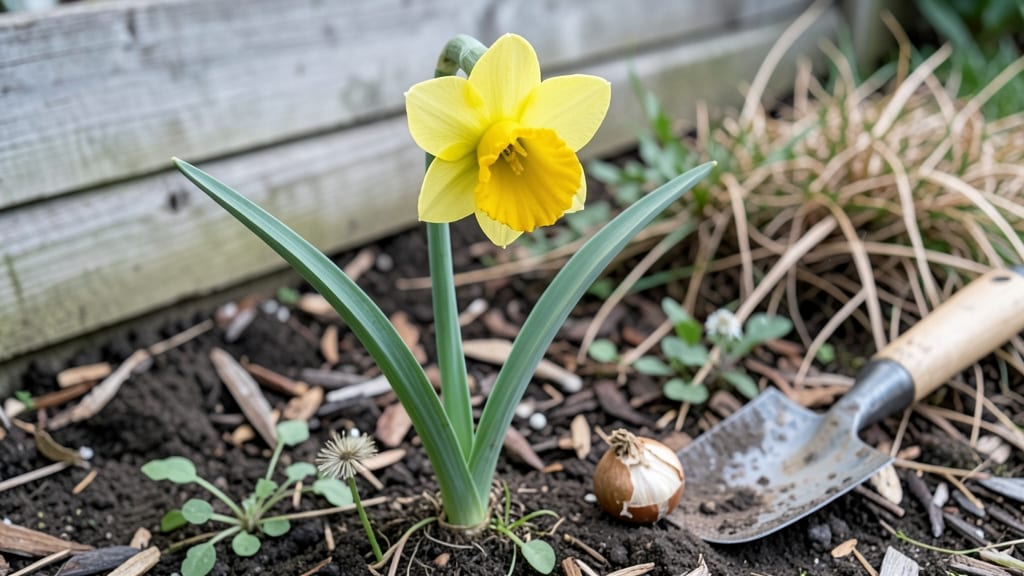
Daffodil bulb planting depth should be 6 inches deep in soil, with the pointed end facing upward, to ensure strong root growth and vibrant blooms while preventing rot or premature sprouting.
Planting daffodil bulbs at the right depth isn’t just about following a rule—it’s about creating the perfect balance for their growth. Too shallow, and they’ll struggle to establish strong roots, leading to weak stems or even rotting.
Too deep, and they may never bloom at all. Well-draining soil is key, so if your garden has heavy clay, consider amending it with compost or sand to mimic the loose, aerated conditions daffodils thrive in.
This simple adjustment can make all the difference between a vibrant spring display and a disappointment. 🌱
Another critical factor is the bulb’s orientation—always plant with the pointed end up to encourage upward growth. Cold-hardy varieties like Ice Follies can handle deeper planting in colder climates, while tender types may need shallower depths in warmer regions.
For containers, use a well-draining mix and ensure the pot has drainage holes to prevent waterlogging, which can turn your bulbs to mush. The right depth and soil prep set the stage for healthy, long-lasting blooms. ✨
💡 In This Article
- How Bulb Depth Affects Daffodil Growth and Bloom
- Adjusting Daffodil Bulb Depth for Different Climates
How bulb depth affects daffodil growth and bloom
Daffodil bulbs thrive at 6 inches deep because this depth creates an ideal balance between root development and moisture exposure. The top 2-3 inches of soil provide warmth for early root growth, while the deeper layers offer stability and protection from temperature fluctuations.
Think of it like a thermostat for the bulb: too shallow, and roots overheat or dry out; too deep, and they struggle to reach nutrients. The bulb's natural growth hormones (like gibberellins) respond to this depth by directing energy toward both root expansion and flower bud formation.
Soil composition plays a critical role in this process. Daffodils prefer well-draining mixes with a pH between 6.0-7.0, which mimics their native rocky, slightly acidic soils.
The top 4 inches should contain 30% organic matter (like compost) to encourage microbial activity that breaks down nutrients, while the lower 2 inches can be slightly heavier to anchor the bulb.
For example, in clay-heavy soils, adding 1 part perlite to 3 parts garden soil prevents waterlogging, which causes bulb rot—a common issue when bulbs are planted too deep in dense soil.
The pointed end of the bulb (where the shoot emerges) must face upward to align with the bulb's natural growth pattern. This orientation ensures the basal plate (the flat bottom) receives optimal moisture without drowning, while the shoot has a clear path to break through the soil.
When planted upside-down, daffodils may produce weak stems or fail to bloom entirely. The 6-inch depth also provides frost protection in winter: the bulb's natural insulation works best when partially buried, allowing it to withstand -20°F temperatures without damage.
Incorrect depth triggers specific problems. Planting too shallow (3-4 inches) exposes bulbs to extreme temperature swings, causing premature sprouting in fall or sunburned tips in spring. Too deep (8+ inches) delays blooming as the bulb exhausts energy trying to reach the surface.
The 6-inch standard ensures the bulb's nutrient reserves (stored in the scales) are used efficiently for both root growth and flower production.
For instance, 'Tête-à-Tête' daffodils—compact varieties—can handle slightly shallower depths (4-5 inches) due to their smaller size, while 'Ice Follies' benefit from deeper planting (7 inches) in cold climates.
Seasonal timing also interacts with depth. Planting in fall (6-8 weeks before frost) gives roots time to establish before winter. The 6-inch depth ensures the bulb's basal plate stays moist but not waterlogged, while the shoot remains protected.
In containers, use a well-draining mix with 50% potting soil and 50% perlite to replicate this balance. The key is mimicking the bulb's natural habitat: loose, aerated soil that allows roots to spread freely while protecting the bulb from environmental stress.
Here's what happens under the soil: The bulb's root initials (primordial root cells) activate first, growing downward to access moisture and minerals.
Meanwhile, the shoot initials (future stems) remain dormant until spring, when the 6-inch depth ensures they emerge at the right time—neither too early (risking frost damage) nor too late (missing the bloom window). This synchronized growth is why daffodils are one of the hardiest spring bloomers. 🌸