
Blooming
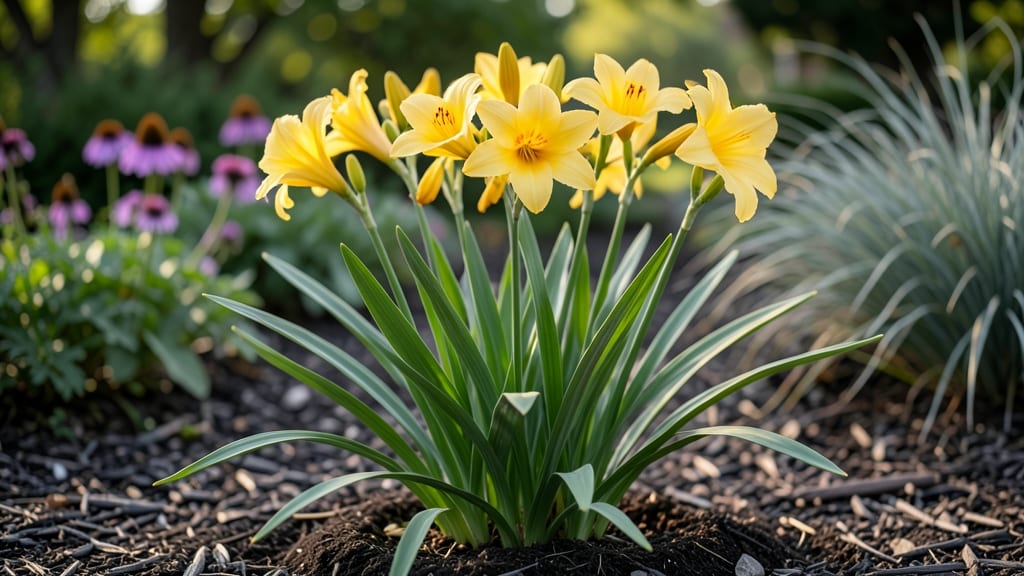
Continuous bloom daylilies create nonstop summer color by flowering repeatedly from early summer until frost in ideal growing conditions (USDA zones 5–9). Choosing the right variety for your climate zone ensures steady blooms, while proper sunlight exposure and soil maintenance extend their flowering season.
These hardy perennials work their magic through a clever biological trick: they produce flowers on stems that emerge from the base rather than the tips, allowing new blooms to form continuously as old ones fade. 🌸 The key to their performance lies in temperature regulation—most varieties need consistent warmth to trigger this cycle, which is why southern climates often see longer bloom times than northern regions.
I've found that varieties like 'Happy Returns' handle cooler mornings better, while 'Stella de Oro' thrives in southern heat, proving that the right selection makes all the difference in your garden's summer display.
What sets continuous bloom daylilies apart is their ability to adapt to different growing conditions once established. They'll reward you with weeks of vibrant color if you provide well-draining soil and at least six hours of sunlight daily. The trade-off?
They demand slightly more maintenance than single-bloom varieties, as consistent moisture and occasional deadheading keep the flowers coming. For gardeners in marginal zones, adding a layer of mulch in early spring can help regulate soil temperatures and extend the blooming window even further.
💡 In This Article
- How Heat Zones Influence Daylily Blooming Cycles
- Best Continuous Bloom Daylily Varieties by Climate Zone
How heat zones influence daylily blooming cycles
Daylilies rely on a biological process called thermoperiodism—their ability to respond to temperature fluctuations—which directly controls when and how often they bloom. These plants require specific daytime warmth (typically 70-85°F) to trigger flower bud formation, but cooler nights (50-60°F) help set those buds for opening.
In warmer climates like USDA zones 8-9, this cycle happens continuously, allowing blooms to appear every 7-10 days throughout the growing season. Meanwhile, in cooler zones (5-6), the process slows, creating shorter bloom windows unless you select cold-hardy varieties.
The magic happens in the plant's meristem—the growth tissue at the base of the stems. Continuous bloom daylilies produce flowers from basal meristems rather than terminal buds, meaning new blooms form even as old ones fade.
This system works best when daytime temperatures consistently stay above 65°F for at least 6-8 hours. In northern climates, early-season blooms may appear in June, but cold snaps can trigger dormancy, causing gaps in flowering.
Southern varieties, however, often bloom from May through October without interruption, thanks to their ability to handle 90°F+ temperatures without stress.
Here's where USDA zones become critical: each zone represents a 10°F temperature range, which directly impacts bloom duration. For example, 'Stella de Oro' thrives in zones 5-9 but may only bloom 8-10 weeks in zone 5 compared to 14-16 weeks in zone 9.
The difference comes down to heat accumulation—warmer zones provide more growing degree days (GDD), the scientific measure of heat energy plants need to develop. A single day at 85°F counts as 20 GDD, while 50°F counts as 0 GDD, explaining why northern gardens see shorter bloom seasons.
Regional climate variations add another layer. Coastal areas often experience milder winters and cooler summers, while inland regions may have hotter days and colder nights. This is why 'Happy Returns'—a mid-season bloomer—performs better in zones 4-7: its buds can tolerate brief cold snaps without aborting.
In contrast, late-season varieties like 'Café au Lait' need prolonged warmth to mature, making them ideal for zones 6-9 where summers last longer. The key is matching your daylily's heat requirements to your local climate patterns, not just the zone number.
What most gardeners overlook is how soil temperature interacts with air temperature. Daylilies prefer soil temps between 60-75°F for optimal root activity, which fuels flower production. In cooler zones, mulching with 3-4 inches of organic matter raises soil temps by 2-4°F, extending the growing season.
This technique is especially valuable for northern gardeners who want to push their daylilies' bloom windows later into fall. The result? A 2-3 week extension of continuous color when combined with proper watering and sunlight exposure.
Consider these three bloom timing patterns based on heat zones:
- Early bloomers (Zones 5-6): 'Happy Returns' and 'Pardon Me' start in late May but may pause in July due to heat stress
- Mid-season performers (Zones 6-8): 'Stella de Oro' blooms from June to September with minimal gaps
- Late-season stars (Zones 7-9): 'Café au Lait' and 'Happy Warrior' extend blooms until first frost in October/November
The takeaway? Your daylily's blooming cycle isn't just about the variety—it's a delicate balance of temperature thresholds, heat accumulation, and soil conditions.
By understanding these factors, you can select plants that match your climate and create a garden that bursts with continuous color from summer through fall. 🌿