
Blooming
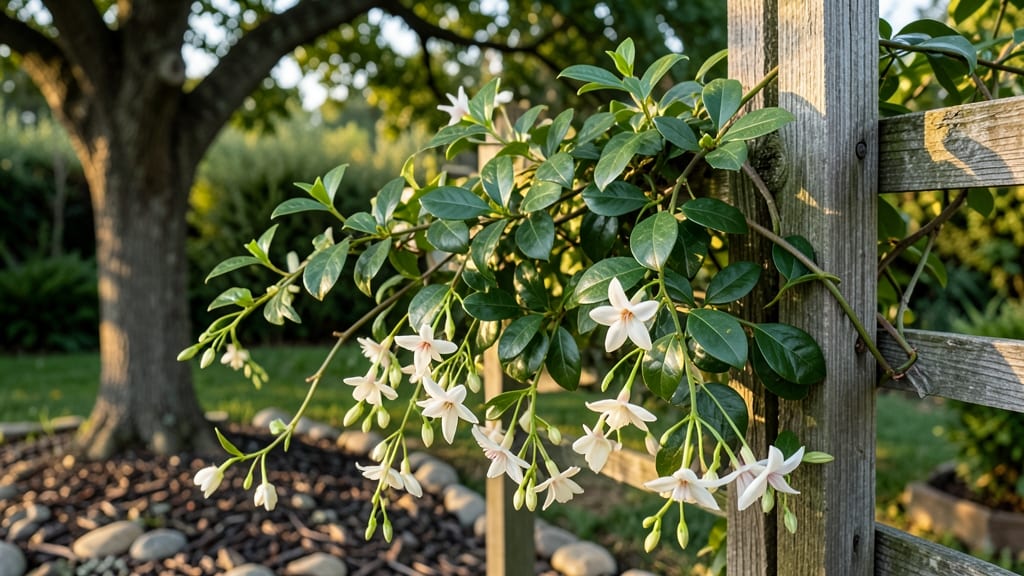
The Confederate Jasmine 🌸 blooms in late spring through summer, with timing that shifts dramatically from Zone 6a to warmer regions—because what triggers its flowers isn’t just the calendar, but your local chill hours and sunlight.
Picture this: your vine bursting with fragrant white blooms by June in Georgia, but still waiting for its cue in Zone 7 until July.
That’s not a mistake—it’s how this Southern classic reads the seasons, and why pruning too early (or not at all) can rob you of weeks of that sweet, star jasmine scent.
Below, I’ll break down the exact months your Confederate Jasmine will bloom based on your zone, the sunlight tricks that make it flower earlier, and the one pruning hack that keeps it reblooming until frost.
You’ll also learn why partial shade in summer isn’t just tolerated—it’s often the secret to longer, more abundant blooms, and how to tell if your plant is stressed (hint: it’s not the wilting you think).
Confederate Jasmine bloom time by USDA Zone: exact months & seasonal patterns
Confederate Jasmine (Trachelospermum jasminoides) is famous for its sweetly fragrant blooms that can turn any garden into a Southern charm hotspot. But when exactly will your vine burst into colorful flowers? The answer depends on your USDA zone, winter chill hours, and even your vine's age.
Unlike some plants that bloom just once, Confederate Jasmine often reblooms—but timing varies dramatically from Zone 7 to Zone 11.
In cooler zones like Zone 7, your vine may need 600-900 chill hours below 45°F to trigger spring blooms, while Zone 10-11 growers might see year-round blooming with minimal winter dormancy.
Understanding these patterns helps you plan pruning, fertilize at the right time, and even extend the bloom season with simple care tweaks.
Key factors affecting bloom time include:
- Winter chill hours (critical for spring blooms)
- Spring temperature spikes (triggers budding)
- Pruning timing (late winter vs. post-bloom)
- Light exposure (full sun vs. partial shade)
| USDA Zone | Primary Bloom Window | Rebloom Window | Chill Hours Needed | Notes |
|---|---|---|---|---|
| Zone 7 | Late May - Early June | August - September | 600-900 hrs | Needs full dormancy; prune after 2nd bloom. |
| Zone 8 | Early May - Late June | July - October | 400-600 hrs | May rebloom if pruned lightly after 1st bloom. |
| Zone 9 | March - April | June - November | 200-400 hrs | Often blooms year-round; minimal dormancy. |
| Zone 10 | January - February | April - December | 0-200 hrs | Little to no dormancy; continuous blooms possible. |
| Zone 11 | Year-round | Year-round | 0 hrs | No winter dormancy; prune to shape 2x/year. |
If you’re in Zone 7 or 8, your Confederate Jasmine will likely follow a two-bloom cycle: a spring flush triggered by winter chill, followed by a summer/fall rebloom if you prune lightly after the first wave. Zone 9-11 growers enjoy more relaxed timing—your vine may bloom year-round with minimal care, though a light pruning in late winter can encourage denser flowers.
Here’s how to read your vine’s signals for bloom timing:
- Bud formation in late winter/early spring = upcoming bloom
- Leaf flush after dormancy = active growth phase
- Delayed blooms? Check for low light or over-fertilizing with nitrogen
One common misconception is that Confederate Jasmine blooms only once. In reality, reblooming is possible—especially in war
How sunlight & location impact Confederate Jasmine blooming: full sun vs. partial shade
Your Confederate Jasmine (Trachelospermum jasminoides) thrives on light exposure, but too much or too little can delay those fragrant blooms you love.
While it’s often called a partial shade plant, the truth is more nuanced—6+ hours of sunlight can actually trigger earlier and more abundant flowering in many climates. The key lies in understanding your microclimate and adjusting care accordingly.
In full sun locations (6+ hours direct light), Confederate Jasmine typically blooms 2-3 weeks earlier than in partial shade. However, this doesn’t mean you should rush to plant it in scorching afternoon sun—morning sun with afternoon shade is ideal for most zones.
The Southern US (Zones 8-11) often handles full sun better, while cooler Northern zones (6-7) may need more protection from intense rays.
Full Sun (6+ Hours Direct Light)
- Earlier blooms (2-3 weeks sooner)
- More abundant flowers in ideal climates
- Stronger vines with better structure
- Best for Zones 8-11
- Risk of leaf scorch in afternoon sun
- May require extra watering
- Can bloom less in extreme heat (Zones 9-11)
- Needs afternoon shade in Zones 7 and below
Partial Shade (3-6 Hours Direct Light)
- Safer for cooler climates (Zones 6-7)
- Reduces water needs
- Prevents leaf burn
- Longer foliage season
- Delayed blooming (1-2 weeks later)
- Fewer flowers overall
- Weaker vine growth
- Needs pruning to encourage blooms
If your Confederate Jasmine is in partial shade but not blooming well, try gradual sun exposure. Move it to a slightly sunnier spot over 2-3 weeks—this helps it acclimate without shock.
For example, if it’s currently getting 3 hours of morning sun, extend that to 5 hours by late spring. Pair this with balanced fertilizer (5-10-10) in early spring to encourage flowering.
In full sun locations, focus on watering deeply 2-3 times per week during summer to prevent stress. Mulch with 2-3 inches of organic matter to retain moisture and protect roots.
I’ve seen Confederate Jasmine in Zone 9 gardens with 6+ hours of sun produce continuous blooms from May through September—but only when given consistent care.
Don’t overlook microclimates in your yard. A north-facing wall might offer partial shade, while a south-facing trellis could provide filtered sun. Test different spots by moving your vine temporarily and observing bloom response.
In my Zone 7 garden, the Confederate Jasmine near the east-facing fence blooms 3 weeks earlier than the one under a large oak tree.
For delayed bloomers, prune in late winter to remove 1/3 of last year’s growth. This stimulates new shoots that will bloom more heavily. Avoid heavy pruning after June 1st, as it can reduce next year’s flowers.
With the right light balance and care adjustments, your Confederate Jasmine can become a fragrant, ever-blooming star—no matter your yard’s sunlight conditions. 🌿