
Blooming
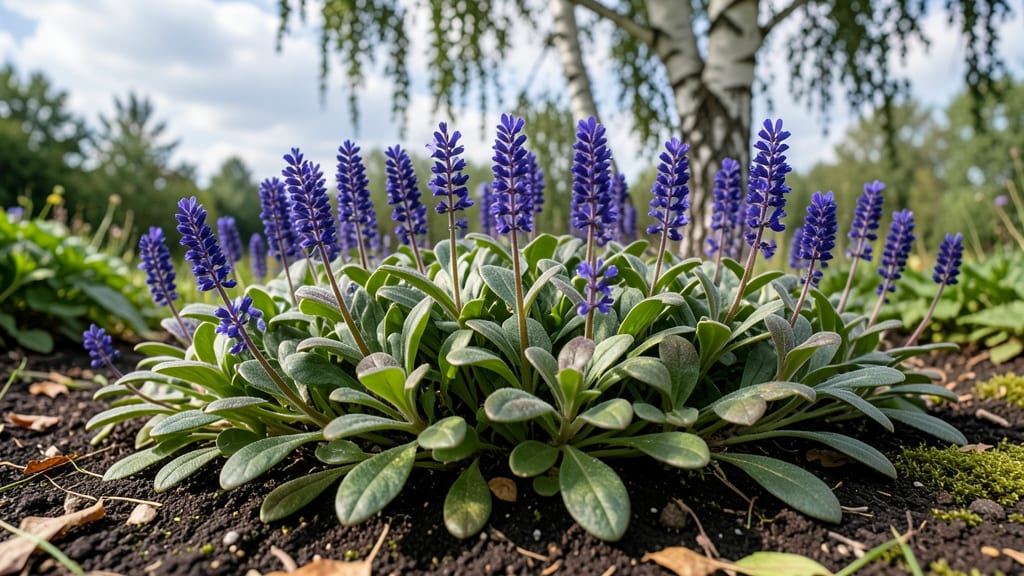
Bugleweed (Ajuga reptans) bursts into heat-triggered purple spikes—usually between late spring and early summer, though timing shifts dramatically by region. 🌿 I’ve watched mine in Zone 5 bloom in May, while friends in Zone 7 see spikes in June, proving this plant reads the thermometer more than the calendar.
The key? Consistent warmth after winter dormancy, not frost dates.
Most varieties flower once per year, but some repeat-bloomers (like Ajuga reptans ‘Chocolate Chip’) may produce a second, lighter flush if summer stays mild. The purple spikes rise above 4- to 6-inch foliage, drawing hummingbirds while suppressing weeds—nature’s multitasker.
To encourage blooms, avoid heavy nitrogen fertilizer (it pushes leaves, not flowers) and prune spent spikes after they brown.
Your garden can coax earlier blooms by planting in full sun (though bugleweed tolerates partial shade) and ensuring well-draining soil. Mulch lightly in spring to warm roots faster—this plant rewards patience with vibrant, long-lasting color that outshines many spring ephemerals.
Just don’t expect perfection: some years, the blooms are modest, but the foliage more than compensates.
For northern climates, protect plants with a light frost blanket if late frosts threaten new growth. In hotter zones, shade cloth in peak summer prevents foliage scorch while keeping blooms coming.
Whether you’re chasing that first purple spike or extending the season, bugleweed delivers—with minimal fuss and maximum impact.
📚 In This Guide
- What you need
- Instructions
- Tips and common mistakes
- Wrapping up and next steps
What you need
- ● Bugleweed seeds or cuttings: Seeds: 50–100 per variety (check seed packets for exact quantities).
- ● Cuttings: 3–5 healthy stems (4–6 inches long) with at least 2–3 leaf nodes.
- ● Growing containers or garden bed: Containers: 6–12 inch pots (1–2 per cutting/seedling).
- ● Garden bed: Well-draining soil with partial shade (dappled sunlight works best).
- ● Potting mix: 1–2 bags of high-quality, peat-based mix (or compost + perlite blend for DIY).
- ● Watering can or spray bottle: With a fine mist nozzle for seedlings.
- ● Pruning shears: Sharp, sterilized shears for trimming cuttings or deadheading.
- ○ Mulch (optional but recommended): 1–2 inches of organic mulch (e.g., straw or shredded leaves) to retain moisture.
- ● Heat tolerance: Bugleweed thrives in consistent warmth (60–80°F). Avoid planting until soil temps reach at least 55°F.
- ● Patience: Seeds may take 14–21 days to germinate; cuttings root in 2–4 weeks.
- ● Sunlight awareness: While bugleweed loves heat, it detests direct midday sun—aim for morning light or filtered shade.
How to predict and encourage bugleweed's heat-triggered blooms
Here's how I time blooms down to the week by tracking temperature cues and variety traits.
🌡️ Step 1: Understand Your Variety's Heat Threshold
Bugleweed (Ajuga reptans) blooms only when soil temperatures hit 65°F consistently for at least 10 days. The 'Chocolate Chip' variety typically flowers 2-3 weeks earlier than standard types because its foliage matures faster. I always check soil temps with a probe at 4 inches deep—surface temps can be misleading.
Watch for purple flower spikes to emerge from leaf axils in spring. The 'Catlin's Giant' cultivar produces 3-inch spikes while 'Multicolor' stays shorter but more prolific. If your plants stay green without flowering, they're either too shaded or haven't hit their heat trigger yet.
☀️ Step 2: Optimize Sun Exposure for Flowering
Bugleweed thrives in partial shade (3-6 hours of morning sun) but needs that direct light to trigger blooms. I position mine where they get dappled sunlight through trees—this prevents leaf scorch while still hitting the 65°F soil threshold. Too much afternoon sun will cause foliage to crisp before flowering begins.
If your plants aren't blooming, move them 2-3 feet closer to a light source for 2 weeks. You'll see new flower buds form within 7-10 days of improved light exposure. The key is morning sun—afternoon heat can stress the plants before they've set buds.
💧 Step 3: Adjust Watering to Encourage Blooms
Once soil temps hit 60°F, reduce watering to once weekly unless rainfall exceeds 1 inch. Bugleweed stores moisture in its rhizomes, and overwatering in warm soil prevents flowering. I test moisture by pushing a finger 2 inches deep—if it feels damp, wait another day.
During bloom time, maintain even moisture but never let water pool. The flower spikes need steady hydration to develop fully. If buds appear but wilt before opening, your watering's too inconsistent. A mulch layer of 1 inch helps regulate soil temps and moisture retention.
✂️ Step 4: Prune Strategically After First Blooms
Deadhead spent flower spikes immediately after they fade to encourage a second flush of blooms later in the season. I use clean pruners to cut back to the first set of healthy leaves—this prevents disease while stimulating new growth. The plant will send up new flower stems within 3-4 weeks if temps stay above 60°F.
Never cut into old wood—bugleweed blooms on new growth only. If you see bare stems with no leaf buds, you've pruned too aggressively. The goal is to remove only the dead flowers, not the foliage that feeds the next bloom cycle.
🌿 Step 5: Monitor for Heat Stress Symptoms
If daytime temps exceed 85°F, bugleweed may skip flowering entirely. Watch for yellowing leaves or drooping foliage—these are signs the plant is conserving energy. Move containers to shadier spots immediately and increase watering to every 4 days until temps drop below 80°F.
In extreme heat, I've seen plants revert to vegetative growth—this isn't permanent. Once temps stabilize, they'll rebound and flower normally the following spring. The key is preventing wilting during critical bud formation periods (typically May-June in most climates).
Tips & tricks for perfect bugleweed bloom timing
Mastering the art of bugleweed blooms comes down to understanding its heat triggers and variety traits—here’s how to get it right every time.
Heat Threshold Precision: The 65°F soil temperature threshold is non-negotiable, but consistency matters just as much. I’ve found that using a soil thermometer at 4 inches deep (not surface temps!) gives the most accurate reading. If your garden experiences temperature swings, consider using a mulch layer of 1-2 inches to help stabilize soil temps and encourage that critical 10-day window of warmth.
Sunlight Strategy: That 3-6 hours of morning sun is your golden window—literally. Too much afternoon sun can scorch leaves before buds even form. I’ve had success positioning plants where they get dappled light through deciduous trees. If your bugleweed isn’t blooming, try moving it 2-3 feet closer to a light source for 2 weeks—you’ll often see buds appear within 7-10 days of this adjustment.
Watering Wisdom: Once soil temps hit 60°F, the watering game changes. I’ve learned the hard way that overwatering at this stage can drown out the heat signal bugleweed needs to bloom. Test moisture by pushing your finger 2 inches deep—if it feels damp, wait another day. During bloom time, maintain even moisture without pooling, and that 1-inch mulch layer works wonders for retaining moisture while regulating temps.
Pruning Payoff: Deadheading spent spikes immediately after they fade is the secret to a second flush of blooms. I cut back to the first set of healthy leaves using clean pruners—this prevents disease while stimulating new growth. The key is patience: if temps stay above 60°F, you’ll see new flower stems emerge within 3-4 weeks. Never cut into old wood, or you’ll miss out on next season’s blooms entirely.
Pro Tips for Bugleweed Bloom Time
- Mastering the art of bugleweed blooms comes down to understanding its heat triggers and variety traits—here’s how to get it right every time.
- Heat Threshold Precision: The 65°F soil temperature threshold is non-negotiable, but consistency matters just as much.
- Sunlight Strategy: That 3-6 hours of morning sun is your golden window—literally.
Frequently asked questions
Got questions about bugleweed’s stunning purple blooms and their heat-triggered magic? We’ve got answers!
Here are some of the most common queries gardeners and plant lovers ask—plus quick, actionable tips to help you time those vibrant spikes perfectly.
When exactly does bugleweed bloom, and how does heat affect it?
Bugleweed (Ajuga reptans) typically blooms in late spring to early summer (April–June in most U.S. zones), but heat triggers its peak. Warmer temperatures (above 70°F/21°C) accelerate blooming, while prolonged drought can delay or reduce flowers. For prolonged blooms, provide consistent moisture but well-draining soil to avoid stress.
Can I control or extend bugleweed’s bloom time?
Yes! To extend blooming, prune spent flower spikes after they fade (but before seeds form) to encourage a second flush. For earlier blooms, start plants indoors 6–8 weeks before last frost or choose heat-tolerant varieties like ‘Chocolate Chip’ or ‘Catlin’s Giant’. Avoid heavy fertilizing during bloom—focus on balanced feed in early spring instead.
Why isn’t my bugleweed flowering this year?
Common culprits include:
- Too much shade: Bugleweed thrives in partial sun (4–6 hours/day). Move it to a sunnier spot if blooms are sparse.
- Overcrowding: Thin dense patches to improve air circulation and light exposure.
- Nutrient imbalance: Too much nitrogen (from lawn clippings or high-N fertilizer) promotes leafy growth over flowers. Switch to a low-N, high-P fertilizer (e.g., 5-10-10) in early spring.
- Age or stress: Mature plants (3+ years) bloom better. Divide clumps every 2–3 years to rejuvenate growth.
Are there bugleweed varieties that bloom later in the season?
Most bugleweed blooms in spring, but a few varieties offer extended or repeat blooms:
- ‘Catlin’s Giant’: Tall spikes (12–18") with prolonged purple blooms (May–July).
- ‘Chocolate Chip’: Dark foliage with late-spring to early summer blooms and heat tolerance.
- ‘Multicolor’: Variegated leaves and second flushes if deadheaded.
Do I need to do anything special to encourage pollinators during bloom?
Bugleweed’s nearly year-round foliage and spring blooms attract bees, butterflies, and hummingbirds—but you can boost pollinator visits with these tips:
Pro tip: Water in the morning to keep blooms hydrated and visible to pollinators!
Wrapping up and next steps
Bugleweed’s heat-triggered purple spikes are a stunning reminder of nature’s resilience—especially when timed right! Whether you’re growing Ajuga reptans for its vibrant blooms or Ajuga pyramidalis for its compact charm, understanding its bloom time helps you create a thriving garden.
With the right care, you’ll enjoy those cheerful spikes from late spring to early summer, adding a pop of color to your landscape.
Ready to level up your garden game? 🌿 Start by monitoring your bugleweed’s soil and sunlight needs—or experiment with pruning to encourage even more blooms next season! Your green thumb is about to shine brighter than those purple spikes. 🌸