
Flowers
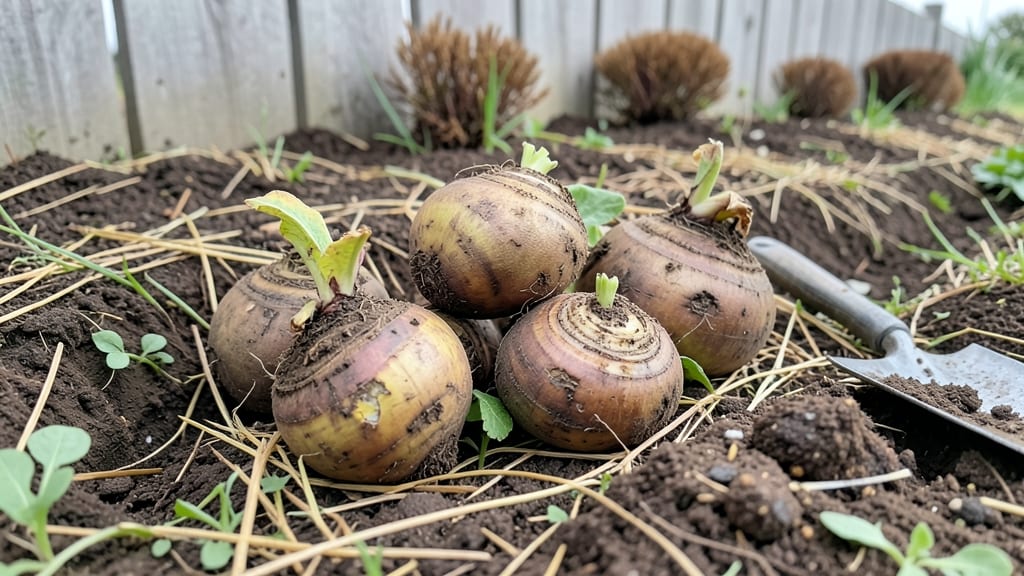
Dahlias are indeed bulb-like tubers, not true bulbs, and require careful handling to thrive year after year. These thickened underground stems store energy for regrowth and must be dug, dried, and overwintered properly in colder climates.
These underground stems—often mistaken for bulbs—act more like storage batteries for the plant. Unlike true bulbs, which have concentric layers, dahlias develop a network of thickened roots that swell with nutrients to fuel next year’s blooms.
That’s why they need a gentler approach: cutting back foliage too early or storing them damp can trigger rot, while proper curing in a cool, dry spot keeps them viable for replanting.
Think of them as nature’s version of a potato—both are modified stems storing energy, but dahlias are far more delicate.
I’ve learned the hard way that even a slight misstep in drying (like leaving them in wet soil) can mean the difference between a lush summer display and a sad pile of mush.
The key is patience: let those tubers dry thoroughly before storing them in a breathable container with just enough moisture to keep them from shriveling.
💡 In This Article
- Dahlias Tubers vs True Bulbs: Key Differences
- Step-by-Step Guide to Storing Dahlia Tubers Over Winter
Dahlias tubers vs true bulbs: key differences
Here's what actually happens underground: dahlias grow tuberous roots rather than true bulbs. While tulips or daffodils develop concentric layers of fleshy scales (like an onion), dahlias produce a network of thickened stems that resemble potatoes or sweet potatoes.
These tubers can reach 6-12 inches in length and develop multiple "eyes" (growth points) along their surface, unlike the single basal plate found in true bulbs.
The key difference lies in their growth mechanism. True bulbs store nutrients in modified leaves (tunics), while dahlia tubers store energy in modified stems.
This means their water content is higher (about 80-85% when fresh) compared to bulbs (60-70%), making them far more susceptible to rot if not properly dried.
The fibrous texture of dahlia tubers also makes them more delicate during handling—squeezing or cutting too aggressively can damage the vascular system that transports nutrients.
This structural difference explains why dahlias can't be planted as deeply as true bulbs. While tulip bulbs thrive when buried 6-8 inches below soil, dahlia tubers need only 4-6 inches of coverage to prevent rot while allowing sufficient air circulation.
The shallow planting also helps the tubers warm up faster in spring, triggering earlier growth. What most people don't realize is that dahlia tubers actually continue growing after being dug—if left in damp soil for even 24 hours, they'll start sprouting new roots, making them vulnerable to fungal infections.
Consider these key factors when comparing care requirements:
- Storage temperature: True bulbs thrive at 40-50°F with 50-70% humidity, while dahlia tubers need 35-45°F and 40-50% humidity to prevent desiccation
- Drying time: Bulbs can air dry for 1-2 weeks, but dahlias require 2-3 weeks of careful drying to reduce moisture content safely
- Revival timing: Bulbs can be planted as early as 4-6 weeks before last frost, while dahlias need 8-10 weeks of warm soil to establish roots
The science behind this involves respiration rates. Dahlia tubers have higher metabolic activity than bulbs, meaning they consume stored nutrients more quickly during dormancy. That's why they need cooler storage temperatures—anything above 50°F can trigger premature sprouting.
I've seen firsthand how tubers stored at 60°F will develop fuzzy mold within weeks, while properly stored tubers remain firm and viable for 3-5 years.
What makes this even more interesting is how dahlia tubers regenerate after being cut. Unlike true bulbs that would die if divided, dahlia tubers can be separated into pieces as long as each section has at least one eye and a small portion of the stem.
This is because their growth centers are distributed along the tuber rather than concentrated in one area. The trade-off? Each division requires careful monitoring during the first growing season to ensure the new tuber develops properly.