
Blooming
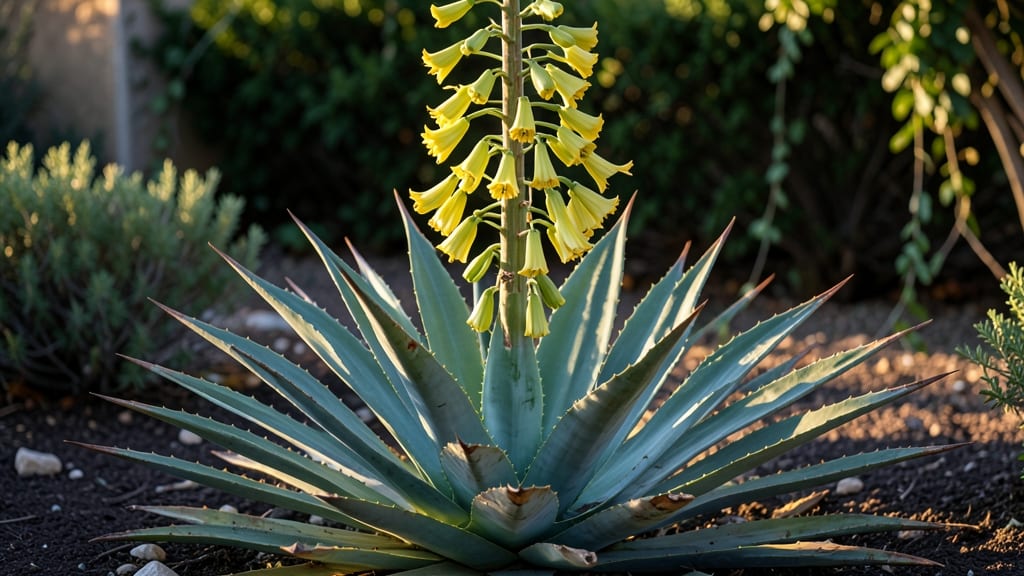
That towering agave bloom stalk is nature's grand finale—and it's worth every inch. 🌱 The first time I saw my agave send up its dramatic 10-foot spike, I knew I'd never ignore these slow-growing giants again.
This single bloom marks the end of your plant's life cycle, but the real magic happens in the pups that form at its base.
Most agaves take 10-20 years to bloom, but with the right conditions—full sun, well-draining soil, and minimal interference—they'll reward you with that spectacular display. The stalk itself can take 6-12 months to fully emerge, and once it does, it's all about balancing aesthetics with plant health.
You'll want to decide early whether to leave it for drama or remove it to protect your plant.
What you'll end up with is a transformed garden corner: the bold architectural lines of the bloom stalk against the deep green rosette creates a focal point that lasts for months.
Even after the flowers fade, the dried stalk adds winter interest. The real prize? Those pups—ready to propagate and start your next generation of agaves.
Here's where it gets interesting: agaves don't just bloom once. With proper care, your pups can grow into their own showstopping plants in 3-5 years. The secret is in the soil prep and watering routine—both before and after that first dramatic spike appears.
Let's get into the details that make all the difference.
📚 In This Guide
- What you need
- Instructions
- Tips and common mistakes
- Wrapping up and next steps
What you need
- ● Pro Tip: 💡 If your agave is indoors, place it near a south-facing window or under a grow light (12+ hours/day) to mimic natural sunlight.
Step-by-step guide to encouraging a longer agave bloom stalk
Here's how to give your agave the best chance at a stunning, extended bloom—without stressing the plant.
🌱 Step 1: Identify a Healthy, Mature Agave
Only agaves over 10 years old typically produce bloom stalks, and you'll spot the first sign when a thick, sturdy shoot emerges from the center. Choose a plant with firm, upright leaves and no signs of yellowing or rot at the base. I always check for a thick, woody stem—this indicates the plant has stored enough energy for flowering.
If your agave is younger than 10 years, don’t force it. Pushing a bloom too early weakens the plant permanently. Instead, focus on giving it bright, indirect light and well-draining soil to build strength over time. You’ll know it’s ready when the center leaves start curling inward slightly—that’s nature’s way of signaling it’s prepping for bloom.
☀️ Step 2: Provide Ideal Growing Conditions
Agaves need full sun (6+ hours daily) to produce strong bloom stalks, but they also crave consistent warmth. Place your plant in a spot where temperatures stay between 65-85°F—too cool, and the stalk will grow weak and leggy. If you’re in a cooler climate, a south-facing window or grow light for 12-14 hours a day helps.
Water sparingly—agaves store moisture in their leaves, so overwatering drowns the roots and starves the bloom. Stick your finger 1-2 inches into the soil; if it’s dry, water deeply until it drains from the bottom. If it’s still damp, wait. I’ve seen blooms fail entirely when the plant gets soggy roots, so drainage is non-negotiable—use a pot with holes or a well-amended garden bed.
💧 Step 3: Support the Bloom Stalk as It Grows
Once the stalk appears, it can grow 6-12 feet tall in just a few weeks, so staking is essential. Use 3-4 bamboo stakes or a metal garden cage to gently tie the stalk as it elongates. I like to secure it loosely with soft plant ties—too tight, and you’ll restrict growth. Check the ties weekly and adjust as the stalk thickens.
Watch for wind or rain damage—agave stalks are brittle when young. If you’re outdoors, move the plant to a sheltered spot during storms. You’ll know the stalk is stabilizing when it develops small buds along the top; this is when it’s strongest and least likely to snap.
✂️ Step 4: Prune and Maintain After Blooming
The bloom itself is dramatic but exhausting for the agave. Once flowering ends, the mother plant will die back—this is normal. However, you can harvest pups (offsets) that form at the base before removing the old stalk. Use sterilized pruners to cut pups cleanly, then replant them in well-draining soil to grow new agaves.
After the bloom fades, trim the dead stalk 2-3 inches above the base to redirect the plant’s energy to the pups. Don’t rush this—wait until the stalk turns completely brown. I’ve seen gardeners leave dead stalks too long, which attracts pests, so clean up promptly but gently.
🌿 Step 5: Extend Future Blooms with Proper Care
Agaves bloom only once in their lifetime, but you can maximize their lifespan to encourage future generations. Keep the pups in bright light and warm conditions, and they’ll mature in 5-10 years. Feed them low-nitrogen fertilizer (like 5-5-5) in spring to build energy for future blooms.
Here’s the thing—patience is key. A well-cared-for agave will produce more pups, each with the potential to bloom spectacularly in their own time. I’ve watched my agaves go from a single stalk to a cluster of thriving pups, and each new bloom feels like a bonus reward for the wait.
Tips & tricks for encouraging a stunning agave bloom
Took me years of trial and error to learn these key tricks—here's how to maximize your agave's dramatic display without stressing the plant.
Age Matters: That 10-year minimum isn't arbitrary—it's the sweet spot where agaves store enough energy for a strong bloom. I've watched younger plants (even 8-year-olds) try to bloom and end up struggling. If your agave is younger, focus on building its strength with bright light and well-draining soil first. The curling of center leaves is your clearest signal it's ready—nature's way of telling you it's prepped for the big show.
Light and Temperature Balance: The 65-85°F range is critical for stalk development, but don't overlook the 12-14 hours of light in cooler climates. I've seen blooms fail completely when plants get inconsistent light—especially in winter. For indoor agaves, rotate them weekly so all sides get even exposure. And here's the thing about grow lights: they should mimic natural sunlight, not just provide any light. LED grow lights with full spectrum work best for that 12-14 hour daily requirement.
Staking Strategy: Those 3-4 bamboo stakes aren't just for looks—they're essential for supporting the 6-12 foot stalk as it grows. I learned this the hard way when my first bloom snapped under its own weight. Use soft plant ties and check them weekly as the stalk thickens. The key is gentle support—too tight and you'll restrict growth, too loose and it won't hold. Watch for those small buds forming at the top—they're your sign the stalk is stabilizing and can handle more wind exposure.
Post-Bloom Care: The 2-3 inch trim after the stalk turns completely brown is where most gardeners go wrong. I've seen people cut too soon and attract pests, or wait too long and miss the chance to redirect energy to pups. Sterilize your pruners first to prevent infection, then make clean cuts. The pups you harvest will give you multiple chances for future blooms—each one a bonus reward for your patience.
Pro Tips for Agave Bloom Stalk
- Took me years of trial and error to learn these key tricks—here's how to maximize your agave's dramatic display without stressing the plant.
- Age Matters: That 10-year minimum isn't arbitrary—it's the sweet spot where agaves store enough energy for a strong bloom.
- Light and Temperature Balance: The 65-85°F range is critical for stalk development, but don't overlook the 12-14 hours of light in cooler climates.
Frequently asked questions
Got questions about agave bloom stalks? You’re not alone—these dramatic displays can be as fascinating as they are mysterious! Below, we’ve rounded up the most common questions (and answers) to help you navigate growing, caring for, and even troubleshooting your agave’s stunning quiote or inflorescence.
How long does an agave bloom stalk last?
The agave bloom stalk typically lasts 2–4 weeks, though some varieties (like Agave americana) can extend to 6 weeks. Once the stalk emerges, it grows rapidly but will eventually die back after flowering. Pro tip: If you want to preserve seeds, collect them during this window!
When is the best time to harvest agave bloom stalks?
Harvest the stalk just before it fully opens (when the bud is still tight but visible). This ensures the best flavor for mezcal or tequila production. For ornamental use, wait until the stalk is fully upright and vibrant. Warning: Harvesting too early may stunt flavor development.
Will cutting off the bloom stalk kill my agave plant?
Yes! The bloom stalk is the plant’s one-time reproductive effort, and removing it will kill the mother plant (though it may produce offsets/pupils first). If you’re growing agave for tequila or mezcal, leave the stalk—it’s part of the process!
Can I force an agave to bloom earlier or later?
Agaves bloom based on maturity (often 7–15 years old) and environmental cues (like temperature shifts). While you can’t force an early bloom, providing consistent warmth (80–90°F) and bright light may encourage faster growth. Patience is key—these plants bloom on their own timeline!
Why isn’t my agave producing a bloom stalk?
Common reasons include:
- Age: Young agaves (under 5 years) won’t bloom.
- Stress: Overwatering, poor drainage, or extreme temps can delay blooming.
- Variety: Some agaves (like Agave parryi) rarely bloom in cultivation.
Try repotting in well-draining soil and placing it in full sun to encourage maturity.
Wrapping up and next steps
Watching your agave bloom its dramatic stalk is a rewarding experience—one that turns your desert garden into a living masterpiece! 🌵✨ With the right care, patience, and a few simple tricks, you can coax your agave into its stunning display and even extend its show.
Whether you’re a seasoned gardener or just starting out, this guide gives you the tools to nurture your plant’s potential.
Now that you’re equipped with the know-how, why not take the next step? Share your agave’s journey with fellow plant lovers online, experiment with different care techniques, or even propagate those pups for more blooms down the road. Happy growing—your agave’s next showstopper display is waiting! 🌟