
Blooming
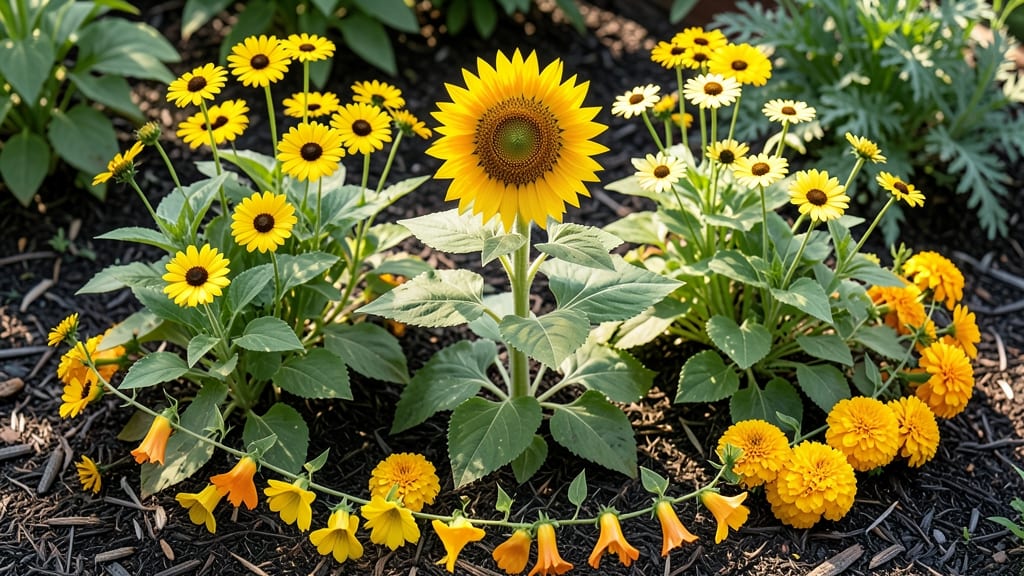
Yellow bloom flowers turn every season into a celebration. 🌻 These sun-kissed stars—like coreopsis, marigolds, and black-eyed Susans—keep your garden buzzing with color from spring to frost, while attracting bees and butterflies that make your yard feel alive.
What makes them special? Many of these plants are prolific rebloomers, meaning they don’t just shine once—they put on multiple shows all season long. Pair a tall sunflower with shorter coreopsis for height contrast, or mix marigolds with purple salvia for a bold, cottage-garden vibe.
The best part? Most thrive with minimal fuss, making them perfect for busy gardeners or small spaces.
Imagine a border bursting with golden daffodils in spring, followed by cheerful zinnias in summer, and then late-season asters holding their own against autumn’s cooler tones. These flowers don’t just fill gaps—they create nonstop visual interest that keeps your garden looking fresh and inviting, no matter the season.
Whether you’re designing a wildflower meadow, a modern container display, or a classic cottage border, yellow blooms bring warmth and energy. They’re the secret weapon for gardens that feel effortlessly vibrant year after year.
What Triggers Pale Petals
When your vibrant blooms start fading into a dull yellow, it’s often a sign that something’s off—but not always what you’d expect. These shifts in color can happen for biological, environmental, or even cultural reasons. Understanding the root causes helps you fix the issue before your garden loses its luster.
Yellowing petals are often a cry for help from your plants, signaling nutrient deficiencies or toxic buildups. Here’s the science behind it:
- Nitrogen Deficiency: While nitrogen fuels leafy growth, too little can cause pale, yellowish blooms. Plants prioritize leaves over flowers, leaving petals starved for chlorophyll. Test your soil—if levels dip below 0.5%, amend with compost or slow-release fertilizer.
- Magnesium or Iron Lack: These micronutrients are critical for chlorophyll production. Yellowing between veins (a condition called interveinal chlorosis) is a classic sign. Epsom salt (magnesium sulfate) or chelated iron sprays can revive struggling blooms.
- Over-Fertilization with Phosphorus: Too much phosphorus can lock out other nutrients, leading to weak, yellowish flowers. Flush soil with water and switch to a balanced 10-10-10 fertilizer to restore equilibrium.
💡 Pro Tip: If your soil pH is < 6.0, iron and magnesium become unavailable. Test your soil and adjust with lime (to raise pH) or sulfur (to lower pH) as needed.
Extreme conditions—whether too much sun or scorching heat—can turn petals yellow faster than you’d think. Here’s how:
- Sunburn: Intense midday sun (especially in hot climates) can bleach petals, causing a yellowish cast. Plants like dahlias or roses are particularly sensitive. Provide afternoon shade with a sheer curtain or plant taller species nearby.
- Heat Stress: Temperatures above 90°F (32°C) disrupt photosynthesis, leading to premature petal yellowing. Mulch heavily to retain moisture and water deeply in the morning to cool roots.
- Cold Shock: Sudden temperature drops (like a frost warning) can cause chilling injury, turning petals yellow or brown. Use frost cloths or move potted plants to sheltered spots.
🌡️ Quick Fix: If heat is the issue, mist flowers lightly in the evening to lower surface temperatures without over-saturating soil.
Water is a double-edged sword—both overwatering and drought stress can trigger yellow blooms by disrupting nutrient uptake.
| Problem | Why It Happens | Solution |
|---|---|---|
| Underwatering | Roots struggle to absorb nutrients, causing oxidative stress that turns petals yellow. Common in sandy soils. | Water 1–2 inches deep per week (check soil moisture—top inch should be dry). Use drip irrigation for consistency. |
| Overwatering | Oxygen deprivation in soggy soil leads to root rot, starving flowers of nutrients. Yellowing often starts at the base. | Improve drainage with perlite or sand. Let soil dry 1 inch between waterings. |
| Hard Water Buildup | Excess minerals (like calcium) in tap water can clog soil pores, reducing nutrient availability. | Use rainwater or filtered water for blooming plants. Flush soil annually with distilled water. |
✨ Bonus: If your yellow blooms coincide with wilting leaves, it’s likely a watering issue. Adjust based on soil type—clay holds moisture longer than sand.
Not all yellow blooms are nutrient-related—pathogens and pests can hijack your flowers’ color too.
- Powdery Mildew or Botrytis: Fungal infections thrive in humid, stagnant air, causing petals to yellow and develop gray mold. Prune affected blooms immediately and apply neem oil or copper fungicide.
- Aphids or Spider Mites: These sap-suckers inject toxins that distort and yellow petals. Look for sticky residue (honeydew) on buds. Blast off with water or use insecticidal soap.
- Bacterial Leaf Spot: Yellow halos around spots on petals? This Xanthomonas bacteria thrives in wet conditions. Remove infected flowers and sterilize pruners with rubbing alcohol.
🔥 Prevention Tip: Space plants for airflow and avoid overhead watering to deter fungal spread. Reflective mulch (like aluminum foil) can also repel pests.
Yellow blooms aren’t always a death sentence—they’re your plants’ way of communicating. By tackling the root cause (literally!), you’ll restore that vibrant color and keep your garden in full, happy bloom.
Revive your fading blooms naturally
Reviving yellowing flowers—whether on your prized reblooming perennials or vibrant annuals—starts with identifying the root cause. Below, we’ve mapped out practical, step-by-step solutions tailored to each issue, plus prevention tips to keep your garden thriving. No green thumb required!
Signs: Yellow leaves with soggy soil, wilting stems, or mushrooms near the base. Why it happens: Too much moisture suffocates roots, leading to rot and nutrient loss.
How to fix it: 🔥 Step 1: Stop watering immediately – Let the soil dry out completely before watering again. 🍳 Step 2: Improve drainage – Mix in coarse sand or perlite (1 part to 3 parts soil) or plant in raised beds. 👨🍳 Step 3: Repot if needed – If roots are mushy, trim the affected parts and replant in fresh, well-draining potting mix. ⏰ Step 4: Monitor moisture – Stick your finger 1 inch into the soil; water only when dry.
💡 Prevention tip: Use self-watering pots with drainage holes or mulch (like pine bark) to regulate moisture without overdoing it.
Signs: Yellowing edges on leaves, crispy petals, or flowers drooping in afternoon heat. Why it happens: Intense sunlight can scorch delicate blooms, especially in hot climates or during summer peaks.
How to fix it: 🔥 Step 1: Provide afternoon shade – Use lightweight shade cloth (30-50%) or move potted plants to a dappled-light spot. 🍳 Step 2: Water deeply in the morning – Aim for 1-1.5 inches per week, soaking the root zone (not just the surface). 👨🍳 Step 3: Mulch heavily – Apply 2-3 inches of organic mulch (straw or wood chips) to retain moisture and cool roots. ⏰ Step 4: Prune damaged foliage – Snip off yellowed or scorched leaves to redirect energy to healthy growth.
🔥 Pro tip: Yellow marigolds and coreopsis are heat-tolerant picks—swap in these if your current blooms struggle!
Signs: Pale yellow leaves (especially older ones), stunted growth, or flowers that bloom weakly. Why it happens: Poor soil lacks nitrogen, phosphorus, or micronutrients critical for vibrant blooms.
How to fix it: 🔥 Step 1: Test your soil – Grab a DIY soil test kit (or send a sample to a local extension office) to identify deficiencies. 🍳 Step 2: Fertilize smartly –
- For nitrogen (green leaves): Use fish emulsion or compost tea (every 4-6 weeks).
- For phosphorus (blooms): Switch to a balanced bloom booster (like 5-10-5 fertilizer) at half-strength.
👨🍳 Step 3: Add organic matter – Work in compost or worm castings to improve soil structure and nutrient availability. ⏰ Step 4: Avoid over-fertilizing – Too much salt can burn roots; always water after applying fertilizer.
🌡️ Prevention tip: Top-dress with slow-release granules (like Osmocote) in early spring to feed plants all season.
Signs: Yellowing leaves with holes, spots, or sticky residue, wilting, or black/brown patches. Why it happens: Aphids, spider mites, fungal infections (like powdery mildew), or bacterial leaf spot can drain energy from flowers.
How to fix it: 🔥 Step 1: Identify the culprit –
- Pests? Check undersides of leaves for tiny bugs or webs.
- Fungus? Look for white powder or dark spots.
🍳 Step 2: Treat naturally –
- Pests: Spray with neem oil or insecticidal soap (reapply every 5-7 days).
- Fungus: Apply baking soda spray (1 tsp baking soda + 1 quart water + a drop of soap) or copper fungicide.
👨🍳 Step 3: Prune and dispose – Remove infected leaves or stems and sterilize pruners with rubbing alcohol. ⏰ Step 4: Improve airflow – Space plants 3-6 inches apart and avoid overhead watering to prevent future outbreaks.
✨ Prevention tip: Rotate crops annually and plant pest-repelling companions (like marigolds or basil) near your bloomers.
Signs: Flowers blooming weakly or fewer blooms than usual, despite good care. Why it happens: Overgrown plants exhaust energy on foliage instead of blooms, or deadheading wasn’t done.
How to fix it: 🔥 Step 1: Deadhead aggressively – Snip off spent blooms (down to the first set of healthy leaves) to encourage reblooming. 🍳 Step 2: Prune for shape – Trim 1/3 of the oldest stems to stimulate new growth (use clean, sharp shears). 👨🍳 Step 3: Fertilize for blooms – Switch to a low-nitrogen, high-phosphorus fertilizer (like 10-20-10) to boost flowering. ⏰ Step 4: Watch for new shoots – Within 2-4 weeks, you should see fresh foliage and buds forming.
🎯 Pro tip: Reblooming perennials (like black-eyed Susans or coneflowers) thrive with late-summer pruning—don’t wait until fall!
📊 Quick Fix Cheat Sheet:
| Problem | Fast Solution | Prevention |
|---|---|---|
| Overwatering | Let soil dry; improve drainage | Mulch + self-watering pots |
| Heat Stress | Afternoon shade + morning water | Heat-tolerant varieties |
| Nutrient Deficiency | Soil test + balanced fertilizer | Compost top-dressing annually |
| Pests/Disease | Neem oil or baking soda spray | Companion planting + airflow |
| Weak Blooms | Deadhead + prune + bloom fertilizer | Regular deadheading + seasonal pruning |
Frequently asked questions
Which yellow flowers bloom all summer long?
For nonstop color, try coreopsis (drought-tolerant and cheerful) or black-eyed Susans—both rebloom prolifically from early summer to frost. Zinnias (especially 'Benary's Giant' mix) also deliver 3-4 months of blooms if you deadhead regularly. These work beautifully in borders or containers!
Can I mix yellow flowers with other colors?
Yellow pairs perfectly with purple (like salvia or petunias) for a bold cottage-garden look, or deep red (like geraniums) for a warm, sun-drenched vibe. For a soft contrast, try blues (like delphiniums) or whites (like shasta daisies). The key is height variation—place taller flowers (sunflowers) at the back!
Are yellow flowers good for pollinators?
Yes! Many yellow bloomers are bee and butterfly magnets. Top picks include coreopsis, black-eyed Susans, and marigolds—all attract pollinators while resisting deer. For extra buzz, pair them with purple coneflowers or lavender. Just avoid pesticides, as they harm beneficial insects.
How do I keep yellow flowers blooming all season?
Deadhead spent blooms weekly to encourage reblooming, and fertilize lightly with a balanced bloom booster (like 10-10-10) every 4-6 weeks. For perennials, prune back 1/3 of the plant in early summer. Water deeply 1-2 inches per week—consistency matters more than frequency!
What’s the easiest yellow flower for beginners?
Start with marigolds—they’re disease-resistant, thrive in heat, and bloom nonstop with minimal care. Zinnias are another great choice: sow seeds directly in the garden, and they’ll reward you with bright blooms in just 6-8 weeks. Both love full sun and well-drained soil!