
Blooming
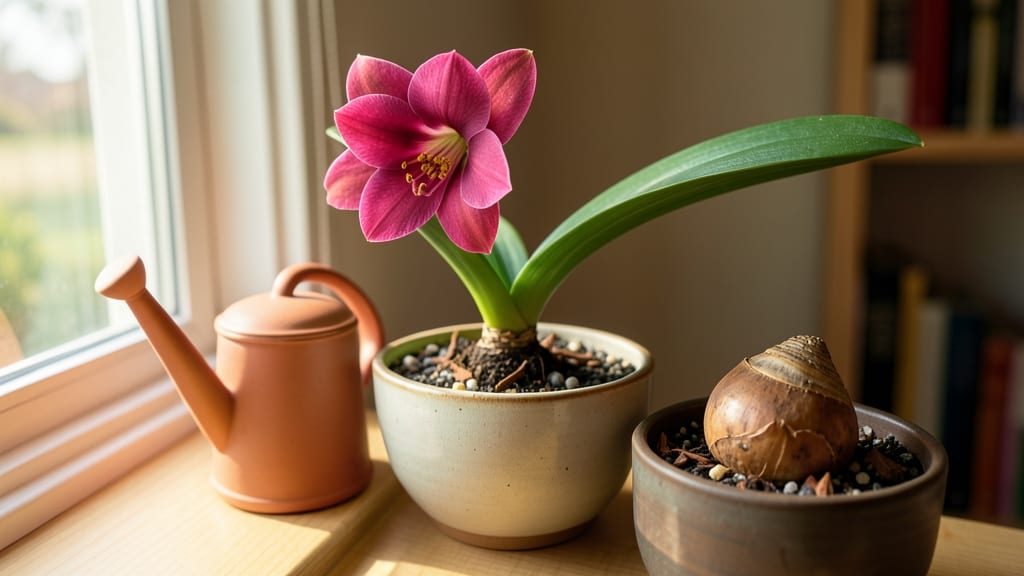
Your amaryllis bulbs will bloom again with the right care after their first flowering, requiring a 6-8 week dormant period in darkness, balanced hydration, and bright indirect light during active growth. Timing and environmental conditions are everything for triggering those stunning flower stems.
Amaryllis bulbs store energy during their blooming phase, and that stored energy is what fuels their next round of flowers. 🌱 The key is mimicking their natural cycle—when they stop blooming, they need a break from water and light to reset.
I've found that many gardeners skip this critical dormancy phase, which is why their amaryllis never reblooms. Even a small pot with well-draining soil can make a big difference in how well the bulb recovers and prepares for its next spectacular show.
What's fascinating is how temperature plays a role too. Bulbs need cooler conditions during dormancy to properly rest, typically between 50-60°F. Once you reintroduce warmth and light, that's when the magic happens—the bulb starts sending up new shoots.
It's like giving your plant a spa day before its big performance!
💡 In This Article
- Understanding Amaryllis Bulb Dormancy and Growth Cycles
- Step-by-Step Guide to Encouraging Amaryllis Reblooming
Understanding amaryllis bulb dormancy and growth cycles
Amaryllis bulbs are fascinating because they follow a precise biological rhythm where energy storage and dormancy are the foundation for reblooming. During their active growth phase, these bulbs store carbohydrates and nutrients in their thick, fleshy scales—think of it like a battery charging for its next big display.
The dormancy period, lasting 6-8 weeks, is when the bulb enters a state of rest, conserving energy and preparing for new growth. This rest phase is triggered by reduced light exposure and cooler temperatures, which signal the bulb to halt flowering and focus on internal repair.
The science behind this involves photoperiodism—the plant's response to daylight length—and temperature sensitivity. When daylight shortens (typically in fall/winter), combined with temperatures dropping to 50-60°F, the bulb receives the environmental cues to enter dormancy.
What's remarkable is how this process resets the plant's internal clock, almost like hitting a biological "refresh" button.
Without this dormancy, the bulb won't have enough stored energy to produce those dramatic flower stalks again. 🌱 Forced reblooming (like making them bloom out of season) requires artificially controlling these conditions with grow lights and temperature adjustments.
Here's where things get interesting: seasonal blooming vs. forced reblooming. In their natural habitat, amaryllis typically bloom in late winter or early spring after a summer dormancy. But gardeners can manipulate this cycle by providing 12-14 hours of artificial light during dormancy and maintaining 65-75°F temperatures.
This tricks the bulb into thinking it's time to grow, often resulting in blooms within 8-10 weeks of starting the process. The trade-off? Forced blooms might be slightly smaller or less vibrant than those that follow a natural cycle.
One common misconception is that all bulbs need the same dormancy conditions. In reality, the duration can vary slightly based on bulb size and health—larger, healthier bulbs often require a full 8 weeks of rest, while smaller ones might manage with 6 weeks.
The key visual cue is when the leaves turn yellow and die back naturally; this signals the bulb is ready to enter dormancy. During this time, reduce watering to just enough to prevent the bulb from shriveling, typically once every 3-4 weeks.
What most people don't realize is how critical the transition back to active growth is. After dormancy, you'll notice new shoots emerging from the sides of the bulb—these are the future flower stems.
This is when you should gradually reintroduce water and move the pot to a bright location (but avoid direct sunlight initially). The bulb needs this careful transition to avoid shock, which could stunt new growth.
Think of it like waking up from hibernation—you wouldn't want to jump out of bed and run a marathon on day one! ✨
The entire cycle—from dormancy to reblooming—relies on this delicate balance of energy storage, environmental cues, and careful human intervention. When done right, you're essentially conducting a biological symphony where every note (light, temperature, water) must be perfectly timed. The result? A repeat performance that's even more spectacular than the first!