
Blooming
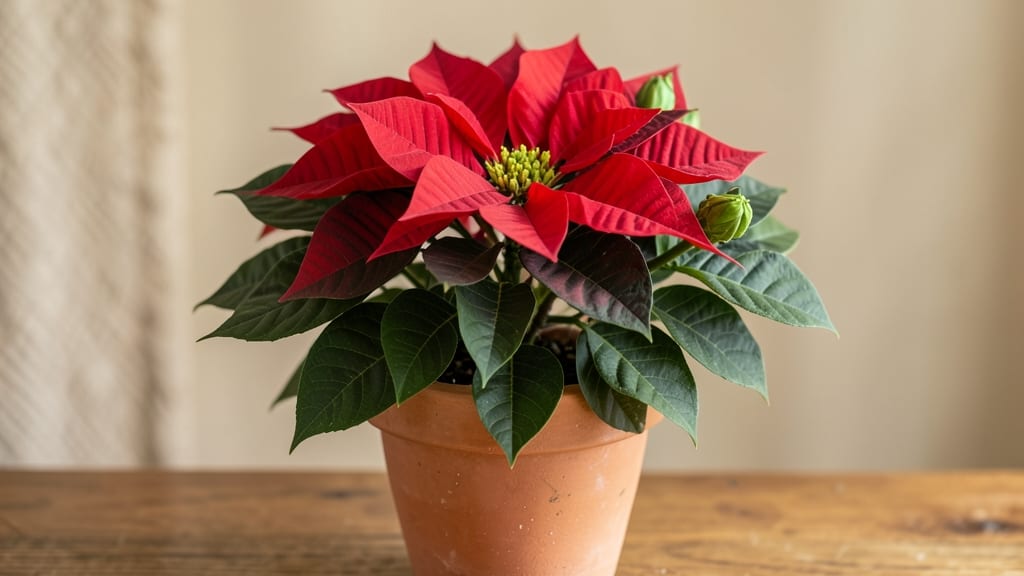
Poinsettias bloom naturally in response to shorter days and cooler temperatures, typically starting in late fall and lasting through January.
If you’ve ever wondered why your 🎄 poinsettia stays green until Thanksgiving, it’s not just luck—it’s light. These tropical plants need 12+ hours of darkness daily to trigger their vibrant color change, and most gardeners miss the timing.
The key is understanding how daylight shifts after the summer solstice and how to mimic those conditions indoors.
In their native Tropical/Subtropical Regions (USDA Zones 10-12), poinsettias naturally bloom when days grow shorter, but indoor plants often miss this signal. Without the right light schedule, they’ll wait until December—or worse, skip blooming entirely.
The good news? You can force earlier blooms with simple adjustments, even if you’re not in their native climate.
Below, I’ll break down the exact light triggers that make poinsettias burst into color, how to adjust your home’s lighting for earlier blooms, and the common mistakes that keep your plant looking like a sad houseplant instead of a holiday showstopper.
Natural poinsettia blooming cycle: how light triggers seasonal color
Poinsettias are famous for their holiday-season color bursts, but their blooming isn't random—it's controlled by light exposure. This process, called photoperiodism, means poinsettias need 12+ hours of darkness daily after the summer solstice to trigger blooming.
Without this signal, they'll stay leafy and never produce their iconic red bracts.
The magic begins when daylight hours shorten in late summer. For poinsettias, this shift signals it's time to bloom. In temperate zones, this typically happens between late November and December, aligning perfectly with Christmas decorations.
However, regional variations can push this timeline earlier or later by a few weeks.
| Region | Natural Bloom Window | Key Light Trigger |
|---|---|---|
| Northern U.S. (Zones 3-6) | Late November - Early December | 12+ hours darkness by mid-November |
| Southern U.S. (Zones 7-9) | Early December - Mid-January | 12+ hours darkness by late November |
| Tropical Zones (10-12) | October - November | Natural shorter days year-round |
| Indoor Potted Plants | Adjustable (with light control) | 14 hours light/10 hours dark for 6-8 weeks |
In temperate climates, poinsettias naturally respond to shorter daylight hours after the summer solstice. The plant's internal clock detects when nights exceed 12 hours, prompting the production of hormones that trigger blooming. This is why poinsettias bloom in late fall—they're following their natural biological rhythm.
If you're growing poinsettias in warmer climates, like zones 10-12, they may bloom earlier, sometimes as early as October. This is because the natural daylight reduction happens sooner. Tropical regions with consistent short days can even see multiple blooming cycles throughout the year.
The bracts—those vibrant red, pink, or white leaves—are actually modified leaf structures that surround the tiny yellow flowers. These bracts develop in response to the darkness signal and are what we associate with the holiday plant.
Without the right light conditions, poinsettias will produce green foliage only, missing their signature color.
For indoor poinsettias, the natural cycle can be disrupted by artificial lights. If your plant stays under lights for too long, it won't receive the 12-hour darkness it needs. This is why many store-bought poinsettias are pre-treated with light schedules to ensure they bloom on time for the holidays.
To encourage natural blooming, place your poinsettia in a spot where it gets natural daylight during the day but complete darkness at night.
Even a small amount of light—like from a streetlamp or TV—can interfere with the blooming process. Blackout curtains or moving the plant to a dark closet for 12 hours nightly can help trigger blooming.
Once the blooming cycle starts, it takes about 6-8 weeks for poinsettias to reach their full color. This means if you want Christmas-ready blooms, you'll need to start the darkness treatment in late October. For gardeners in cooler climates, this aligns perfectly with the natural timeline.
Understanding this process lets you control poinsettia blooming—whether you want to advance it for early holidays or delay it for later in the season. The key is patience and consistency with the light-dark cycle.
With the right approach, you can enjoy vibrant poinsettias year-round, not just during the holidays. 🎄
How to force poinsettias to bloom earlier using artificial light
Poinsettias are famous for their holiday-season color, but their natural blooming cycle starts much earlier—if you know how to manipulate their light exposure. By controlling daylight hours, you can force blooms 4-6 weeks ahead of their usual December timing.
This trick works especially well for indoor plants or those in cooler climates where natural daylight shortens later.
Poinsettias rely on photoperiodism, a process where they detect 12+ hours of darkness to trigger blooming. In nature, this happens after the summer solstice, signaling fall.
To speed this up, we simulate shorter days with artificial light control—a method both gardeners and florists use to get vibrant bracts earlier.
- 🌞 Late Summer: Plants detect shorter daylight after June solstice.
- 🌙 Early Fall: 12+ hours of darkness trigger bud formation (Sept-Oct).
- 🎄 November-December: Bracts fully color as blooms mature.
- ❄️ Winter: Peak display lasts 6-8 weeks post-bloom.
To force earlier blooms, start by giving your poinsettia 14 hours of light followed by 10 hours of complete darkness daily. Use a timer-controlled grow light or even a cardboard box to block all light after sunset. Consistency is key—skip even one night of light, and the process resets.
For indoor plants, place them in a dark closet or covered area from 5 PM to 7 AM for 6-8 weeks before your target bloom date.
If outdoors, move potted plants to a shady spot or greenhouse during evening hours. LED grow lights work best because they mimic natural sunlight without overheating.
Watch for bract color changes—the vibrant leaves that look like flowers. If your poinsettia gets too much light during the dark period, the buds may drop. Keep temperatures between 60-75°F and avoid drafts. With patience, you’ll see holiday-ready color as early as late October!
Once blooms appear, maintain bright indirect light (6-8 hours daily) and reduce watering slightly. Overwatering can cause dropped buds, so let the top inch of soil dry between waterings. Your early-blooming poinsettia will be the star of the season! 🎄