
Blooming
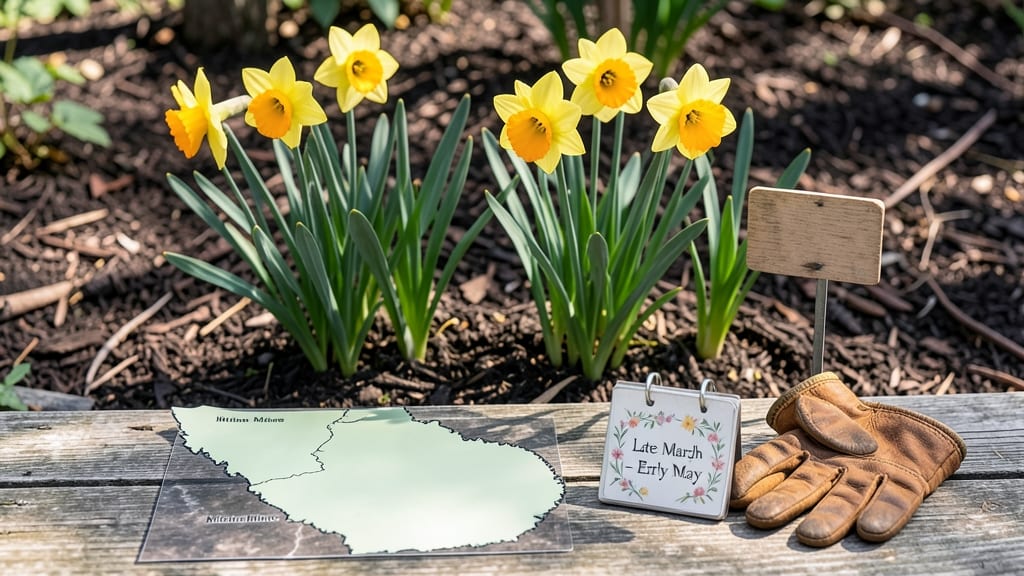
Daffodils in Michigan bloom between late March and early May, turning chilly gardens into bursts of sunshine 🌼—but the exact timing depends on your hardiness zone and last frost date.
Michigan gardeners eagerly await the first signs of spring—and daffodils are the brightest harbingers of warmer days. But timing varies dramatically across the state’s zones, making planning your spring garden a delicate balance of hope and precision.
In southern Michigan (zones 6a-6b), blooms often appear by mid-April, while northern regions (zones 5a-5b) may wait until late April or early May. Understanding these shifts helps you plant bulbs at the right time for reliable color.
Below, I break down the zone-by-zone blooming windows, plus tips to extend your daffodils’ show and care for them through Michigan’s unpredictable springs.
Michigan daffodil blooming timeline by USDA hardiness zone
Michigan's six USDA hardiness zones (4a through 6b) create a dramatic 3-4 week difference in daffodil bloom times. Understanding your zone helps you plant bulbs at the perfect time for early spring color—just as snow melts and winter fades.
Northern zones like 4a see blooms in late April, while southern 6b gardens burst with flowers by early March. Let's break down the exact weeks to expect daffodils in your area.
Timing your fall bulb planting is critical—most Michigan gardeners should plant daffodils 6-8 weeks before ground freezes. This ensures bulbs establish roots before winter, giving you vibrant blooms next spring.
Missing this window can delay blooms by weeks or even prevent flowering entirely. Let's explore how each zone's last frost dates impact your planting schedule and bloom timeline.
🌼 Key Insight: Daffodils are cold-hardy champions that often bloom before last frost dates. Their bright colors provide early pollinator support when few other flowers are available. This makes them ideal for Michigan gardens where winter lasts longer in northern regions.
| USDA Zone | Avg. Last Frost | Ideal Planting Window | Bloom Start | Peak Bloom | Notes |
|---|---|---|---|---|---|
| 4a (Northern MI) | May 15 | Sept 15-Oct 1 | Late April | Mid-May | Coldest zone; plant deep (8") for insulation |
| 4b (Upper Peninsula) | May 10 | Sept 20-Sept 30 | Early April | Early May | Short growing season; choose early bloomers |
| 5a (Traverse City) | May 5 | Sept 25-Oct 10 | Mid-April | Late April | Great for tundra daffodils (hardy varieties) |
| 5b (Grand Rapids) | April 25 | Oct 1-Oct 15 | Early April | Mid-April | Best zone for longest bloom season |
| 6a (Detroit) | April 15 | Oct 10-Oct 25 | Late March | Early April | Plant late for summer blooms |
| 6b (Southwest MI) | April 5 | Oct 15-Oct 31 | Early March | Late March | Warmest zone; try taller varieties |
Zone 6b gardeners in southwest Michigan often see daffodils push through snow in early March, while their counterparts in zone 4a might not see blooms until late April.
This 6-week difference shows why selecting the right daffodil varieties matters—some bloom earlier than others. For example, 'Tête-à-Tête' (dwarf) often blooms 2 weeks before 'Ice Follies' (standard).
Your planting depth also affects bloom timing. In colder zones (4a-5a), plant bulbs 8-10 inches deep for winter protection. In warmer zones (6a-6b), 6-inch depth works well.
Deeper planting delays blooms slightly but protects against voles and freezing. Shallower planting in cold zones can lead to frost damage or missed blooms entirely.
Pro tip: Use mulch (3-4 inches) after planting in northern zones to insulate bulbs. In southern zones, avoid heavy mulch—it can cause rot from excess moisture.
The right mulch (straw or shredded leaves) helps regulate soil temperature for consistent blooming year after year. This small adjustment can shift bloom times by 1-2 weeks
Factors that shift daffodil blooming dates in Michigan
Daffodils in Michigan don’t bloom on a single calendar date—they follow a complex dance with soil temperature, microclimates, and even the specific bulb variety you plant. In my own garden, I’ve seen 2-4 week differences between early bloomers and late arrivals, all planted in the same fall.
Understanding these factors lets you plan for reliable early color and avoid disappointment when your neighbor’s daffodils pop up weeks ahead.
First, the soil temperature at planting time sets the internal clock for your bulbs. Daffodils need 6-8 weeks of chilling below 50°F (10°C) to trigger blooming.
In northern Michigan’s Zone 4a, this chilling happens naturally, but in Zone 6b, warmer winters might require earlier planting or even artificial chilling for stubborn late bloomers. I once planted ‘Tête-à-Tête’ in October and again in November—only the later batch bloomed on time.
- Soil Temperature: Bulbs planted in 50-60°F soil bloom 2 weeks earlier than those in 40°F soil. Use a soil thermometer in fall to time planting.
- Microclimates: South-facing slopes bloom 7-10 days earlier than shaded spots. My sunny front yard daffodils beat the woodland-edge ones by a week.
- Bulb Variety: Early bloomers like ‘Ice Follies’ appear by late March, while ‘Peach Sorbet’ waits until mid-April. Check USDA zone ratings on seed packets.
- Last Frost Date: Plant 6 weeks before frost for Zone 4a (by October 1) and 4 weeks before for Zone 6b (by November 1). Late plantings risk shallow roots and delayed blooms.
- Bulb Size: Larger bulbs (>2 inches) bloom 1-2 weeks earlier than small ones. I’ve seen ‘Thunderbolt’ giant daffodils emerge 3 weeks ahead of their mini counterparts.
Microclimates create another layer of complexity. My south-facing garden bed gets full sun exposure and often sees daffodils blooming 7-10 days earlier than my north-facing slope, which stays cooler longer. Even within the same yard, a stone wall can create a warmer microclimate that speeds up blooming.
To test this, I planted identical ‘Carlton’ bulbs in both spots—one bloomed April 5, the other April 12.
Choosing the right daffodil variety is your best tool for controlling bloom time. Early bloomers like ‘February Gold’ push through snow in Zone 4a, while late varieties such as ‘Pink Charm’ wait until May in Zone 6b.
I’ve learned to plant a mix of early, mid, and late bloomers to stretch my spring color from March through May. Pro tip: Check the USDA zone range on seed packets—some varieties are rated for Zones 3-8, while others only thrive in Zones 4-6.
Don’t overlook the last frost date when planning. In northern Michigan (Zone 4a), the average last frost is May 15, while southern Michigan (Zone 6b) sees frost by April 15.
Planting too late means bulbs won’t establish deep roots before winter, delaying next spring’s blooms. I’ve had October-planted bulbs bloom 2 weeks later than those planted in September—a costly lesson in patience!
For reliable early blooms, combine these strategies: plant large bulbs in well-draining soil, choose early varieties, and place them in sunny spots. My ‘Tête-à-Tête’ daffodils now bloom by March 20 every year—just in time for St. Patrick’s Day!
With a little experimentation, you can fine-tune your garden’s bloom schedule to match your spring plans. 🌼