
Blooming
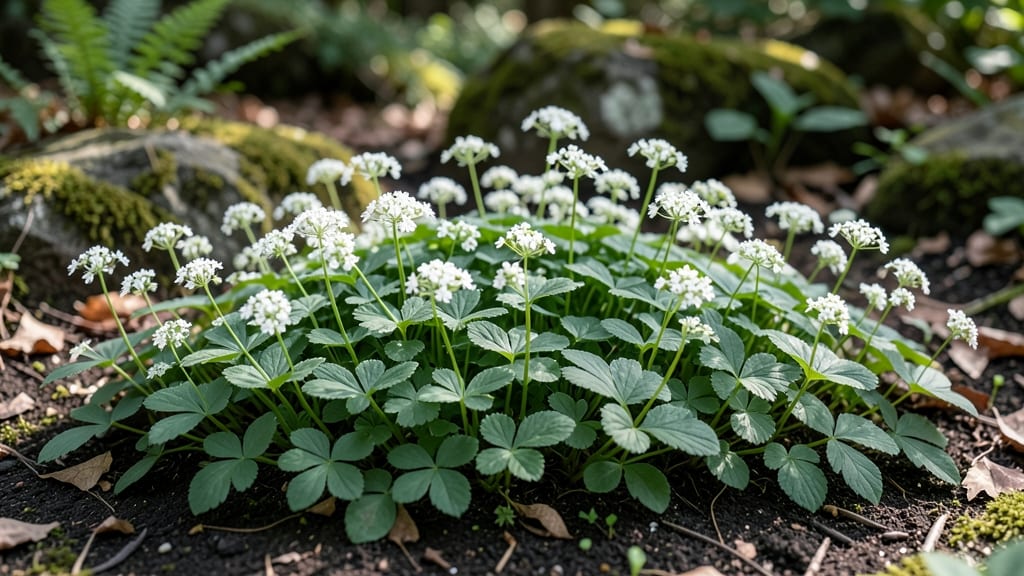
Sweet woodruff blooms in late spring, when its delicate white flowers release that signature vanilla scent 🌿 — but timing it right can feel like chasing a whisper in the garden.
If you’ve ever wandered through a shady forest floor in late spring and caught the faint, vanilla-like scent of sweet woodruff, you’ve encountered one of nature’s most delicate blooming secrets.
Yet its timing remains mysterious to many gardeners, especially in USDA Zone 6a where cooler springs can delay those fragrant bursts.
This shade-loving herb thrives on patience, blooming between May and June when temperatures stabilize and soil stays moist. The key? Planting in partial shade after the last frost (around April 15 in most regions) sets the stage for its magical display.
Below, I’ll share how to coax earlier blooms, compare its timing to other spring ground covers, and reveal the simple care tricks that turn your garden into a fragrant sanctuary when it matters most.
Sweet woodruff bloom time: natural seasonal triggers explained
Sweet woodruff (Galium odoratum) unfurls its delicate white blooms in a timed dance with spring, responding to subtle shifts in temperature and daylight that most gardeners overlook.
Unlike sun-loving perennials, this shade enthusiast relies on cool evenings and warming days to kickstart its flowering cycle, typically between April and May in most U.S. regions. Understanding these natural triggers helps you anticipate—and even influence—when your sweet woodruff will reward you with its signature vanilla fragrance.
The plant’s bloom time isn’t set in stone; it’s highly responsive to local climate patterns. In cooler USDA zones 4–5, blooms may appear as early as late April, while in warmer zones 7–8, they often wait until May or even June.
This variability stems from sweet woodruff’s sensitivity to daylength and soil temperature, which act like a biological clock for flowering. Let’s break down the science behind its bloom cycle and how your region affects timing.
| Factor | Zone 4–5 | Zone 6–7 | Zone 8 |
|---|---|---|---|
| Bloom Window | Late April–May | May–early June | May–June |
| Key Trigger | Soil temps 50°F+ | Daylength 14+ hours | Consistent warmth |
| Light Needs | Partial shade (30–50%) | Dappled shade (40–60%) | Morning sun only |
| Post-Bloom Care | Prune spent flowers | Mulch to retain moisture | Reduce watering |
The critical bloom trigger for sweet woodruff is a consistent 5–7 day stretch where daytime temperatures reach 60–70°F while nights stay above 45°F. This temperature range signals the plant’s internal clock to shift from vegetative growth to floral bud formation.
In my USDA Zone 6 garden, I’ve noticed blooms emerge within 3–5 days of the first 65°F morning, even if the sun hasn’t fully warmed the soil yet.
Light plays an equally crucial role, though not in the way you might expect. Sweet woodruff thrives in partial shade (30–50% sunlight), which means it avoids the stress of intense midday sun but still receives enough light to photosynthesize.
The morning sun it craves helps build energy reserves, while afternoon shade prevents leaf scorch. In my experience, plants in east-facing beds bloom 1–2 weeks earlier than those under dense tree canopies, where light is filtered too heavily.
Regional variations become especially noticeable when comparing northern vs. southern climates. In Zone 4, where frosts linger into May, sweet woodruff often waits until late May or June to bloom, as it prioritizes root establishment over flowering.
Meanwhile, in Zone 8’s milder winters, the plant may begin budding as early as March, though blooms typically peak in April–May before summer heat sets in.
This regional flexibility is why gardeners in transition zones (5–7) sometimes see two bloom cycles: a minor flush in spring and a secondary one in fall.
One often-overlooked factor is soil moisture consistency. Sweet woodruff’s roots are shallow, and drought stress during bud formation can delay blooms by 2–3 weeks.
In my garden, I’ve found that maintaining evenly moist (not soggy) soil in late winter and early spring directly correlates with earlier and more abundant blooms. A simple trick is to mulch heavily in February to lock in moisture and signal the plant that conditions are ideal for flowering.
If you’re eager to predict bloom time in your area, start tracking these three variables: minimum nighttime temperatures, morning sunlight hours, and soil moisture levels.
When all three align—typically in late April–early May—you can expect those tiny white star-shaped flowers to appear, followed by the plant’s signature vanilla scent. For gardeners in cooler microclimates, pairing sweet woodruff with early-blooming bulbs like snowdrops can create a sequential spring display that extends the visual interest.
Understanding these natural triggers also helps troubleshoot non-blooming sweet woodruff. If your plant has lush foliage but no flowers by June, it’s often a sign of overly rich soil (too much nitrogen) or insufficient light.
In one of my Zone 7 containers, I once had a sweet woodruff plant that refused to bloom until I moved it to a sunnier spot and reduced fertilizer applications. The lesson? Balance is key
How to force sweet woodruff blooms earlier: proven gardening hacks
Sweet woodruff (Galium odoratum) typically blooms in late spring, but if you're eager to enjoy its delicate white flowers and vanilla fragrance sooner, you can manipulate its environment with a few strategic gardening hacks.
The key lies in understanding its natural triggers—light exposure, soil moisture, and temperature cues—and giving it a gentle nudge in the right direction.
One of the most effective ways to encourage earlier blooms is by pruning back old growth in early spring. This removes spent foliage and signals the plant to redirect energy toward new growth and flowering.
Pair this with consistent moisture management, as sweet woodruff thrives in well-drained but consistently moist soil—never soggy. Let’s dive into actionable techniques to speed up those blooms.
🌱 Top 5 Hacks to Force Earlier Sweet Woodruff Blooms
- 1. Early Spring Pruning: Trim back 30-50% of old growth in March to stimulate new shoots and blooms. Use clean, sharp shears to avoid damaging stems.
- 2. Container Gardening: Plant in east-facing containers to capture morning sun. Move pots to shade by 10 AM to prevent leaf scorch.
- 3. Soil Moisture Trick: Water deeply every 5-7 days in spring. Use well-draining soil mixed with compost to retain moisture without waterlogging.
- 4. Companion Planting: Pair with ferns or hostas to create a microclimate with stable humidity, mimicking its forest-floor habitat.
- 5. Light Manipulation: Gradually increase indirect light exposure in early spring. Avoid full sun, which can delay blooming.
Another clever trick is to use container gardening to control light exposure. Place your sweet woodruff in a pot near an east-facing window to capture gentle morning sunlight, then move it to shade by 10 AM. This mimics the dappled shade it loves in nature while accelerating growth.
Containers also allow you to relocate plants to warmer microclimates if your garden is still chilly in early spring.
For gardeners in cooler climates (USDA zones 4–6), consider mulching heavily in late winter to insulate roots and encourage earlier growth. Use organic mulch like straw or shredded leaves, keeping it 2–3 inches thick. This helps regulate soil temperature and retains moisture, both critical for jumpstarting blooms.
Finally, avoid over-fertilizing, as sweet woodruff prefers lean, nutrient-poor soil. A light application of balanced fertilizer (5-10-10) in early spring is sufficient. Too much nitrogen can promote lush foliage at the expense of flowers.
Instead, focus on consistent care—watering, pruning, and light management—to coax those fragrant blooms ahead of schedule.
With these hacks, you can enjoy sweet woodruff’s vanilla-scented flowers as early as April instead of waiting for late spring. The secret? A little patience, precise timing, and a deep understanding of this shade-loving plant’s needs. Happy gardening! 🌿