
Blooming
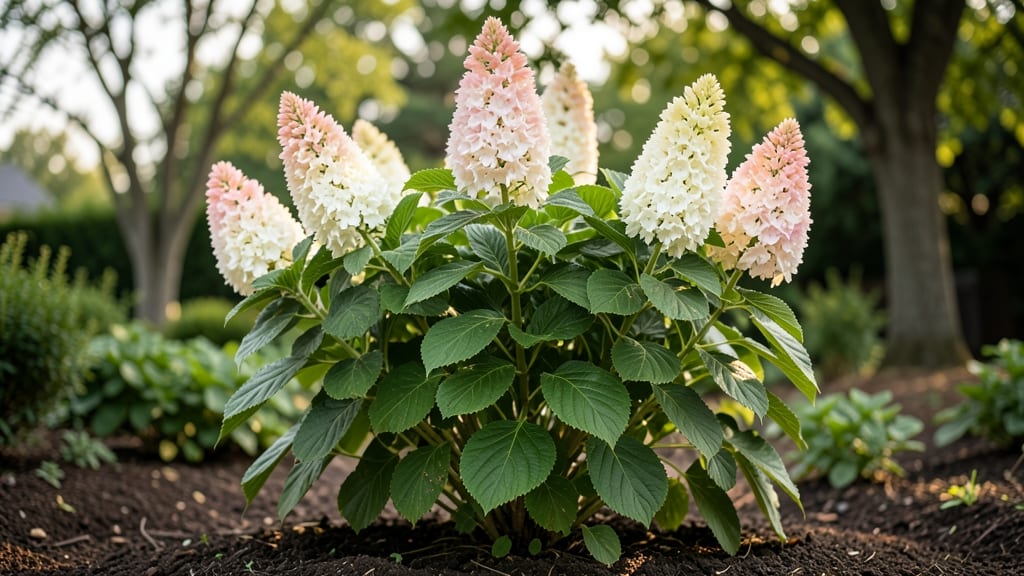
Panicle hydrangeas light up gardens with vibrant purple spikes from late spring through summer, but the exact timing depends on your zone—here’s the breakdown. 🌿 In Zone 5, expect blooms in June and July, while Zones 6–9 see them from May to August, with some varieties flowering even later.
The key to predicting bloom time? Understanding how your climate and pruning habits interact with the plant’s natural rhythm.
Your pruning schedule is the single biggest factor—cutting back in late winter or early spring (after the first frost) ensures you’ll see blooms on new wood, but timing it wrong can delay or even skip the show.
In warmer zones, panicle hydrangeas often start blooming earlier, while colder climates may push them back until June or July. The good news? These hydrangeas are forgiving—they’ll still flower even if pruned at the wrong time, just not as dramatically.
To coax the most lush, long-lasting blooms, focus on watering deeply during dry spells and feeding with a balanced fertilizer in early spring. Mulching helps regulate soil temperature, which can extend the bloom season by 2–4 weeks in cooler zones.
The result? Stunning vertical interest that lasts from late spring to early fall, with some varieties even turning pink in autumn frost.
For gardeners in Zones 3–4, consider cold-hardy varieties like ‘Little Lime’ or ‘Limelight’—they’ll bloom reliably even in shorter seasons.
And if you’re in a hotter zone, like 8 or 9, don’t be surprised if your hydrangeas start flowering as early as April, especially if they get afternoon shade. The secret to keeping them blooming all season?
A little pruning in late summer to encourage fresh growth for next year’s spikes.
📚 In This Guide
- What you need
- Instructions
- Tips and common mistakes
- Wrapping up and next steps
What you need
- ● Panicle hydrangea plant(s) – Choose Hydrangea paniculata varieties like ‘Limelight,’ ‘Little Lime,’ or ‘Vanille Fraise’ (1–3 plants per 4–6 ft. spacing).
- ○ Well-draining potting mix or garden soil – Aim for a pH of 5.5–6.5 (test with a soil kit). Optional: Amend with compost or peat moss for acidity.
- ● Balanced fertilizer – 10-10-10 or 20-20-20 (use ½ tsp per plant in early spring and mid-summer).
- ● Mulch (2–3 inches) – Use pine bark, wood chips, or straw to retain moisture and regulate soil temp.
- ● Watering can or hose with a gentle spray nozzle – Hydrangeas need 1–1.5 inches of water weekly (more in drought-prone zones).
- ● Pruning shears – Bypass pruners (sharp, clean, and sanitized with rubbing alcohol).
- ● Gloves – Heavy-duty gardening gloves to protect from thorns.
- ● Rake or cultivator – For clearing debris and aerating soil.
- ○ Plant supports (optional) – Stakes or cages if your hydrangea grows 6+ feet tall.
How to time panicle hydrangea blooms by your USDA zone
Here’s how I’ve learned to predict—and extend—those iconic purple blooms in my garden.
📅 Step 1: Identify Your USDA Zone for Accurate Timing
Panicle hydrangeas bloom on new wood, meaning their flower buds form in late spring and summer from the current year’s growth. Your USDA zone determines when they’ll peak: Zones 3-5 typically see blooms in late June to August, while Zones 6-9 bloom from July to September. Check your zone via the USDA Plant Hardiness Map—it’s the foundation for everything else.
I always mark my zone on the plant tag or garden map. This ensures I don’t prune at the wrong time (a rookie mistake that kills next year’s blooms). For example, in Zone 7, my ‘Limelight’ hydrangea starts showing buds in mid-May, but full spikes don’t appear until late July. Timing is everything.
☀️ Step 2: Monitor Light and Temperature for Bud Formation
Panicle hydrangeas need full sun to partial shade (6+ hours of direct light daily) to set strong buds. In cooler zones (3-5), they’ll start forming buds as soon as soil warms to 55°F in spring. In warmer zones (6-9), budding begins later, around 60-65°F, often after Memorial Day. Watch for swollen buds at the tips of stems—that’s your cue they’re gearing up for bloom.
Here’s the thing: heat waves can delay blooming. If temperatures spike above 90°F during bud formation, flowers may abort. I’ve seen this happen in Zone 8—the buds would swell, then drop off entirely. Mulch around the base with 2-3 inches of organic mulch (like shredded bark) to stabilize soil temps and retain moisture.
🌱 Step 3: Prune Strategically to Extend the Bloom Season
Since panicle hydrangeas bloom on new wood, pruning in late winter or early spring (before buds swell) encourages longer, fuller spikes. Cut back one-third of the oldest stems each year to promote vigorous new growth. For example, if your plant has 10 stems, remove 3-4 of the thinnest, oldest ones at the base. This isn’t optional—skipping it leads to weaker blooms and leggy growth.
I prune in February or March in Zone 6, when the plant is still dormant but before buds break. Wait until after the first bloom in warmer zones (like Zone 9) to avoid cutting off flowers. Deadhead spent blooms in late fall to prevent seed formation, which drains energy from next year’s buds.
💧 Step 4: Adjust Watering to Support Long-Lasting Blooms
Panicle hydrangeas thrive with consistent moisture, especially during bud formation and bloom. Water deeply once a week (or more in extreme heat) to keep soil 2-3 inches deep damp. Let the top inch dry out between waterings—this prevents root rot but keeps flowers hydrated. I use a soaker hose to deliver water slowly at the base, avoiding wetting the foliage (which can invite powdery mildew).
In drought-prone zones (7-9), I add 2-3 inches of mulch to lock in moisture. The key is steady, not soggy. Overwatering in summer can cause buds to drop, while underwatering leads to weak, sparse blooms. Check soil moisture by sticking your finger 2 inches deep—if it’s dry, water thoroughly.
⏰ Step 5: Plan for Seasonal Care to Prolong Blooms
To extend the bloom window, fertilize in early spring with a balanced, slow-release fertilizer (like 10-10-10) when new growth appears. Avoid high-nitrogen feeds—those push leafy growth at the expense of flowers. I also apply a half-strength liquid bloom booster (like fish emulsion) in mid-June to give buds a final push.
In colder zones (3-5), protect plants from late frosts by wrapping young stems in burlap or using a frost blanket if temperatures dip below 28°F. In warmer zones (6-9), shade cloth (30-50%) can prevent heat stress during bud set. The goal is to minimize stress—stressed plants drop buds or bloom weakly.
Tips & tricks for perfect panicle hydrangea bloom timing
Mastering these purple spikes comes down to understanding your plant's language—and your climate's quirks. Here's what I've learned after years of trial and error.
Zone-Specific Visual Cues: The 55°F soil temperature threshold in cooler zones (3-5) isn't just a number—it's when you'll first notice tiny green buds forming at stem tips. In warmer zones (6-9), wait for those buds to appear around 60-65°F, often after Memorial Day. I mark my calendar with these temps because they're your first real indication that bud formation has begun. The buds will look like tiny green cones at first, then gradually elongate into the distinctive panicle shape.
Heat Wave Protection: When temperatures climb above 90°F during bud formation, your hydrangea's flowers may abort—this has happened to me twice in Zone 8. The solution? Create a microclimate by installing shade cloth (30-50%) over the plant during heat waves. I also water deeply in the morning to help stabilize soil temperatures. Think of it as giving your plant a cooling blanket during its most vulnerable growth phase.
Pruning Precision: That one-third pruning rule in Step 3 isn't arbitrary—it's about balance. When you remove 3-4 of the thinnest, oldest stems from a 10-stem plant, you're actually making room for stronger new growth. I've seen plants with unpruned centers develop weak, sparse blooms while the outer stems flourish. The key is to prune when the plant is dormant but buds haven't yet formed—this ensures you're not cutting off potential blooms for next season.
Watering Wisdom: The 2-3 inch deep damp soil guideline is crucial, but here's the trick: use your finger to check moisture at 2 inches deep—this is where the roots are actively growing. I've learned that surface moisture (from light watering) can actually prevent deeper root growth. In drought-prone zones, I water at the base using a soaker hose for 20 minutes every other day during peak bloom season to maintain that perfect moisture balance without wetting the foliage.
Pro Tips for Panicle Hydrangea Bloom Time
- Mastering these purple spikes comes down to understanding your plant's language—and your climate's quirks.
- Zone-Specific Visual Cues: The 55°F soil temperature threshold in cooler zones (3-5) isn't just a number—it's when you'll first notice tiny green buds forming at stem tips.
- Heat Wave Protection: When temperatures climb above 90°F during bud formation, your hydrangea's flowers may abort—this has happened to me twice in Zone 8.
Frequently asked questions
Got questions about timing, care, or troubleshooting your panicle hydrangea blooms? You’re not alone! Here are answers to the most common queries to help you maximize those stunning purple spikes.
When do panicle hydrangeas bloom in my zone?
Bloom times vary by zone! In Zones 4-6, expect spikes in late June to August. Warmer zones (7-9) often see blooms from July to September. Early varieties (like 'Limelight') may bloom slightly sooner, while late types (like 'Little Lime') stretch into fall. Check our zone-specific chart for precise timing!
Why aren’t my panicle hydrangeas blooming this year?
No blooms? Don’t panic! Common culprits include over-pruning (cut back in late winter, not fall), nutrient deficiencies (feed with acidic fertilizer in spring), or stress (drought or extreme heat). Young plants may also take 2-3 years to bloom. Review our care checklist to diagnose the issue.
Can I extend the bloom time of panicle hydrangeas?
Deadhead spent blooms in early fall to encourage a second flush of flowers. Also, plant in partial shade (6+ hours of sun) and water deeply 1-2 times per week during dry spells. Mulching with pine bark helps retain moisture and cool roots, which can prolong blooms into October or November in mild climates.
What’s the best alternative if panicle hydrangeas don’t thrive in my yard?
If your soil is too alkaline (pH > 6.0) or your climate is too hot/dry, try these low-maintenance alternatives:
- 'Annabelle' hydrangea – Disease-resistant with huge white blooms (tolerates heat better).
- Butterfly bush (Buddleia) – Drought-tolerant and attracts pollinators.
- Dwarf ninebark (Physocarpus) – Thrives in poor soil and offers seasonal color.
- Smoke bush (Cotinus) – Heat-loving with feathery foliage and pink plumes.
Do panicle hydrangeas bloom on old or new wood?
Unlike mopheads, panicle hydrangeas bloom on new wood (current season’s growth). This means you can prune anytime—even in late winter—without sacrificing blooms. Pro tip: Cut back 1/3 of the stems in early spring to encourage bushier growth and more abundant flowers.
How do I revive a panicle hydrangea that’s not blooming or looks leggy?
Leggy growth or sparse blooms often signal overcrowding or poor pruning habits. Try this:
- Prune 1/3 of the oldest stems at the base in late winter.
- Fertilize with acidic, balanced fertilizer (10-10-10) in spring.
- Ensure 6+ hours of sun and well-draining soil.
- Water deeply 1-2x/week during dry spells.
Wrapping up and next steps
Understanding your panicle hydrangea bloom time is the first step to enjoying those stunning purple spikes year after year!
From the early blooms of Zone 5 in June to the late bursts of Zone 9 in September, timing is everything—but with the right care, you can extend their beauty and even encourage repeat blooming. 🌸
Now that you’re armed with zone-specific insights, it’s time to roll up your sleeves! Start by selecting the perfect spot in your garden, prune with confidence, and give your hydrangeas the love they deserve. Your next step? Grab your gardening gloves and watch your panicle hydrangeas thrive—you’ve got this!