
Blooming
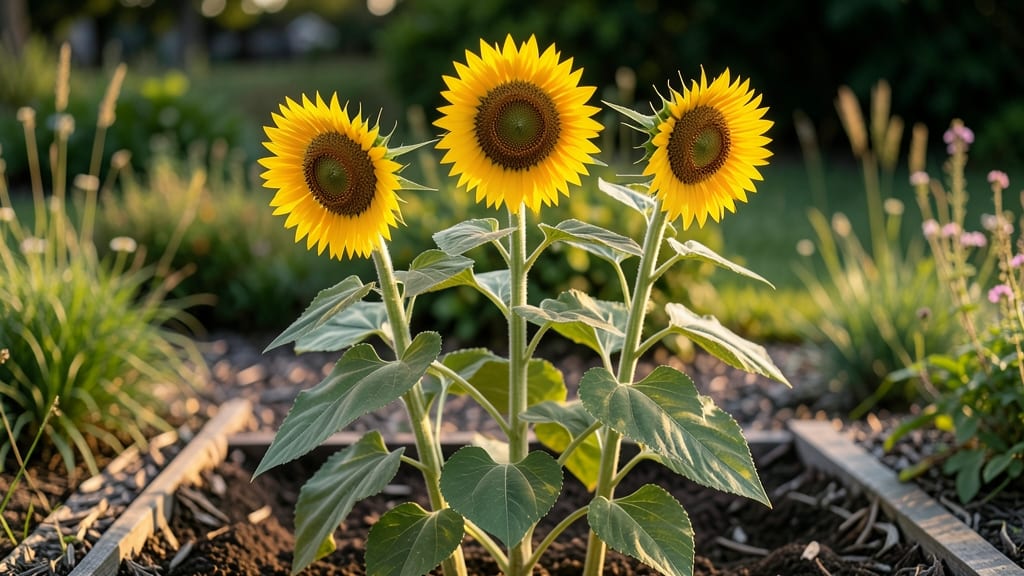
Growing multiple bloom sunflowers that keep blooming all season feels like magic—until you know the heat-triggered trick. 🌻 I've watched single-stem giants turn into reblooming powerhouses by selecting the right varieties and timing everything just right.
The secret lies in choosing 'Moulin Rouge' or 'Autumn Beauty' sunflowers, which naturally produce multiple buds when given the perfect growing conditions.
Start with well-draining soil rich in compost—sunflowers hate soggy roots. Plant seeds ½ inch deep after your last frost, spacing them 12-18 inches apart for strong stems. Once they hit 3-4 feet tall, fertilize lightly with a balanced 10-10-10 mix to encourage branching.
The key? Deadheading spent blooms immediately—this tells the plant to redirect energy into new buds instead of seeds.
You'll see the first secondary blooms in 6-8 weeks, with nonstop color lasting until frost. The plants grow taller and bushier, their faces tracking the sun like little mirrors.
Just watch for aphids on new growth—spray with soapy water at the first sign, and you'll keep those blooms coming all summer.
This method works in any sunny spot, from backyard beds to container gardens. The only rule? Never let the soil dry out completely—consistent moisture is what triggers those extra blooms. Ready to turn your sunflowers into a season-long showstopper?
📚 In This Guide
- What you need
- Instructions
- Tips and common mistakes
- Wrapping up and next steps
What you need
- ● Sunflower seeds: Choose heat-tolerant, reblooming varieties like ‘Moulin Rouge’, ‘Autumn Beauty’, or ‘Russian Giant’ (50–100 seeds, depending on desired quantity).
- ● Well-draining potting mix: 5–10 gallons (for containers) or enrich garden soil with compost (1–2 cubic feet per plant).
- ● Fertilizer: Balanced 10-10-10 or 5-10-10 granular fertilizer (2 tbsp per plant at planting).
- ● High-phosphorus 10-20-10 for blooming (1 tbsp per plant mid-season).
- ● Watering can or hose: With a gentle spray nozzle for even moisture.
- ● Pruning shears: Sharp, clean pair for deadheading and trimming.
- ● Garden stakes or cages: 4–6 ft tall (1–2 per plant for support).
- ● Heat-resistant mulch: Straw or black plastic (to retain soil warmth).
- ○ Thermometer (optional): Soil or air thermometer to monitor heat triggers (aim for 75–85°F for reblooming).
- ○ Slow-release fertilizer spikes: (Optional) For low-maintenance nutrient boosts.
- ○ Sunflower-specific fungicide: (Optional) Preemptive treatment for powdery mildew.
- ● Full sun location: Minimum 6–8 hours of direct sunlight daily (reblooming thrives in heat!).
- ● Warm season timing: Plant after last frost (70°F+ soil temps) or start indoors 4–6 weeks early.
- ● Patience for heat triggers: Reblooming often requires consistent temps above 80°F for 2–3 weeks.
How to grow multiple bloom sunflowers for continuous color
Here's the science-backed method I use to coax sunflowers into reblooming—no fancy tricks, just heat and timing.
☀️ Step 1: Select the Right Varieties for Reblooming
Not all sunflowers rebloom—focus on multiple-bloom varieties like 'Autumn Beauty,' 'Moulin Rouge,' or 'Teddy Bear.' These hybrid types produce secondary stems after the first bloom. Avoid single-stem types like 'Russian Giant'—they won’t rebloom no matter what you do.
Start with 4-6 plants (since reblooming isn’t guaranteed on every stem). I plant mine in full sun (6+ hours daily) and well-drained soil—this sets the foundation for heat-triggered reblooming. If your area has cool summers, choose heat-tolerant varieties like 'ProCut' or 'Evening Sun.'
🌱 Step 2: Deadhead Strategically to Encourage Reblooms
Once the first bloom opens fully, snip the stem 1-2 inches below the flower head with clean pruners. This removes the spent bloom but leaves the stem intact—critical for triggering lateral buds. I do this in the early morning when stems are stiff, reducing disease risk.
Watch for new side shoots emerging from the main stem within 7-10 days. These are your rebloom candidates. If no side shoots appear after two weeks, the plant may not rebloom—don’t force it. Heat (above 75°F) and consistent moisture are the real triggers here.
💧 Step 3: Manage Water and Heat for Reblooming Success
Reblooming sunflowers need deep watering 2-3 times weekly—let the top 2 inches of soil dry between waterings. Overwatering stresses plants, while drought stops new buds cold. I water at the base only, avoiding wet foliage to prevent mildew.
Heat is the secret weapon: temperatures above 80°F signal the plant to produce new flowers. If your summer cools below 70°F, reblooming slows or stops. In cooler climates, extend the season with row covers or grow them in containers you can move indoors at night.
✂️ Step 4: Prune and Fertilize for Extended Blooms
After the second bloom opens, repeat the deadheading process—but this time, cut just above a set of leaves on the main stem. This encourages a third (and sometimes fourth) flush of flowers. I fertilize lightly with balanced 10-10-10 every 4-6 weeks to support regrowth without promoting leafy growth at the expense of blooms.
Remove any yellowing or diseased leaves immediately—they sap energy from reblooming. I also pinch off any puffballs (seed heads) that form after blooms, as these signal the plant to stop producing flowers. This keeps energy focused on new buds instead of seed production.
⏰ Step 5: Time Your Planting for Maximum Reblooms
For nonstop color, plant two batches of sunflowers 3-4 weeks apart. The first batch blooms early, while the second takes over as the first declines. I plant mine in late spring (after last frost) and again in early summer for a staggered display.
Reblooming slows as days shorten in fall, but with proper care, you’ll get 2-4 blooms per plant instead of just one. Save seeds from your best rebloomers for next year—they’ll perform even better with genetic selection!
Tips & tricks for perfect multiple bloom sunflowers
Here's what nobody tells you about getting those extra blooms—it's all about heat, timing, and a few sneaky tricks.
Variety Selection is Non-Negotiable: The 'Autumn Beauty' and 'Moulin Rouge' varieties I mentioned aren't just pretty—they're bred specifically to rebloom. I learned this the hard way after planting 'Russian Giant' for three years straight and wondering why I only got one bloom per plant. These hybrids produce secondary stems naturally when given the right conditions. If you're in a cooler climate, 'ProCut' is your secret weapon—it handles heat fluctuations better than most.
Deadheading Timing Matters More Than You Think: That 1-2 inch cut below the flower head in Step 2 isn't arbitrary—it's about preserving the plant's energy while removing the spent bloom. I used to cut too close to the stem, which often killed the lateral buds before they could form. The early morning timing is crucial too: stems are stiffest then, so you get cleaner cuts that heal faster. Watch for those side shoots appearing within 7-10 days—they're your first sign the plant is responding to your care.
Heat Management is the Real Game-Changer: Those temperatures above 80°F aren't just numbers—they're the biological trigger for reblooming. I've seen plants in greenhouses hit 85°F consistently and produce three full blooms in a season. In cooler areas, I use clear plastic row covers during the day to create a microclimate, then remove them at night to prevent overheating. The 70°F threshold is your warning sign: below that, and the plant conserves energy instead of producing new flowers.
Pruning Strategy for Maximum Blooms: When you're cutting just above a set of leaves in Step 4, you're not just removing spent blooms—you're redirecting the plant's growth hormones. I've seen plants produce fourth blooms when I maintained this pruning schedule religiously. The key is consistency: don't skip deadheading after the second bloom, or you'll lose your chance at that third flush. And those puffballs? Pinch them off immediately—they're the plant's way of saying "I'm done flowering for now."
Pro Tips for Multiple Bloom Sunflowers
- Here's what nobody tells you about getting those extra blooms—it's all about heat, timing, and a few sneaky tricks.
- Variety Selection is Non-Negotiable: The 'Autumn Beauty' and 'Moulin Rouge' varieties I mentioned aren't just pretty—...
- Deadheading Timing Matters More Than You Think: That 1-2 inch cut below the flower head in Step 2 isn't arbitrary—it'...
Frequently asked questions
How do I know if my sunflower is a multiple-bloom variety?
A true multiple-bloom sunflower (like 'Autumn Beauty' or 'Russian Giant') will produce secondary buds after the first bloom opens. Look for side branches forming near the base of the stem—these are your rebloom indicators! If your plant only flowers once, it’s likely a standard variety. Pro tip: Check seed packets or plant tags for "reblooming" labels.
When should I expect the second bloom after heat treatment?
With proper heat triggering (consistent temps above 85°F/29°C for 2–4 weeks), reblooms typically appear 4–6 weeks after the first flower opens. Patience is key! Some varieties like 'Moulin Rouge' may take longer, especially if daylight hours shorten. Monitor your plant closely—you’ll see new buds forming at the stem’s base.
What if my sunflower doesn’t rebloom after heat treatment?
Don’t worry—several factors could be at play. Check these first:
- Was the heat consistent (not just a single hot day)?
- Did the plant get 6+ hours of sunlight daily?
- Was it overwatered (root rot kills rebloom potential)?
- Did you prune dead blooms to redirect energy?
Can I force reblooms in cooler climates?
Yes! Use row covers, cold frames, or even a greenhouse to maintain warmth. For container growers, move pots to a sunny indoor spot (near a south-facing window) or under grow lights for 12+ hours/day. Warning: Sunflowers need sunlight—supplemental light alone won’t trigger reblooms without heat.
Are there alternatives to sunflowers for multiple blooms?
If sunflowers aren’t your style, try these reblooming annuals:
- Zinnias – Heat-loving and super easy to rebloom.
- Marigolds – Thrives in heat and keeps flowering all season.
- Cosmos – Drought-tolerant and produces continuous blooms.
- Celestial Blue Salvia – Starts late but reblooms prolifically.
Wrapping up and next steps
Multiple bloom sunflowers aren’t just a gardening dream—they’re achievable with the right heat-triggered care! By understanding their needs—like proper spacing, deadheading, and seasonal adjustments—you can enjoy vibrant blooms all season long. 🌻✨
Ready to turn your garden into a nonstop sunflower spectacle? Start by planting a few varieties this season and experiment with the tips you’ve learned. Before you know it, you’ll be the envy of the neighborhood with your reblooming sunflower magic!
Happy gardening—your future sunflower paradise awaits! 🌱💛