
Blooming
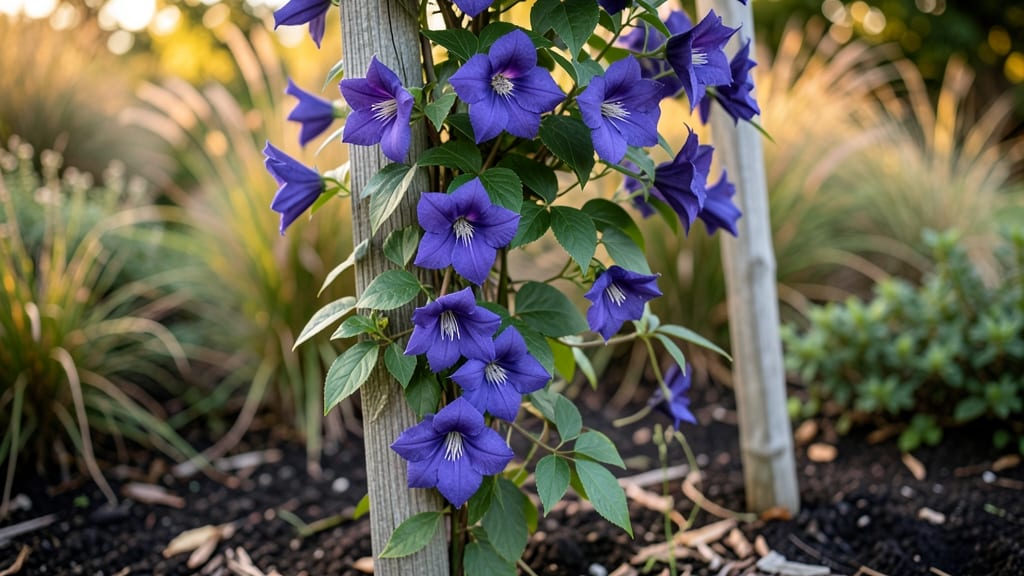
Your Jackmanii clematis has a bloom time from late spring to early summer, but with the right pruning, those purple spikes can stretch into six extra weeks of color.
Picture this: your garden’s star performer, the Jackmanii clematis, putting on a show from June through August—only to fade too soon. The secret? Pruning it at the exact wrong time (or not at all) can cut its bloom time nearly in half.
But get the timing right, and you’re looking at a prolonged display that turns heads all season long.
This isn’t just about when to cut—it’s about how to prune. Too aggressive, and you’ll sacrifice next year’s blooms. Too timid, and you’ll miss the chance to extend this year’s show.
Below, I’ll walk you through the science-backed pruning windows, the tools you’ll need, and the little tricks that keep your Jackmanii clematis flowering like it’s auditioning for a garden magazine spread.
Ready to turn your clematis into a season-long superstar? Let’s get started.
When to prune Jackmanii clematis for maximum bloom time extension
Timing your Jackmanii clematis pruning within a 6-week window can extend its deep purple blooms by nearly half the season. This Group 3 clematis thrives on precision—cut too early, and you risk stunted growth; too late, and you shorten next year’s flowers.
The key lies in understanding its dormancy cycle and how to trigger prolonged flowering through strategic cuts.
Most gardeners prune in late winter or early spring, but the optimal window depends on your USDA zone. In Zones 6-8, aim for March-April when buds swell but before new growth starts.
This timing preserves last year’s flower buds while encouraging fresh stems for extended blooms through summer and into fall.
| Pruning Window | Key Action | Bloom Impact |
|---|---|---|
| Late Winter (Feb-Mar) | Cut back 1/3 of stems to 2-3 buds from base | Preserves last year’s buds for early blooms |
| Early Spring (Mar-Apr) | Remove dead/damaged wood and cut healthy stems to strong buds | Maximizes 6-week bloom extension |
| Post-Bloom (Aug-Sept) | Light trim to encourage new growth for fall blooms | Adds late-season color |
| Avoid Pruning | Never prune after mid-Sept in cold zones | Prevents dormancy disruption |
The 6-week extension hack works because Jackmanii clematis produces flowers on both old and new wood. By pruning in early spring, you remove last year’s spent stems while leaving buds from previous growth intact.
These buds bloom first, followed by fresh stems that flower 6-8 weeks later, creating a continuous display.
For Zone 9+ gardeners, shift pruning to late winter (Jan-Feb) to align with natural growth cycles. The goal is always to cut just before new shoots emerge—this ensures the plant isn’t stressed by late frosts while still having time to establish robust flowering stems before summer heat arrives.
One common mistake is pruning too aggressively in early spring, which can delay blooming by 3-4 weeks. Aim to remove only 1/3 of stems—never more than half. The remaining stems carry next year’s flower buds, so preserve them unless they’re dead or diseased.
Use clean, sharp pruners to make cuts at a 45-degree angle just above a healthy bud.
Environmental factors also play a role. If your Jackmanii clematis receives full sun (6+ hours/day), it will naturally bloom longer than plants in partial shade. Pair pruning with a balanced fertilizer (5-10-10 NPK) applied in early spring to fuel vigorous growth and prolonged flowering.
Avoid high-nitrogen feeds, which encourage leafy growth at the expense of blooms.
In cooler climates (Zones 4-5), wait until after the last frost (typically mid-April) to prune. Cold snaps can damage new growth, so monitor weather forecasts and prune only when nighttime temps stay above 40°F.
A mulch layer (2-3 inches) around the base helps regulate soil temperature and protects roots during late-season pruning.
To test if your pruning timing is optimal, observe the first blooms of the season. If flowers appear by mid-June, your timing is likely correct. If blooms are delayed until July, you pruned too late and missed the early-season buds.
Adjust next year’s schedule by 2-3 weeks earlier. For maximum impact, combine pruning with regular deadheading throughout the season to encourage continuous flowering.
Remember: Jackmanii clematis rewards patience. The 6-week extension isn’t about forcing blooms—it’s about working with the plant’s natural cycle. With the right timing, your deep purple spikes will grace your garden from late spring through early fall, making it the star of your landscape for months. 🌸✂️🌿
Step-by-step pruning guide: how to cut Jackmanii clematis for extended blooms
Pruning your Jackmanii clematis correctly is the secret to unlocking those deep purple blooms for weeks longer than usual. Since this is a Group 3 clematis, it flowers on current season's growth—meaning last year's stems won’t produce flowers.
The key is cutting back just enough to encourage vigorous new shoots while preserving the plant’s energy.
Timing matters most: prune in early spring (March-April) when new growth begins, or in late winter (February) before buds swell. This ensures you’re removing dead wood while leaving healthy stems to rebound with flowers. Grab your tools—sharp bypass pruners and gloves—and let’s get started.
Step-by-Step Pruning Guide
- Step 1: Wait for new shoots (3-4 inches tall) to appear in early spring. This signals the plant is ready to re-energize.
- Step 2: Locate the crown (base of the plant) and identify last year’s dead stems—they’ll be brown and brittle.
- Step 3: Cut back all stems to 12-18 inches above the ground. This encourages multiple strong new shoots.
- Step 4: Remove any weak or crossing stems to improve airflow and reduce disease risk.
- Step 5: Disinfect your pruners with rubbing alcohol between cuts to prevent spread of diseases.
- Step 6: Apply a 2-inch layer of mulch around the base to retain moisture and protect roots.
- Step 7: Fertilize with balanced fertilizer (5-10-10) to support new growth and extended blooming.
After pruning, monitor your clematis closely. Within 4-6 weeks, you’ll see new shoots emerging from the base. These are the stems that will produce your prolonged purple blooms.
Water deeply once a week to encourage root development, and avoid over-fertilizing, which can lead to leafy growth over flowers.
Pro tip: If your clematis is established and healthy, you can also do a light pruning in late summer (August) to remove spent blooms. This encourages a second flush of flowers before winter. Just trim back 1/3 of the oldest stems to keep the plant balanced.
Remember, Jackmanii clematis thrives on precision pruning. Over-cutting can stunt growth, while under-pruning leaves room for weak, leggy stems. With this method, you’ll enjoy vibrant blooms from June through August—or even longer with ideal conditions! 🌸