
Blooming
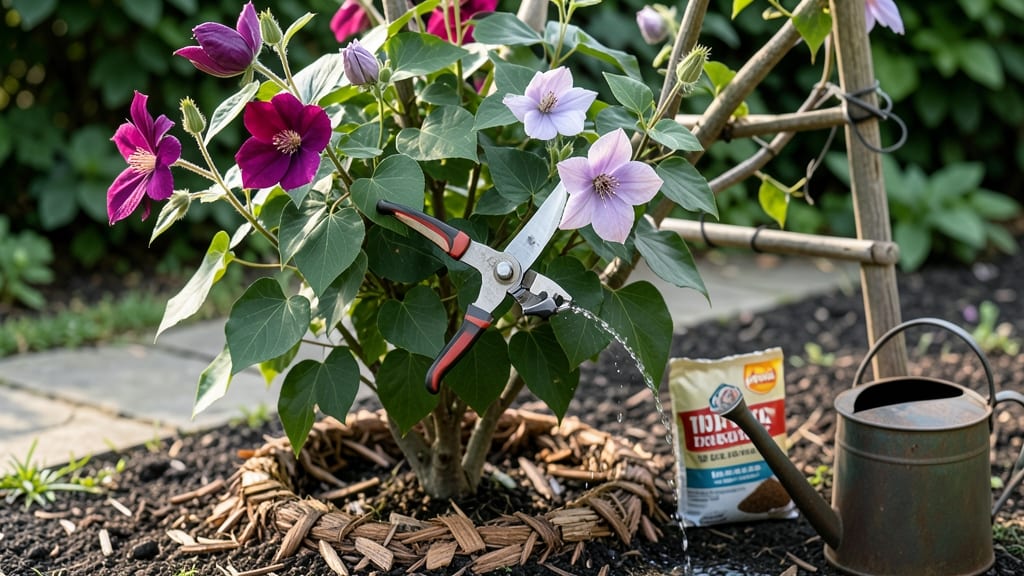
How to make clematis bloom all summer—your garden can become a purple waterfall if you prune it right. ✨ The secret isn’t just cutting back; it’s understanding which stems produce blooms and when to encourage new growth. My first summer with clematis ended with just two sad flowers, but after learning this pruning system, my vines now burst with blooms from June through frost.
Start by identifying your clematis type—early bloomers need gentle pruning, while late-season varieties thrive with aggressive cuts. You’ll need sharp pruners, a notebook to track growth, and a sunny spot with support (trellis or arbor).
The key is timing: prune early bloomers right after their first flush, while late bloomers wait until spring. Most gardeners mess this up by pruning at the wrong time, so mark your calendar for late February or early March.
After pruning, feed your clematis with balanced fertilizer (10-10-10) and water deeply once a week. The vines will reward you with foot-long spikes of blooms by midsummer, and with consistent care, they’ll keep flowering until fall.
The best part? You’ll avoid the heartbreak of sparse blooms that plague so many gardens.
Works for all clematis varieties—whether you’re growing the classic ‘Jackmanii’ or a delicate ‘Nelly Moser’. The same principles apply to container-grown vines too. Here’s how to keep those purple spikes coming all season.
📚 In This Guide
- What you need
- Instructions
- Tips and common mistakes
- Wrapping up and next steps
What you need
- ● Clematis plant – Choose a hardy, blooming variety (e.g., 'Jackmanii,' 'Niobe,' or 'Perle d’Azur'). Ensure it’s healthy with strong stems.
- ● Well-draining soil – A mix of garden soil, compost, and perlite (ratio: 60% soil, 30% compost, 10% perlite). Test pH (ideal: 6.5–7.5).
- ● Support structure – A trellis, arbor, or sturdy fence (height: 6–12 feet, depending on variety). Use twine or flexible ties to secure vines gently.
- ○ Balanced fertilizer – 10-10-10 or 20-20-20 (apply every 4–6 weeks during growing season). Optional: Slow-release granules for convenience.
- ● Mulch – 2–3 inches of organic mulch (e.g., shredded bark or straw) to retain moisture and regulate temperature.
- ● Pruning tools – Bypass pruners (for clean cuts on 1/4-inch stems)
- ● Loppers (for thicker stems, up to 1-inch diameter)
- ● Garden shears (for shaping)
- ● Disinfectant (rubbing alcohol or bleach solution to sterilize tools between cuts)
- ● Watering can or hose with adjustable nozzle – Aim for 1–1.5 inches of water per week (deep watering 2–3 times weekly in dry spells).
- ● Epsom salt – 1 tablespoon per gallon of water (monthly spray for magnesium boost).
- ● Copper fungicide – Prevents clematis wilt (apply early spring).
- ● Shade cloth – 30–50% coverage for afternoon sun protection in hot climates.
- ● Plant tags or labels – To track pruning groups (early/late bloomers) and varieties.
- ● Gloves – Garden or pruning gloves to protect hands from thorns and sap.
Step-by-step pruning secrets for nonstop clematis blooms
Here's the method I've used for years to turn a single summer burst of flowers into months of purple spikes.
✂️ Step 1: Identify Your Clematis Type First
Clematis bloom on old wood, new wood, or both—and pruning wrong can mean no flowers at all. Group 1 (early bloomers like 'Jackmanii') flowers on previous year's growth, so you only trim dead stems. Group 2 (repeat bloomers like 'Niobe') flowers on both old and new wood, so you do light pruning. Group 3 (late bloomers like 'Henryi') flowers only on new wood and needs aggressive pruning.
I always check my plants in early spring before new growth starts. If you see flower buds forming in winter, that's Group 1—leave them alone. If you see both old and new growth, you're Group 2. Group 3 will have no visible buds until after heavy pruning. This step is the moment that matters: get it wrong, and you'll have bare stems all season.
✂️ Step 2: Prune at the Right Time for Your Group
Group 1: Prune immediately after flowering, cutting back dead stems to the first pair of healthy buds. Never prune in late winter—you'll remove next year's blooms. Group 2: Prune lightly in late winter, removing only dead or crossing stems, then do a second light pruning after first flush of flowers. Group 3: Prune hard in late winter, cutting back to 12-18 inches above ground level.
I use sharp bypass pruners and make clean cuts at a 45-degree angle just above a bud facing outward. The key is timing: Group 1 pruning happens in June, Group 2 in March and July, and Group 3 in February. Mark your calendar now—miss this window, and you'll sacrifice blooms.
🌿 Step 3: Feed and Water for Continuous Blooming
After pruning, feed with a balanced 10-10-10 fertilizer in early spring and again after first flowers appear. Clematis are heavy feeders, and you'll see the difference in lush foliage and abundant blooms. Water deeply twice weekly during dry spells—wilting stems mean fewer flowers. I always check soil moisture by sticking my finger 2 inches deep; if it feels dry, that's your watering cue.
Here's the thing—most gardeners stop feeding after initial blooms. But clematis respond to consistent feeding. I make it a habit to add slow-release fertilizer granules around the base every 6 weeks during growing season. You'll notice new flower buds forming within 4-6 weeks of proper feeding.
☀️ Step 4: Provide Support and Sunlight
Clematis need 6+ hours of morning sun and partial afternoon shade to prevent leaf scorch. If your plant gets afternoon sun, watch for crispy edges—this means it's time to add shade cloth. I use a sturdy trellis or arbor with 4-6 inch spacing between supports, which gives vines room to grip without strangling each other.
Tie new growth gently with soft plant ties every 10-12 inches as it climbs. The goal is to guide growth without restricting it. You'll see stronger stems and more abundant blooms when vines have proper support. Real talk: I've seen clematis with no support produce flowers, but they're always fewer and less vibrant.
⏰ Step 5: Deadhead and Maintain Through Summer
Deadhead spent blooms regularly to encourage more flowers. I pinch off faded blooms with my fingers—no need for tools. For Group 2 and 3 plants, also remove any seed heads that form, as they sap energy from new blooms. You'll notice new flower buds forming within 2-3 weeks of deadheading, especially on Group 3 plants.
Don't skip this (I learned the hard way). One summer I stopped deadheading, and by August my clematis had only 3 blooms instead of the usual 100+. Keep the plant healthy by removing any yellowing or diseased leaves immediately. A weekly check for pests like aphids prevents infestations that can weaken the plant and reduce flowering.
Tips & tricks for nonstop clematis blooms
These simple strategies will help you extend your clematis' flowering season from weeks to months.
Group Identification: I can't stress enough how critical this first step is—mistaking your clematis group can mean no flowers all season. For Group 1 plants, look for flower buds forming on last year's stems in winter. Group 2 plants will show both old and new growth, while Group 3 plants won't show buds until after pruning. I always double-check by examining stems with a magnifying glass if I'm unsure.
Pruning Precision: When pruning Group 3 plants to 12-18 inches, make your cuts just above an outward-facing bud at a 45-degree angle. This creates a natural water runoff and prevents disease. I've seen gardeners cut too close to buds, which can damage new growth. Also, never prune Group 1 plants in late winter—they'll lose next year's blooms.
Feeding Strategy: The 6-week feeding schedule is non-negotiable for continuous blooms. I always apply fertilizer in early spring and again after the first flowers appear, then set a phone reminder every 6 weeks during growing season. Most gardeners make the mistake of stopping after initial blooms—this is when clematis actually respond best to consistent feeding.
Deadheading Discipline: I learned this the hard way after my clematis went from 100 blooms to just 3 in one season. Deadhead spent blooms regularly—Group 3 plants will show new buds within 2-3 weeks of deadheading. For Group 2 plants, also remove seed heads as they form to redirect energy to new blooms. I keep a small pair of scissors in my gardening apron for quick deadheading sessions.
Pro Tips for Make Clematis Bloom All Summer
- These simple strategies will help you extend your clematis' flowering season from weeks to months.
- Group Identification: I can't stress enough how critical this first step is—mistaking your clematis group can mean no...
- Pruning Precision: When pruning Group 3 plants to 12-18 inches, make your cuts just above an outward-facing bud at a ...
Frequently asked questions
Got questions about keeping your clematis blooming like a dream all summer? You’re not alone! Here are some of the most common queries—and their answers—to help you troubleshoot and thrive.
Why isn’t my clematis blooming even after pruning?
If your clematis is still shy about blooms, check its light (6+ hours of sun) and soil (well-draining, rich in organic matter). Over- or under-pruning can also delay flowers. Group 1/2 varieties (early bloomers) may need a late-winter trim, while Group 3 (late bloomers) thrive with a post-flower cutback. Pro tip: Feed with a balanced fertilizer in spring and mid-summer for extra energy!
When is the best time to prune for continuous blooms?
Timing depends on your clematis type:
- Group 1 (early bloomers): Prune right after flowering (late spring) to avoid cutting off next year’s buds.
- Group 2 (repeat bloomers): Trim lightly after the first flush, then again in early summer to encourage more flowers.
- Group 3 (late bloomers): Prune hard in late winter (down to 12–24 inches) for a bold second bloom.
Can I make clematis bloom without pruning?
Some varieties (like Group 1) will bloom without pruning, but growth can get unruly, and flowers may be smaller or fewer. Light pruning to remove deadwood or shape the plant still helps air circulation and encourages new growth. For Groups 2 and 3, pruning is key to prolonged blooms. Think of it as a spa day for your vine—necessary for its best look!
My clematis has bugs or diseases—will that stop the blooms?
Yes! Pests like clematis wilt (a fungal disease) or aphids can sap energy, leading to fewer blooms. Treat fungal issues with copper fungicide and aphids with soapy water or neem oil. Prevention tip: Space plants for airflow, water at the base (not leaves), and mulch to deter soil-borne diseases.
What if my clematis is young—should I prune it at all?
New clematis (under 2 years old) need minimal pruning—just remove dead or crossing stems to encourage establishment. Focus on support (a sturdy trellis) and soil health (compost or slow-release fertilizer). Wait until the plant is 3+ years old for heavier pruning. Patience pays off with bigger, better blooms later!
Wrapping up and next steps
With the right pruning techniques, proper care, and a little patience, your clematis can burst into vibrant blooms all summer long! 🌸 Remember, the key is understanding your plant’s type, timing cuts strategically, and keeping it healthy with water, sunlight, and nutrients.
Don’t let overwhelm stop you—start small, observe your plant, and adjust as you go.
Ready to transform your garden? Grab your pruners and get started today! Watch as your clematis rewards you with nonstop color from spring to fall. Happy gardening! 🌿