
Watering
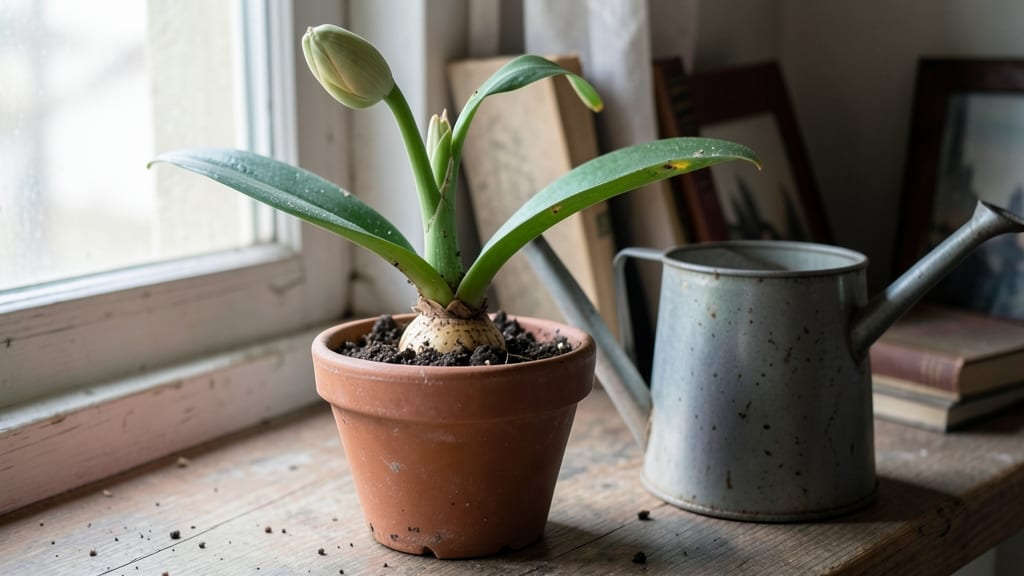
Watering amaryllis bulbs requires a precise schedule: soak the soil until water drains freely every 1-2 weeks during active growth and blooming, then reduce to once every 3-4 weeks in dormancy. Overwatering is the most common cause of bulb rot.
Amaryllis bulbs thrive on a careful balance—too much water drowns their roots, while too little stunts their dramatic blooms.
During their active phase, when they're pushing up those showstopping flowers, they need that deep soak to encourage robust growth, but the soil must dry out between sessions to prevent soggy roots. 🌱 Think of it like nurturing a high-maintenance diva: consistent but not excessive attention keeps them performing at their best.
When they enter dormancy after blooming, their needs shift dramatically. Cutting back to monthly watering mimics their natural cycle, helping the bulb store energy for next year's spectacle. This is where many well-meaning gardeners overdo it—remember, amaryllis bulbs are tough survivors, not delicate annuals.
The key is observing the soil rather than sticking rigidly to a schedule.
💡 In This Article
- Amaryllis Watering Science: Why Timing Matters for Blooms
- Seasonal Amaryllis Care Checklist: Watering + Light + Soil Tips
Amaryllis watering science: why timing matters for blooms
Amaryllis bulbs are native to South America's arid regions, where they evolved to store water and nutrients during dry seasons. This adaptation explains why they need precise watering—too much creates anaerobic conditions that suffocate roots, while too little triggers stress hormones that actually promote blooming.
When you withhold water slightly during dormancy, the bulb perceives this as a natural signal to conserve energy and prepare for next season's flower spike. 🌿 The root zone must have at least 30% air space to prevent rot, which is why well-draining soil with perlite or sand is critical.
During active growth (spring through summer), amaryllis bulbs demand 1.5-2 inches of water per week, delivered through deep soaking rather than frequent shallow drinks. This mimics their natural rainfall patterns in the wild, where heavy downpours are followed by dry periods.
The key is letting the top 2-3 inches of soil dry completely between waterings—this encourages deeper root growth and prevents the fungal infections that cause bulb rot. Think of it like training an athlete: intense sessions (watering) followed by recovery periods (drying) build strength.
What most people don't realize is that amaryllis bulbs actually bloom in response to water stress. When you reduce watering in late summer, the bulb experiences mild dehydration, which triggers the production of florigen—a hormone that initiates flower bud formation.
This is why consistent watering during dormancy (every 3-4 weeks) is crucial: it maintains just enough moisture to keep the bulb alive without stimulating premature growth. Too much water during this phase can delay blooming by 3-6 weeks the following spring.
The science of root zone aeration explains why amaryllis bulbs rot so easily when overwatered. Bulbs have a thick, papery skin that regulates moisture, but when constantly wet, this barrier breaks down. The roots become waterlogged, cutting off oxygen supply—a condition called hypoxia that kills cells within 24-48 hours.
You can test soil aeration by pressing your finger 2 inches deep: if it feels damp, wait before watering. In winter, when bulbs are dormant, their metabolic rate drops to 10% of active levels, meaning they need 90% less water to survive.
Seasonal light exposure directly affects water needs. During spring's 12-14 hours of daylight, amaryllis bulbs photosynthesize rapidly, requiring more frequent watering to support leaf growth. But in winter's 8-10 hour days, their energy needs plummet, so even 1-2 waterings per month may be too much.
The bulb's natural cycle shows how interconnected these factors are: proper light triggers growth, which increases water demand, while proper watering prevents stress that could delay blooming. 🌸
Here's what happens when you get it wrong: Overwatering in winter causes bulbs to rot within 4-6 weeks, while underwatering in spring can stunt leaf growth by 30-50%.
The ideal soil moisture balance creates a 60/40 water-to-air ratio in the root zone—this delicate equilibrium is what professional growers monitor with moisture meters.
Most home gardeners can achieve this by using a mix of 50% potting soil, 30% perlite, and 20% sand, which mimics the loose, well-draining conditions of their native habitat.