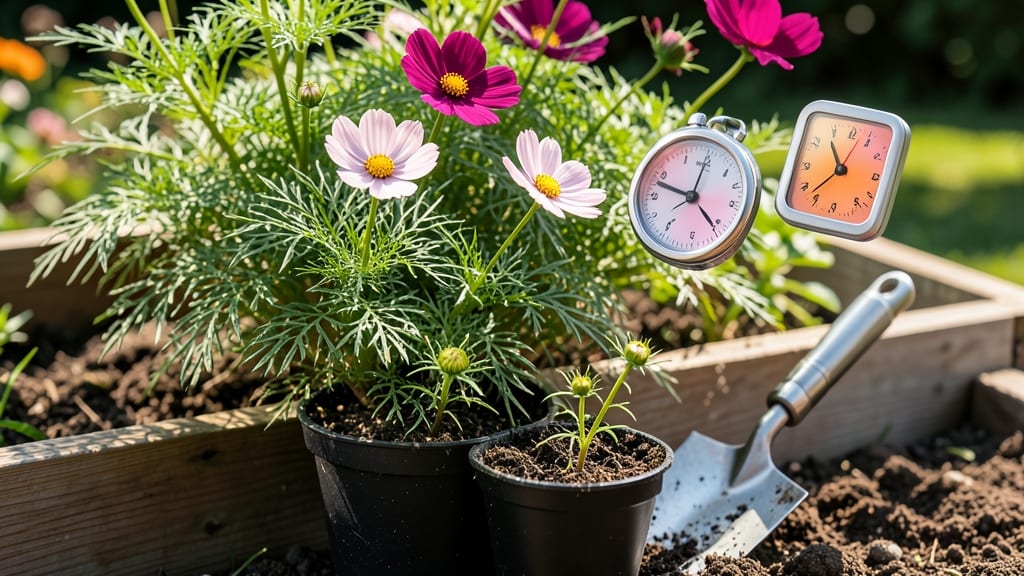
Blooming cosmos flowers from seed takes just 60 to 90 days—a speed that makes them one of the fastest annuals to transform your garden from bare soil to vibrant blooms.
If you’ve ever wondered why cosmos flowers seem to appear almost overnight in your garden, the answer lies in their rapid growth cycle—just 60 to 90 days from seed to bloom. But timing isn’t the only factor; soil, sunlight, and variety play crucial roles in unlocking their full potential.
In Zone 6a, where spring planting kicks off in April, you’ll see those first delicate buds unfurl as early as June, provided your seeds get full sun and well-draining soil. Skimp on either, and you’ll push back that timeline by weeks.
Below, I’ll break down the exact stages—from seed to those showstopping blooms—plus the simple tweaks that keep cosmos flowering all the way through October.
🌸
🍂
🍁
🍂
🍁
zz

☀️
🍂
❄️
Spring
Summer
Fall
Winter
🌱
Plant: April - May (after last frost)
🌼
Harvest: June - October
Cosmos bloom timeline: exact days from seed to flower by variety
Cosmos flowers are famous for their fast growth and prolific blooms, but not all varieties follow the same timeline. From seed to first flower, most cosmos take 60 to 90 days, but specific varieties can bloom earlier or later depending on growing conditions.
Understanding these timelines helps you plan your garden for continuous color from summer to frost.
For example, 'Sensation Mix' cosmos often bloom in just 55 to 65 days, while 'Bright Lights' may take up to 75 to 85 days. The difference comes down to genetics, sunlight exposure, and soil warmth.
Let’s break down the exact bloom timelines for the most popular cosmos varieties, so you can predict when your garden will burst into color.
🌱 Germination typically occurs in 5 to 14 days after planting, depending on soil temperature. Once sprouted, seedlings grow 1 to 2 inches per week under ideal conditions. The key stages—from seed to first bud to full bloom—vary slightly by variety, as shown below.
🌿 Environmental factors like full sun exposure (6+ hours daily) and well-draining soil can cut bloom time by 10 to 20 days. Conversely, shady spots or cool soils may delay blooming by 2 to 4 weeks. Always plant after the last frost in your USDA Zone (typically Zone 3-11) for best results.
| Variety |
Germination (Days) |
Seedling to Bud (Days) |
Bud to Bloom (Days) |
Total Seed to Bloom (Days) |
Height (ft) |
Color Notes |
| 'Sensation Mix' |
5-10 |
28-35 |
12-18 |
45-63 |
2-4 |
Pink, white, red |
| 'Bright Lights' |
7-12 |
35-42 |
18-22 |
60-76 |
3-5 |
Multicolored stripes |
| 'Seashells' |
6-10 |
30-38 |
10-14 |
46-62 |
1-2 |
White, blush pink |
| 'Double Click' |
8-14 |
40-48 |
20-25 |
68-87 |
4-6 |
Deep pink, double blooms |
| 'Purity' |
5-9 |
25-32 |
10-1
5 Key factors that speed up or delay cosmos blooming
When you plant cosmos seeds, you’re essentially starting a race against time—and the environment—to see those vibrant blooms appear. While the 60-90 day timeline is typical, several factors can either accelerate or delay this process. Understanding these will help you optimize growth and enjoy cosmos flowers even faster.
First, sunlight exposure is non-negotiable. Cosmos thrive in full sun (6+ hours daily), but even slight shade can stretch their bloom time by 2-3 weeks. If your garden gets only partial sun, consider planting cosmos in containers and moving them to sunnier spots as the day progresses.
Next, soil temperature plays a surprising role. Cosmos seeds germinate best in soil that’s at least 60°F (15°C). Cold, damp soil slows germination, adding 10-14 extra days to your timeline. Use a soil thermometer to monitor temperatures, especially in early spring or fall plantings.
🌱 Key Factors Affecting Cosmos Bloom Time
-
1
Sunlight Exposure: 6+ hours daily cuts bloom time by 2-3 weeks vs. partial shade.
-
2
Soil Temperature: Ideal 60°F+ (15°C+) speeds germination; cooler soil adds 10-14 days.
-
3
Watering Frequency: Deep watering 2x/week prevents stress; overwatering delays blooms by 1-2 weeks.
-
4
Spacing: 12-18 inches apart reduces competition; crowding delays blooms by 10-15 days.
-
5
Seed Depth: Plant ¼ inch deep for faster sprouts; deeper planting adds 5-7 days to germination.
Don’t overlook watering frequency, either. Cosmos are drought-tolerant once established, but inconsistent watering—especially during dry spells—can cause stress delays of up to 1-2 weeks. Aim for deep watering 2x weekly rather than shallow, frequent watering. Use a moisture meter to check soil levels and avoid soggy roots.
Proper spacing is another game-changer. Cosmos planted too closely compete for nutrients and sunlight, which can delay blooming by 10-15 days. Give them 12-18 inches of space, and they’ll reward you with fuller, faster blooms. If you’re short on space, try container gardening with dwarf varieties like 'Purity.'
Finally, seed depth matters more than you might think. Planting cosmos seeds too deep (more than ¼ inch) forces seedlings to work harder to reach the surface, adding 5-7 extra days to germination.
A light sprinkle of soil and a gentle pat is all you need—no need to bury them deep.
By mastering these five factors, you’ll turn that 60-90 day timeline into a 45-60 day sprint to cosmos paradise. Happy gardening! 🌼
★★★★★4.8(4 reviews)
|