
Flowers
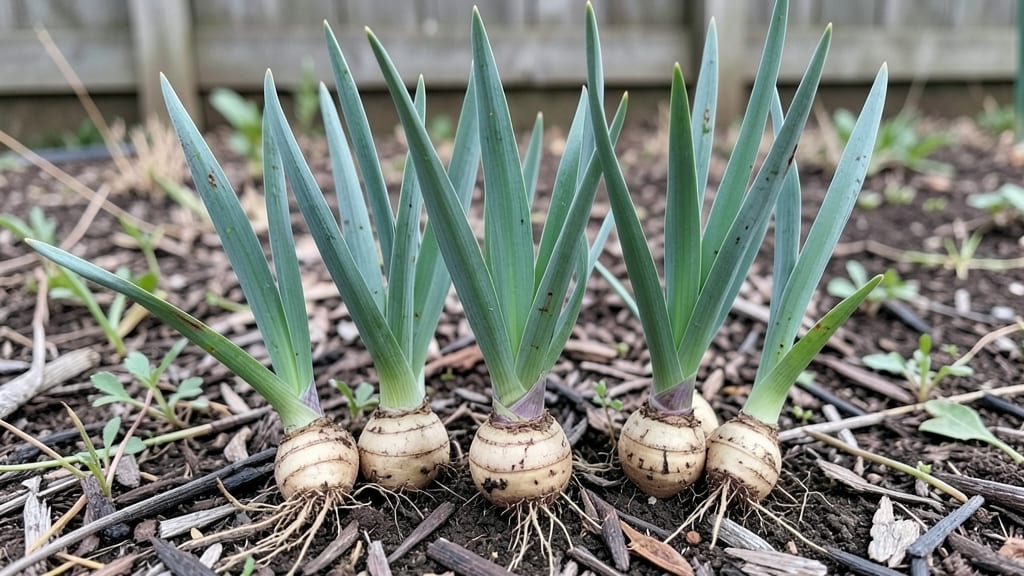
Irises do not have traditional bulbs like tulips or daffodils; instead, they grow from rhizomes—thick, horizontal underground stems that store nutrients and produce new shoots each season.
These underground stems aren't just roots—they're powerhouses that let irises thrive year after year. Unlike bulbs that store nutrients in compact layers, iris rhizomes spread horizontally, creating a network that supports multiple flower stalks.
This growth habit is why they're so hardy in gardens, often returning stronger each spring after proper winter care.
What's fascinating is how this structure affects planting—rhizomes need to sit partially exposed to sunlight during dormancy, unlike bulbs that prefer complete soil coverage. I've learned the hard way that burying them too deep suffocates the plant, while leaving them too bare risks drying out.
The key is finding that sweet spot where they get just enough air and moisture to flourish!
💡 In This Article
- Rhizomes vs. Bulbs: How Iris Roots Differ
- Planting and Caring for Iris Rhizomes
Rhizomes vs. bulbs: how iris roots differ
Here's what's actually happening underground with irises: their growth system is fundamentally different from bulbous plants. While tulips and daffodils store nutrients in compact, layered bulbs (like an onion's rings), irises use rhizomes—thick, fleshy stems that spread horizontally just below the soil surface.
These rhizomes contain specialized cells that store starches and sugars, but unlike bulbs, they don't form concentric layers. Instead, they grow outward year after year, creating a sprawling network that can support multiple flower stalks simultaneously.
The key difference lies in their nutrient storage mechanism. Iris rhizomes have a high water content (about 80-85%) during active growth, which makes them more resilient to drought once established. Their structure also allows for continuous growth points along the stem, meaning each segment can produce new shoots.
This is why mature iris clumps can produce dozens of blooms—each new stem emerges from a different point along last season's rhizome. In contrast, bulbous plants rely on a single central growth point each year.
What this means for gardeners is a different care approach. Rhizomes need partial exposure to sunlight during dormancy (unlike bulbs which prefer complete darkness), and they multiply through division rather than bulb offsets.
I've noticed that iris rhizomes develop a leathery, papery skin as they mature, which helps protect against moisture loss—similar to how cacti have thick skins, but in this case, it's for underground survival.
This adaptation explains why irises thrive in USDA zones 3-9, often returning stronger each year with proper care.
There's also a fascinating seasonal cycle: in late summer, iris rhizomes enter dormancy and stop producing leaves, but they continue storing nutrients. This is when gardeners should divide and replant—the rhizomes will have developed new growth points ready for next season.
The contrast with bulbs is striking: while tulip bulbs go dormant underground completely, iris rhizomes remain active in their horizontal spread, even if above-ground growth has ceased.
For visual learners, imagine a horizontal root system that looks like a series of connected sausages buried just below the surface, each segment capable of producing new growth. This structure explains why irises spread so aggressively—each rhizome segment can become its own plant.
In my backyard, a single iris clump has expanded to cover about 3 square feet in just three years, all from that initial planting!
This growth habit also affects how irises handle transplanting. Unlike bulbs that can be dug up, stored, and replanted with minimal stress, iris rhizomes develop a delicate root system that needs careful handling.
The rhizome's top should always remain above soil level—burying it too deep suffocates the plant, while leaving it too exposed risks drying out. This precise balance is what makes iris care so rewarding once you understand their unique biology.
The bottom line is that irises have evolved a more resilient growth system than bulbs, perfectly adapted to their native habitats in temperate climates. Their rhizomes store energy more efficiently for long-term survival, which is why they often outlive many bulbous perennials with proper care.
Understanding this difference helps explain why irises come back year after year with minimal intervention—nature's built-in survival strategy!