
Blooming
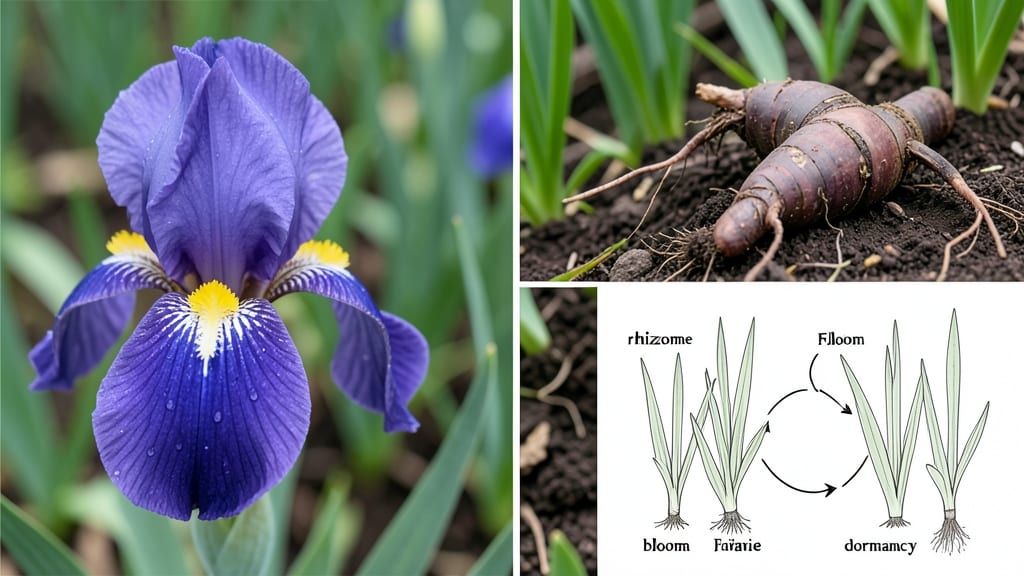
Irises don't bloom every year—they follow a natural rebirth cycle, flowering for just 2–4 weeks in spring before entering dormancy to rebuild energy. With the right care, you can encourage more frequent blooms over time.
This annual flowering pattern isn't a flaw—it's how irises recharge. 🌸 During their dormant phase, they focus energy on root and rhizome growth, which directly impacts next year's bloom quality. Think of it like a plant version of hibernation: they store nutrients underground to fuel their spring comeback.
The timing varies by iris type, with bearded irises often blooming later than Siberian varieties, so don't panic if your neighbors' plants are already in bloom while yours aren't.
What many gardeners miss is that proper post-bloom care makes all the difference. When those dramatic petals fade, the foliage keeps working—it's photosynthesizing to feed the roots. Cutting it back too soon starves the plant, while leaving it too long can weaken next year's flowers.
The key is patience: wait until the leaves turn yellow before trimming, and you'll see stronger blooms the following spring.
💡 In This Article
- Why Irises Skip Blooming: The Science Behind Their Cycle
- How to Encourage Year-Round Iris Blooms
Why irises skip blooming: the science behind their cycle
Irises follow a precise biological rhythm where blooming isn't continuous but seasonal. During their 2-4 week spring flowering, they allocate nearly all energy to producing vibrant blooms, which requires significant resources.
What most gardeners overlook is that this extravagant display is followed by a 6-8 month dormant phase where the plant redirects energy underground to strengthen its rhizomes or bulbs—this storage system is their survival strategy for harsh conditions.
This cycle mirrors how deciduous trees shed leaves in winter to conserve energy.
The dormancy trigger varies by iris type. Rhizomatous irises (like bearded varieties) rely on their thick, horizontal root systems to store starches, while bulbous irises (such as Dutch irises) store nutrients in their underground bulbs.
Both types need 10-12 weeks of cooler temperatures (below 60°F) to break dormancy—this chilling period resets their internal clocks, similar to how fruit trees need winter chilling to bloom properly. Without this, irises may produce fewer or weaker flowers, even if they have ample sunlight and water.
Light exposure plays a crucial role too. Irises are photoperiod-sensitive, meaning they respond to daylight length. In short-day plants like Siberian irises, blooming triggers when daylight hours shorten in late summer/early fall, but the actual flowers appear in spring after sufficient root growth.
Meanwhile, long-day plants like bearded irises need extended daylight (14+ hours) to initiate blooming. This is why irises in northern climates often bloom earlier than those in southern regions—they're following their internal light cues rather than a strict calendar.
Climate variations create another layer of complexity. In mild winter regions (USDA zones 8-10), irises may bloom more consistently because they don't experience the same dormancy triggers. However, this can lead to exhausted rhizomes over time since they're constantly producing flowers without proper recovery periods.
The trade-off is that these regions can support year-round growth if given proper care, while colder climates require more patience for the natural cycle to complete.
Here's what happens when you disrupt this cycle: Overwatering during dormancy can rot rhizomes, while insufficient nutrients lead to weak foliage that can't support blooming. The plant's survival instinct kicks in—if it can't bloom, it will prioritize root growth.
This is why even healthy-looking irises might skip a year: they're playing the long game, storing energy for future displays rather than showing off every season.
Consider this analogy: An iris is like a marathon runner who trains for months before the big race. They don't sprint every day—they build endurance first. The blooms are the race, and the roots are the training. 🌱