
Blooming
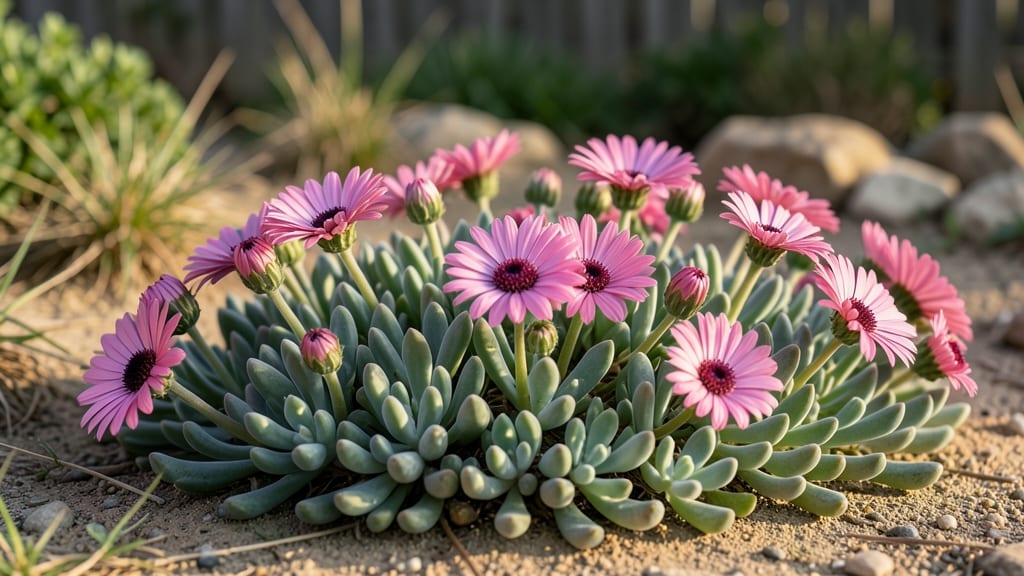
Ice plants can bloom all summer long when given the right growing conditions—think bright sunlight, well-draining soil, and consistent care to encourage continuous flowering from spring through fall. Different varieties have unique blooming patterns, but most thrive with minimal deadheading.
These succulent plants are summer's rockstars, turning your garden into a vibrant display when cared for properly. 🌸 The secret lies in their love for full sun exposure—at least 6 hours daily—which triggers their natural blooming instincts.
Many gardeners swear by a light feeding of low-nitrogen fertilizer every 4-6 weeks to keep those flowers popping up nonstop. What's fascinating is how some varieties, like Delosperma, actually bloom more prolifically under mild drought conditions—just don't let them get waterlogged!
The key to extending their summer show is regular maintenance: snip off spent blooms to encourage new growth, and watch your ice plants reward you with weeks of colorful flowers. Pro tip: If you live in a hot climate, provide afternoon shade to prevent wilting while still getting that essential morning sun.
With these simple adjustments, you'll have a nonstop floral spectacle from June right through September!
💡 In This Article
- Factors Influencing Ice Plant Summer Blooms
- Tips to Extend Ice Plant Flowering Season
Factors influencing ice plant summer blooms
Ice plants thrive on sunlight like no other succulent—most varieties demand full sun exposure (6-8 hours daily) to trigger their blooming mechanisms. The key lies in their native habitats: these plants evolved in arid regions where intense sunlight is the primary energy source for photosynthesis.
When exposed to direct sunlight, ice plants produce more chlorophyll, which directly fuels their flower production. Interestingly, some varieties like Delosperma actually bloom more prolifically when given partial shade during peak afternoon heat (1-3 PM), as this prevents leaf scorch while maintaining sufficient light for flowering.
The science behind their blooming cycles involves photoperiodism—the plant's response to daylight length. Most ice plants are day-neutral, meaning they'll bloom continuously as long as they receive adequate light, unlike some plants that require specific day lengths.
Their flowering triggers also respond to temperature fluctuations: optimal blooming occurs between 60-85°F (15-29°C), with cooler nights (below 70°F/21°C) actually stimulating bud formation. This is why they often bloom most vigorously in spring and fall when temperatures moderate—though many varieties adapt to summer heat with proper care.
Soil conditions play an equally critical role in summer blooming. Ice plants absolutely despise soggy roots—their thick, fleshy leaves store water, making them drought-tolerant once established. For continuous blooms, use a well-draining soil mix (60% mineral soil + 30% sand + 10% perlite) with a pH between 6.0-7.5.
The right soil pH ensures proper nutrient uptake, particularly calcium and magnesium, which are essential for flower development. Too much organic matter in the soil can actually reduce blooming by encouraging leafy growth over flowers—a common mistake gardeners make when amending soil with compost.
Watering patterns might surprise you: ice plants often bloom more prolifically when given infrequent, deep waterings (every 2-3 weeks) rather than frequent light waterings. This mimics their natural drought conditions and triggers stress responses that stimulate flowering.
Overwatering leads to weak stems and fewer blooms, while proper drought conditions encourage the plant to focus energy on flower production. The exception is during extreme heat waves—then you might need to water every 10-14 days to prevent wilting while still maintaining that drought-like stress for optimal blooming.
One fascinating adaptation is how ice plants respond to seasonal changes. As summer progresses, many varieties enter a semi-dormant state where growth slows but blooming continues. This is their way of conserving energy while still producing flowers.
The key to maintaining summer blooms is to avoid fertilizing with high-nitrogen products (like 10-10-10 fertilizer), which promotes leaf growth at the expense of flowers. Instead, use a low-nitrogen, high-phosphorus fertilizer (5-10-10 ratio) every 6-8 weeks to encourage more abundant blooming throughout the season.
Consider these key environmental factors when planning your ice plant display:
- Light requirements: Minimum 6 hours full sun daily, with afternoon shade in extreme heat zones (Zones 9-11)
- Temperature range: Ideal blooming occurs between 60-85°F (15-29°C) with cooler nights stimulating buds
- Soil type: Fast-draining mix with 10-20% sand or grit to prevent root rot
- Watering schedule: Deep waterings every 2-3 weeks (more frequent only during extreme heat)
- Fertilizer type: Low-nitrogen, phosphorus-rich formula applied every 6-8 weeks during growing season
The result? A nonstop summer floral display that turns heads and attracts pollinators—all while requiring minimal maintenance once established. 🌟