
Blooming
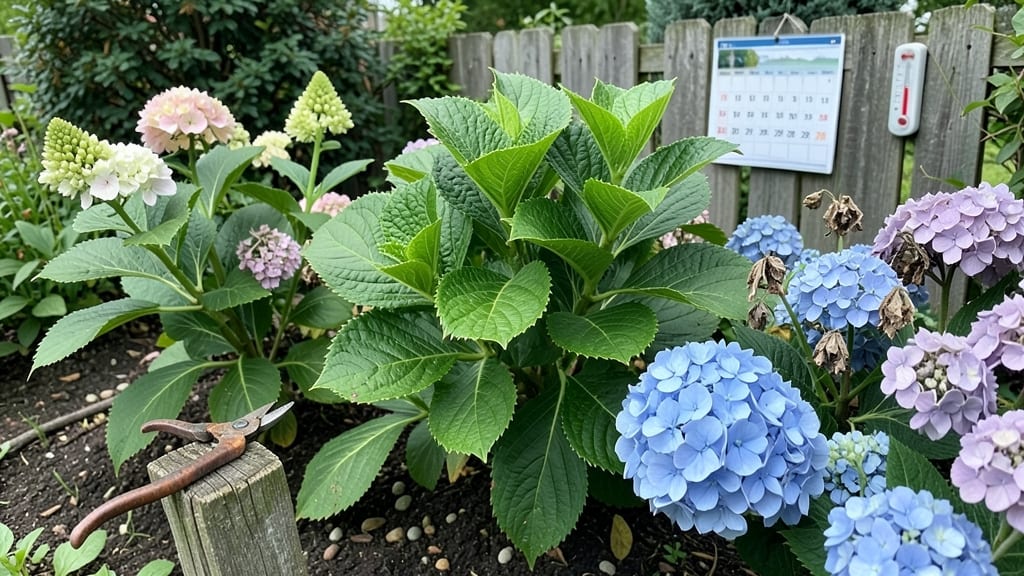
Hydrangeas don't bloom all year; most varieties flower seasonally from late spring through early fall, with timing determined by your climate zone, specific variety, and how you prune them.
Hydrangeas are seasonal showstoppers, not year-round bloomers. 🌸 The key factors—like temperature shifts and daylight hours—trigger their growth cycles, with most types needing cold winters to reset for spring blooms. Even tropical varieties have natural lulls, though they may flower longer in warm climates.
I've seen mophead hydrangeas in Zone 5 burst into color by June, while panicle types often extend their display into September or October.
What surprises many gardeners is how pruning can tweak this schedule. For example, cutting back bigleaf hydrangeas in late summer encourages a second flush of blooms before winter, while panicle varieties actually reward heavy spring pruning for extended summer-to-fall color.
The secret lies in understanding each variety's unique growth patterns and matching care to your local frost dates.
💡 In This Article
- Hydrangea Blooming Seasons by Variety and Climate
- Extending Hydrangea Blooms: Pruning and Care Tips
Hydrangea blooming seasons by variety and climate
Hydrangeas follow strict seasonal rhythms because their blooming is triggered by two key environmental signals: temperature shifts and daylight hours.
Most varieties need a period of cold dormancy (typically 4-6 weeks below 40°F) to reset their growth cycle, which explains why they burst into color in late spring after winter.
For example, mophead hydrangeas (Hydrangea macrophylla) in USDA Zone 5 usually bloom from June to August, while panicle types (Hydrangea paniculata) often extend their show until October or even November due to their later growth habit.
Daylight length plays an equally important role. Many hydrangeas are "short-day" plants, meaning they flower when daylight hours shorten in late summer. This is why you'll see panicle hydrangeas like 'Limelight' or 'Little Lime' produce their most dramatic blooms in September—right as days grow shorter.
Tropical varieties like Hydrangea macrophylla 'Endless Summer' are exceptions, bred to rebloom on new wood, which is why they can flower from spring to frost in warm climates (Zones 6-9). The trade-off? They still need a brief rest period to prevent exhaustion.
Climate zones dramatically alter these timelines. In Zone 7, mopheads might bloom from May to September, while in Zone 3, their season shrinks to June-August due to shorter growing seasons.
Even within the same zone, microclimates matter—hydrangeas in sheltered spots bloom 2-3 weeks earlier than those in exposed areas. The science behind this is photoperiodism: plants detect changing light patterns through specialized proteins called phytochromes, which trigger flower formation when daylight falls below 14 hours.
Here's how varieties compare in typical blooming windows:
- Mopheads (H. macrophylla): Late spring to early fall (May-September in Zones 5-9), with reblooming types extending to frost
- Panicles (H. paniculata): Midsummer to fall (July-November), often with late-season color peaks
- Oakleaf (H. quercifolia): Late spring to early summer (May-July), with stunning fall foliage as a bonus
- Smooth (H. arborescens): Early to midsummer (June-August), with some varieties reblooming if pruned correctly
The most dramatic exceptions are tropical varieties like Hydrangea macrophylla 'Nikko Blue', which can bloom year-round in Zone 10+** with consistent warmth and moisture. However, even these need a 2-4 week rest period every 6-8 months to prevent decline.
The key takeaway? No hydrangea is truly "all-year," but strategic variety selection and care can create near-continuous color in warm climates.
What most gardeners overlook is how soil temperature affects root activity. Hydrangeas won't bloom until roots reach 55°F—this is why late frosts can delay flowering by 3-4 weeks in marginal zones.
Mulching with 3-4 inches of organic matter helps maintain consistent root temperatures, which is why well-mulched plants often bloom 10-14 days earlier than unmulched ones.