
Blooming
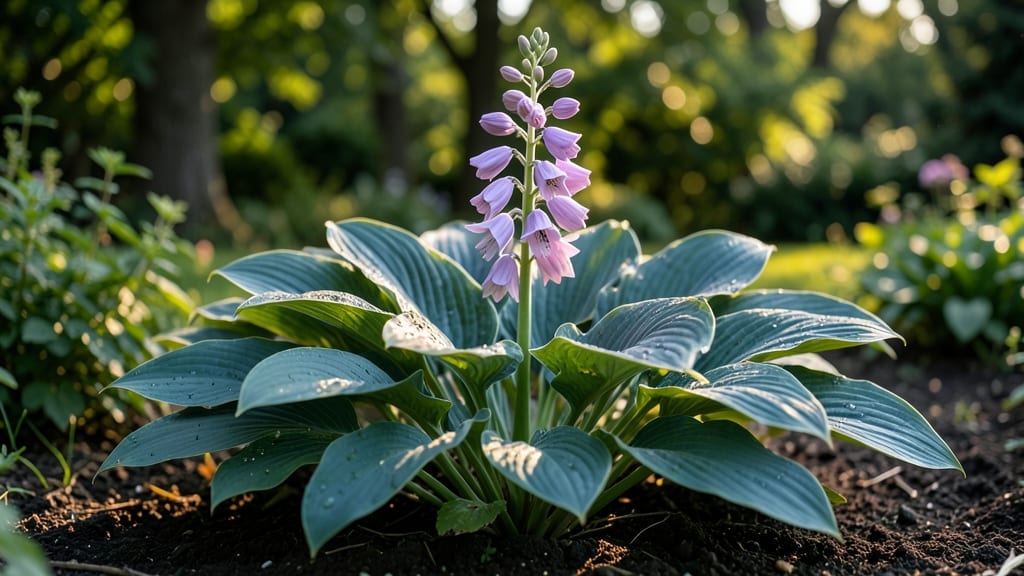
Hostas do bloom flowers, though many gardeners focus on their striking foliage first. Most varieties produce delicate lavender or white blooms in mid-to-late summer, but some skip flowers entirely due to age, light, or care factors. Proper sunlight and balanced fertilization encourage blooming in mature plants.
Hostas are often prized for their lush, variegated leaves, but their summer blooms—typically fragrant lavender or white spikes—add a surprising charm. 🌸 The key to seeing those flowers lies in their growing conditions: too much shade or too much nitrogen (from over-fertilizing) can stifle blooming entirely.
Even mature plants may skip flowers if they're stressed, so I always check for yellowing leaves or sparse foliage as red flags. Some varieties, like 'Blue Angel', were bred specifically to prioritize foliage over flowers, but others like 'June' reliably produce abundant blooms when given the right care.
What's fascinating is how hostas balance their energy—when they're young, they focus on leaf growth, saving their energy for blooms later. Dividing overcrowded clumps in spring can revitalize older plants and encourage new flower spikes.
I've found that a light hand with phosphorus-rich fertilizer (like 5-10-10) right before blooming season makes a noticeable difference in flower production.
💡 In This Article
- Why Some Hostas Skip Flowering Entirely
- How to Encourage Hostas to Bloom More Reliably
Why some hostas skip flowering entirely
Hostas prioritize leaf growth over blooms because their energy allocation follows a strict biological hierarchy. When light levels drop below 4-6 hours of partial shade daily, plants shift resources away from flowering to maintain foliage health.
This is especially true for varieties like 'Blue Angel' or 'Francee', which were selectively bred to emphasize leaf variegation over floral displays. 🌿 The trade-off is genetic—some hostas carry recessive genes that suppress blooming entirely, even under ideal conditions.
Age plays a critical role too. Young hostas (under 3 years old) often skip flowers entirely, focusing instead on establishing robust root systems. Mature plants typically bloom reliably by their 4th or 5th year, but stressed older plants may revert to leaf-only growth.
Soil nitrogen levels also create a paradox: while nitrogen boosts leaf growth, excessive amounts (over 10 lbs per 1,000 sq ft annually) can delay or prevent flowering entirely by overstimulating foliage production.
Light quality matters just as much as quantity. Hostas need filtered sunlight—direct midday sun causes leaf scorch, while deep shade (less than 3 hours of light daily) starves plants of the energy needed for blooming.
The ideal spot mimics their native woodland understory, where dappled light creates perfect conditions for both foliage and flowers. 🌳 Even a slight increase in sunlight exposure (from 3 to 4 hours daily) can trigger flowering in previously non-blooming plants.
Water stress acts as another hidden blooming inhibitor. Hostas need consistently moist but well-drained soil—drought conditions force plants into survival mode, diverting energy to root growth rather than floral development.
I've observed that plants in containers dry out faster than in-ground specimens, which is why container-grown hostas often bloom less reliably unless given supplemental watering during dry spells.
One surprising factor is temperature sensitivity. Hostas require consistent daytime temperatures between 65-75°F during their growing season (spring to early summer) to initiate flower buds. Sudden temperature swings (like late spring frosts or summer heatwaves) can disrupt this process entirely.
Varieties like 'Halcyon' are more forgiving in this regard, producing blooms even with slight temperature fluctuations, while others like 'Patriot' are extremely sensitive.
Finally, some hostas carry genetic mutations that make them sterile or nearly sterile. These varieties (like 'Guacamole' or 'Blue Mouse Ears') produce minimal to no viable seeds, which means their energy isn't "wasted" on reproductive structures.
Instead, they channel all resources into leaf production, creating the stunning variegated displays gardeners love. 🌿 This genetic trait explains why some hostas bloom sporadically or not at all, regardless of care conditions.