
Blooming
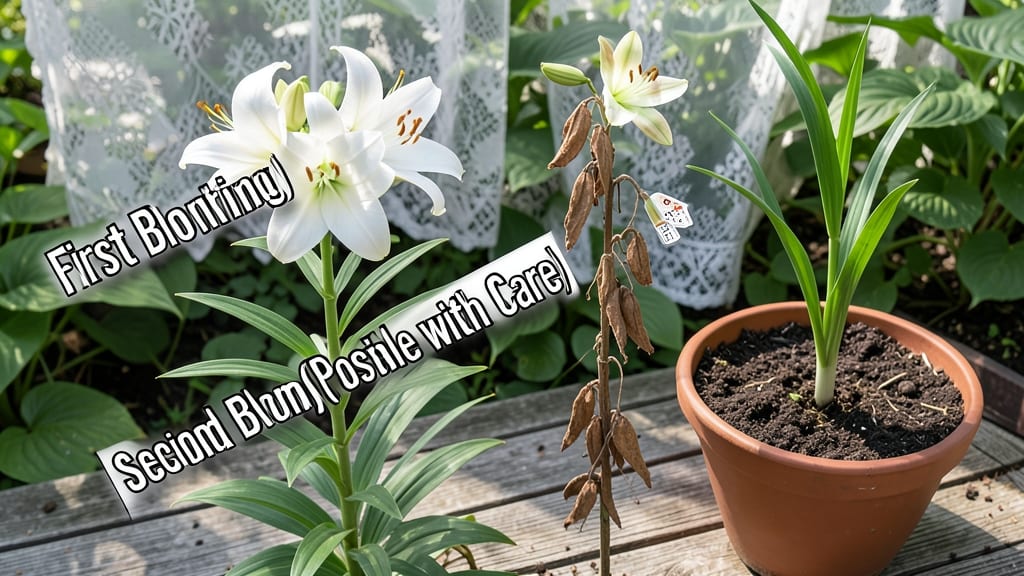
Do Easter lilies bloom more than once? Most Easter lilies produce flowers just once annually in spring, but certain reblooming varieties like 'Stargazer' or 'Casa Blanca' can generate a second, smaller bloom cycle with optimal care. Standard types remain perennial but redirect energy to foliage after their initial flowering.
Most Easter lilies follow a strict once-a-year blooming schedule because their energy goes toward producing those stunning trumpet-shaped flowers. 🌸 The plant prioritizes this primary bloom cycle, leaving little for additional flowering.
However, reblooming varieties have been selectively bred to push beyond this limit—though their second bloom is typically smaller and less robust. The key to encouraging reblooming lies in mimicking natural conditions: providing consistent moisture, well-draining soil, and proper winter dormancy.
I've found that supplementing with phosphorus-rich fertilizer in late summer helps signal the plant to prepare for potential reblooming.
What many gardeners don't realize is that even standard Easter lilies can sometimes produce secondary blooms if given ideal conditions—but this requires careful management. The plant must first establish strong root systems and store adequate energy reserves.
This is why I recommend dividing mature clumps every 3-4 years: it rejuvenates the plant and increases its chances of producing multiple bloom cycles over time.
💡 In This Article
- Why Most Easter Lilies Bloom Only Once Annually
- How to Encourage Reblooming in Easter Lilies
Why most Easter lilies bloom only once annually
Easter lilies (Lilium longiflorum) are genetically programmed to prioritize a single, dramatic bloom cycle each spring. This single-bloom behavior stems from their natural energy allocation strategy: producing those iconic white, trumpet-shaped flowers requires massive resources.
The plant invests up to 80% of its stored energy reserves in creating just 10-20 buds per stalk, leaving little for subsequent blooms. 🌸 This energy comes from the bulb's starch reserves, which are depleted during flowering.
Unlike perennials that spread energy across multiple cycles, Easter lilies treat each bloom as a high-stakes, all-or-nothing event.
The timing of this bloom is triggered by specific environmental cues: 10-12 hours of daylight (shortening days in fall) combined with cool winter temperatures (40-50°F) that signal dormancy. Most standard varieties need 8-10 weeks of vernalization (cold exposure) to properly initiate flowering.
Reblooming hybrids like 'Stargazer' have been selectively bred to partially override this cycle, but even they require perfect conditions—including well-draining soil with pH 6.0-7.0 and consistent moisture—to produce a second, smaller bloom. Without these, the plant defaults to its ancestral single-bloom pattern.
Here's what's actually happening botanically: After flowering, the plant enters a recovery phase where it rebuilds reserves through photosynthesis in the leaves. This foliage stage is critical—if you remove leaves too early (a common mistake), the bulb won't store enough energy for potential reblooming.
Standard Easter lilies typically double their bulb size over 2-3 years, but this growth is prioritized for next year's single bloom rather than multiple cycles. The trade-off is clear: spectacular first blooms at the cost of frequent reblooming.
Temperature plays a surprising role in reblooming potential. Easter lilies need winter chill hours (below 50°F) to properly reset their biological clock. In warmer climates (Zones 8-10), many standard varieties fail to rebloom because they don't get sufficient cold exposure.
This is why reblooming hybrids often perform better in cooler transitional zones (6-7) where winter temperatures dip but don't freeze. The plant's internal clock—controlled by florigen proteins—requires this cold signal to even consider a second bloom cycle.
Nutrient availability also creates a critical bottleneck. Easter lilies are heavy feeders, especially during their 6-8 week growth phase before blooming. A deficiency in phosphorus (P) or potassium (K) can completely halt reblooming attempts.
Most gardeners overlook the fall fertilization window—applying a 5-10-5 fertilizer in September helps build reserves for potential second blooms. Without this, the plant defaults to its single-bloom strategy, as evolutionarily programmed for survival in their native Japanese woodlands.
Consider this comparison: A standard Easter lily bulb produces 1-2 flower stalks with 10-20 buds in its primary bloom, while a reblooming hybrid might produce 1 main stalk + 1-2 smaller stalks with 5-10 buds each**.
The second bloom is always smaller because the plant is dividing its limited resources. This is why gardeners often see a "half-hearted" second attempt—it's the plant's way of saying "I tried, but priorities shifted."