
Flowers
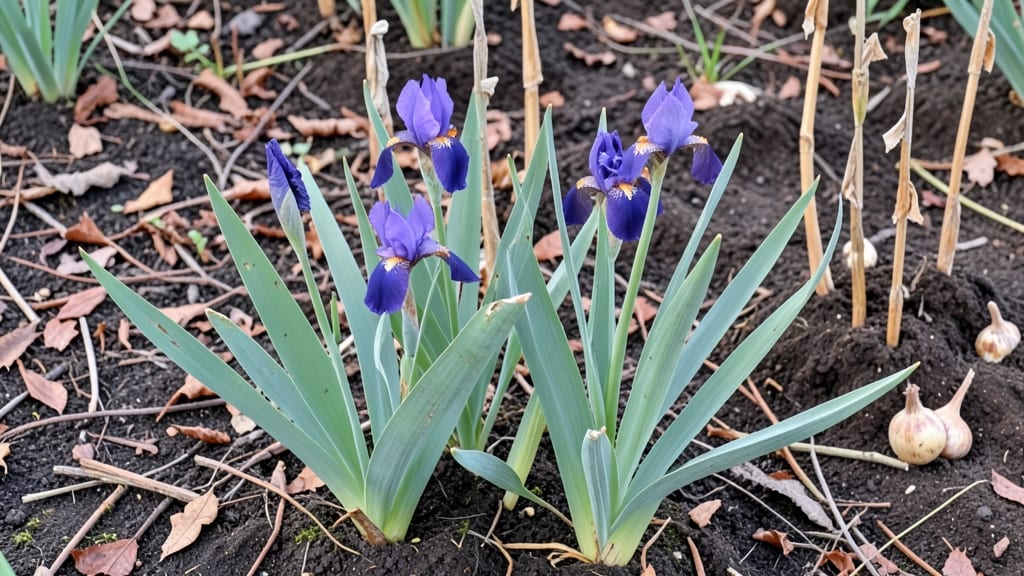
Dutch iris bulbs do multiply over time, producing offsets (smaller bulbs) that form around the parent bulb, though they spread more slowly than other spring-blooming bulbs like daffodils. Dividing them every 3-5 years prevents overcrowding and maintains bloom vigor.
Dutch iris bulbs grow new plantlets through a process called offset formation, where tiny bulblets emerge from the parent bulb's base.
Unlike aggressive spreaders like daffodils, these offsets develop gradually because Dutch iris bulbs prioritize energy for their stunning spring blooms over rapid multiplication. 🌱 The trade-off means fewer offsets per year, but each one matures into a robust plant with minimal care once established.
These bulbs thrive in well-drained soil where they can store nutrients efficiently, which explains why they don't spread as prolifically as other spring bloomers.
When you notice fewer flowers or crowded foliage, it's time to intervene—dividing them every 3-5 years lets each bulb reclaim its strength for bigger, brighter blooms next season.
💡 In This Article
- How Dutch Iris Bulb Offsets Develop Naturally
- When and How to Divide Dutch Iris Bulbs for Optimal Growth
How Dutch iris bulb offsets develop naturally
Here's what's actually happening underground: Dutch iris bulbs multiply through a process called rhizomatous offset formation, where the parent bulb produces 1-3 small bulblets annually from its base. These offsets form on horizontal rhizomes (thickened stems) that store energy as starches, similar to how potatoes grow eyes.
The key difference is Dutch iris bulbs allocate most of their energy to flower production rather than rapid spread, which is why you'll see fewer offsets compared to daffodils.
The science behind this involves the bulb's photoperiod sensitivity. Dutch iris bulbs detect daylight length changes and prioritize bloom development when days shorten in late summer.
This biological focus means offsets grow slowly—typically reaching 1-2 inches in diameter over 2-3 years—while daffodils can produce offsets that mature in just 1 year. Tulips fall somewhere in between, with offsets forming but rarely reaching full maturity without division.
What most people don't realize is how the soil environment affects this process. Dutch iris bulbs thrive in well-drained, slightly alkaline soil (pH 6.5-7.5) where their rhizomes can expand freely. In heavy clay soils, the rhizomes become restricted, forcing energy back into the parent bulb rather than offset growth.
The ideal scenario is loamy soil with 20-30% organic matter, which provides both drainage and nutrients for steady offset development.
You can observe this growth pattern by gently digging around established clumps in late summer. Look for the horizontal rhizomes (about ½-inch thick) with small bulblets attached—these are your future plants.
Unlike daffodils that can spread 6-12 inches per year, Dutch iris rhizomes typically extend only 3-6 inches annually, explaining why they appear less aggressive in the garden.
The trade-off becomes clear when comparing bloom counts. A single daffodil bulb can produce 3-5 offsets per year, while a Dutch iris bulb might yield just 1-2 mature offsets annually.
However, those offsets develop into plants with larger, more vibrant blooms because the parent bulb hasn't been drained by rapid multiplication. This energy conservation strategy is why Dutch iris flowers often outshine their faster-spreading cousins.
For gardeners, this natural growth pattern means less frequent division is needed. While daffodils may require dividing every 2-3 years, Dutch iris bulbs can often go 4-5 years between divisions without significant bloom decline.
The key is monitoring for crowded foliage or reduced flower size—visual cues that the plant's energy is being diverted from blooms to maintaining its current structure.