
Blooming
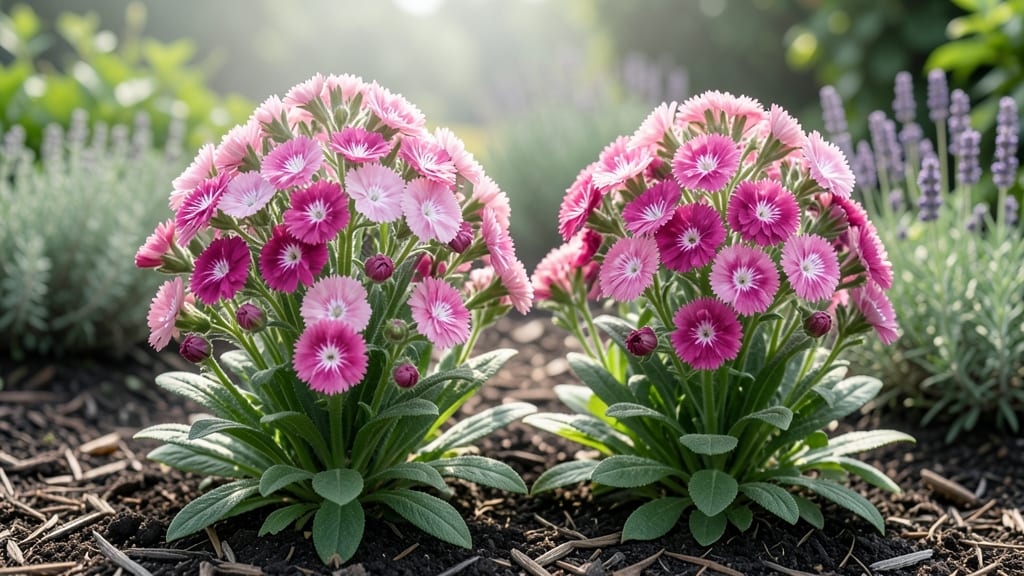
Dianthus do bloom all summer when given proper care, including consistent moisture, afternoon shade, and deadheading. However, prolonged heat waves or drought stress can cause them to slow down or stop flowering entirely.
Dianthus thrive in summer's warmth but struggle when temperatures climb above 85°F for extended periods. 🌡️ The plants conserve energy by focusing on survival rather than producing new blooms, which is why you'll often see fewer flowers in late July or August.
I've found that mulching with straw helps retain soil moisture while keeping roots cooler—this simple trick can make a huge difference during heatwaves.
Another key factor is humidity levels. In dry climates, dianthus may drop buds before they open due to water stress. 💧 Increasing airflow around plants (by spacing them properly) while providing light afternoon shade can help maintain that vibrant summer display.
The good news? With these adjustments, many varieties like 'Firewitch' or 'Matrona' will reward you with continuous blooms right up until frost.
💡 In This Article
- Why Dianthus Flowering Declines in Late Summer Heat
- Extending Dianthus Summer Blooms with Proven Care
Why dianthus flowering declines in late summer heat
Dianthus plants experience physiological stress when daytime temperatures exceed 85°F because their metabolic processes shift from blooming to survival. 🌡️ The heat causes increased transpiration (water loss through leaves), which forces the plant's roots to work harder to maintain moisture.
When soil moisture drops below 30% volumetric water content, the plant prioritizes root and leaf maintenance over energy-intensive flower production—a natural defense mechanism called "abscission." This is why you'll notice fewer blooms during heatwaves, even if the plant appears healthy.
The real culprit is often root zone temperature. Dianthus roots thrive at 60-70°F, but surface soil can reach 100°F+ during summer afternoons.
When roots overheat, they produce less auxin (a growth hormone), which directly reduces flower bud formation. 🌱 Humidity plays a secondary role too—low humidity (40% relative humidity) accelerates water loss, making the plant more vulnerable to heat stress.
This explains why dianthus in dry climates often struggle more than those in coastal areas with natural humidity buffers.
Another critical factor is airflow. Poor circulation traps heat around the foliage, creating microclimates that can be 10°F hotter than ambient air. This localized heat stress causes buds to drop before opening, a condition called "bud blast."
The plant's defense mechanism kicks in to prevent wasting energy on flowers that wouldn't survive the extreme conditions. 🌬️ Even well-watered dianthus will show reduced blooming if airflow is restricted, which is why gardeners often see better results with spaced plantings rather than crowded beds.
Soil moisture retention becomes the limiting factor in late summer. Sandy soils drain too quickly, while clay soils can become waterlogged and suffocate roots. The ideal soil for summer dianthus should maintain 40-50% moisture retention capacity—this balance is crucial for sustaining both root health and flower production.
Organic matter like compost helps achieve this by improving soil structure and water-holding capacity, which is why mulching becomes essential during heatwaves.
What most gardeners don't realize is that dianthus also respond to light intensity changes. As summer progresses, longer daylight hours can actually reduce flowering in some varieties because the plant perceives it's entering a "resting" phase.
This photoperiod response, combined with heat stress, creates a double challenge for maintaining summer blooms. 🌅 The solution lies in managing these stress factors simultaneously—cooling the roots while optimizing water availability and airflow.
Consider this comparison: A dianthus plant in 75°F conditions with proper moisture will produce 30-40% more blooms than one in 90°F conditions, even with identical watering schedules. The difference comes from reduced physiological stress and maintained hormone balance.
This explains why afternoon shade (which can drop leaf temperatures by 15-20°F) makes such a dramatic difference in late summer performance.