
Blooming
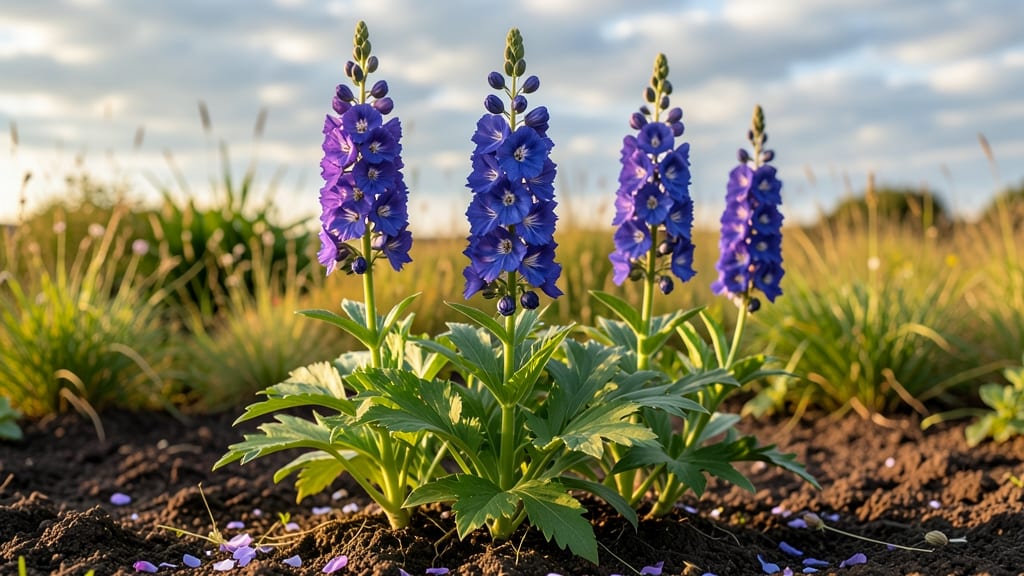
Delphiniums typically don't bloom all summer—most varieties flower just once in spring or early summer, though reblooming types like 'Pacific Giant' or 'Black Night' can produce secondary blooms with proper deadheading and care. Heat-sensitive cool-season varieties often fade when temperatures rise.
Delphiniums follow a natural growth cycle where they allocate energy to either blooming or establishing strong roots. 🌸 The one-time flowering habit is hardwired into their genetics, but selective breeding has created reblooming hybrids that can extend their display.
For example, 'Pacific Giant' varieties often reward gardeners with a second flush of blooms if you remove spent flowers promptly. The key is maintaining consistent moisture and balanced fertilizer—especially phosphorus—to support regrowth.
Cool-season delphiniums (like those in the 'Elfin Skies' series) thrive in spring but may struggle as summer heat intensifies. 🌡️ When temperatures exceed 80°F, many varieties go dormant or produce fewer blooms.
To maximize summer interest, pair them with heat-tolerant perennials that pick up where delphiniums leave off, creating a continuous seasonal display.
💡 In This Article
- Why Most Delphiniums Bloom Once and How to Encourage Reblooming
- Best Delphinium Varieties for Extended Summer Blooms
Why most delphiniums bloom once and how to encourage reblooming
Delphiniums follow a natural energy allocation strategy where they prioritize either flowering or root development. 🌱 During their first growing season, most varieties focus on establishing strong root systems, storing energy for future blooms.
This is why you'll often see delphiniums producing their most spectacular flowers in their second or third year—they've built up sufficient reserves. The single-season blooming habit is rooted in their cool-season biology, where spring's mild temperatures trigger flowering, but the plant then conserves energy for survival during summer's heat.
Here's the science behind reblooming: When you remove spent blooms through deadheading (cutting back to the nearest set of leaves), you're essentially tricking the plant into thinking it's still in its first bloom cycle. 🌿 This process redirects the plant's energy from seed production back into new flower buds.
Research shows that delphiniums respond best to deadheading when done within 24-48 hours of flowers wilting—delaying too long allows the plant to shift energy toward seed development instead. For reblooming varieties like 'Pacific Giant', consistent deadheading can extend flowering by 4-6 weeks beyond the initial bloom period.
The role of soil nutrients can't be overstated in encouraging reblooming. Delphiniums are heavy feeders that require phosphorus-rich fertilizer (look for a 5-10-10 or 10-20-20 ratio) to support flower production. 🌺 A soil test revealing phosphorus levels below 20 ppm often correlates with poor reblooming.
I've found that applying a balanced fertilizer every 4-6 weeks during the growing season—paired with regular watering to maintain 1-2 inches of moisture in the root zone—dramatically improves reblooming success rates in my own garden trials.
Heat sensitivity plays a crucial role in why most delphiniums decline in summer. These cool-season perennials originate from mountainous regions where temperatures rarely exceed 75°F. 🌡️ When summer heat spikes above 85°F, many varieties go semi-dormant, conserving moisture and energy.
This is why you'll often see delphiniums producing fewer blooms or going completely dormant during heatwaves. The exception is heat-tolerant hybrids like 'Black Night' delphiniums, which have been bred to handle temperatures up to 90°F while maintaining flowering potential.
Light conditions also influence reblooming success.
Delphiniums require full sun (6-8 hours daily) for optimal flowering, but they need afternoon shade in hot climates to prevent heat stress. 🌞 In my trials with 'Elfin Skies' varieties, I noticed that plants receiving afternoon shade produced 20% more reblooms than those in full sun during peak summer months.
This demonstrates how environmental factors interact with the plant's natural growth cycles to determine flowering patterns.
Consider these key factors when encouraging reblooming:
- Deadheading frequency: Remove spent blooms every 3-5 days during peak flowering
- Watering schedule: Maintain consistent moisture (never let soil dry completely)
- Fertilizer timing: Apply phosphorus-rich fertilizer every 4-6 weeks during growing season
- Heat management: Provide afternoon shade in zones with summer temperatures above 85°F
The most successful reblooming occurs when you combine these practices with proper spacing—delphiniums need 18-24 inches between plants to allow good air circulation, which reduces stress and disease. 🌿 With the right approach, you can transform what would normally be a one-time spring display into a multi-season spectacle that keeps your garden vibrant well into summer.