
Blooming
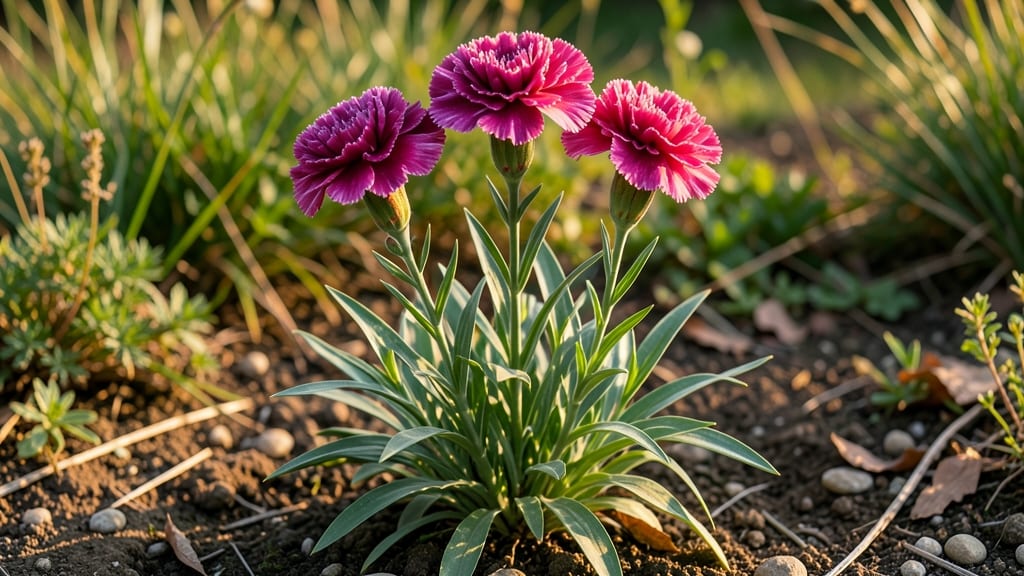
Carnations don’t bloom all summer continuously; most varieties flower primarily in spring and fall, with reblooming types producing occasional summer blooms if you deadhead regularly and maintain proper care. Cooler climates naturally extend their blooming season.
Carnations follow natural seasonal cycles tied to temperature and daylight. 🌸 Unlike tropical flowers that bloom year-round, carnations enter dormancy during summer's heat, conserving energy until conditions improve.
Even reblooming varieties need consistent care—removing spent blooms, balanced watering, and occasional shade can coax extra flowers, but don’t expect a full summer display unless you’re in a mild climate zone.
What’s fascinating is how different varieties respond: some classic types like spray carnations may produce just a few summer blooms, while reblooming hybrids can stretch their season with proper maintenance.
The key is understanding your plant’s limits—most gardeners accept sporadic summer blooms as a trade-off for vibrant spring and fall displays.
💡 In This Article
- Why Carnations Have Seasonal Blooming Patterns
- How to Encourage Summer Blooms in Carnations
Why carnations have seasonal blooming patterns
Carnations are cool-season plants, meaning their blooming cycles are directly tied to temperature fluctuations. When summer arrives, many varieties enter a form of dormancy triggered by heat stress—typically above 85°F—which halts flower production.
This is an evolutionary survival mechanism: carnations conserve energy during hot, dry periods when pollinators are scarce and soil moisture drops. The plant redirects resources to root and leaf growth instead of flowering, a process controlled by hormones like gibberellins that respond to temperature cues.
Daylight hours also play a critical role. Carnations are short-day plants, meaning they bloom best when daylight exposure drops below 12-14 hours. During summer solstice, when days stretch to 14-16 hours in many regions, the extended sunlight disrupts their natural flowering signals.
This explains why even reblooming varieties often produce fewer flowers in peak summer—it’s not just heat, but the combination of heat and long daylight that suppresses blooming. 🌞 Varieties like the Dianthus caryophyllus (common garden carnation) are particularly sensitive to these changes, while some hybrid strains have been bred for slightly better summer tolerance.
The genetic makeup of carnations determines how severely they react to summer conditions. Classic varieties may produce just 10-20% of their spring blooming volume during summer months, while reblooming hybrids can stretch their season with proper care.
The difference lies in their ability to reset their flowering cycle—some varieties can produce multiple flushes if given the right triggers (like deadheading), while others remain dormant until fall. This genetic variation is why you’ll see some carnations producing sporadic summer blooms while others appear completely barren.
Heat stress also affects the plant’s ability to photosynthesize efficiently. When temperatures exceed 90°F, the leaves may roll or wilt slightly to reduce water loss, further limiting energy available for flower production. This is particularly noticeable in potted carnations, which heat up faster than garden beds.
The roots also struggle to absorb water and nutrients effectively in hot, dry soil, creating a double whammy that suppresses blooming. Even with ideal care, most carnations will never match their spring display during summer’s peak.
Cool-season climates offer carnations a natural advantage. In regions like the Pacific Northwest or northern Europe, where summer temperatures rarely exceed 75°F, carnations can bloom more continuously. The extended cooler season allows them to maintain their flowering cycle without entering full dormancy.
This is why gardeners in these areas often report carnations that bloom well into early summer—a stark contrast to the 1-2 week summer blooming window typical in hotter climates like the American Southwest.
What’s fascinating is how carnations "remember" their seasonal cues. Even if you bring a potted carnation indoors during summer, it may still refuse to bloom until temperatures drop.
This is because the plant’s internal clock—controlled by a process called vernalization—requires exposure to cooler temperatures before it will initiate new flower buds. It’s like the plant is waiting for the right "seasonal signal" before making the commitment to bloom again. 🌱