
Blooming
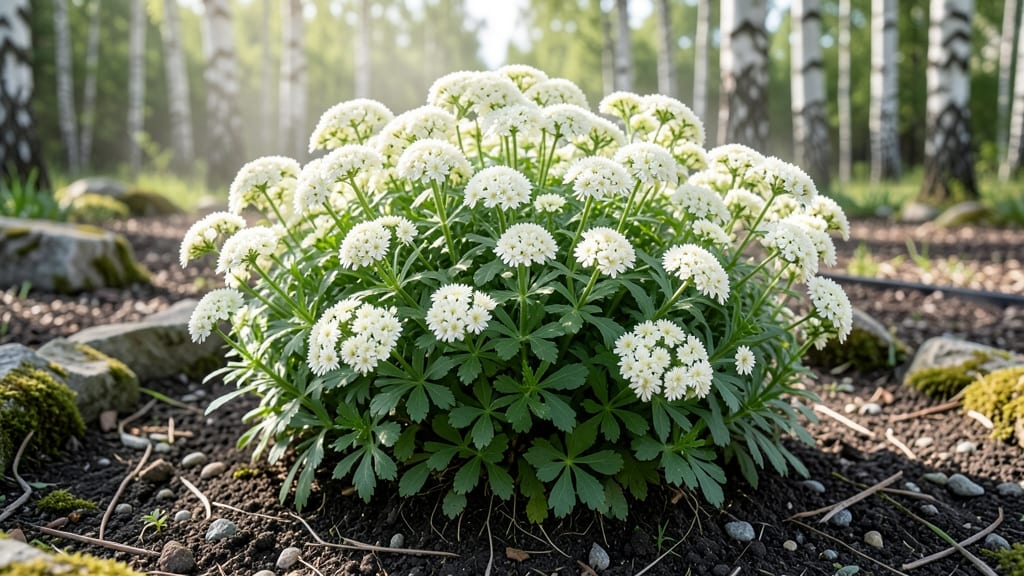
Some candytuft varieties bloom all summer, particularly Iberis sempervirens ‘Snowflake’ and Iberis gibraltarica, which handle heat well and produce continuous flowers with full sun exposure and well-drained soil. Most other types, however, only bloom in spring and early summer.
Not all candytuft varieties follow the same blooming schedule—it depends on their genetic makeup and growing conditions. 🌸 The extended-blooming types I mentioned thrive in hotter climates because their roots stay shallow, allowing them to access moisture quickly while avoiding heat stress.
For example, 'Snowflake' often reblooms after light pruning in early summer, while 'Gibraltarica' produces clusters of tiny flowers that open gradually over months rather than all at once.
If you're growing candytuft for summer color, consider pairing these heat-lovers with other long-blooming perennials like lavender or sedum. Most annual candytufts, on the other hand, focus their energy on a single spring-to-early-summer burst, making them better suited for seasonal displays rather than continuous garden interest.
💡 In This Article
- Why Some Candytuft Varieties Bloom Longer Than Others
- Best Candytuft Varieties for Extended Summer Blooms
Why some candytuft varieties bloom longer than others
Candytuft's blooming timeline comes down to genetics and growth habits. Perennial varieties like Iberis sempervirens have evolved to handle heat stress better than their annual cousins. Their shallow root systems allow them to quickly access moisture during dry spells, while their semi-evergreen foliage conserves energy between blooms.
This adaptation lets them produce multiple flower flushes throughout summer, unlike annual types that focus all their energy on one spring display.
The key difference lies in their flowering triggers. Perennial candytufts respond to day length changes more gradually, producing flowers in response to warm temperatures rather than just spring's lengthening days. For example, Iberis gibraltarica blooms continuously because its flowers develop along stems over several weeks, creating a staggered display.
Annual varieties, however, typically bloom all at once when days get long, then fade quickly as temperatures rise.
Heat tolerance plays a crucial role too. Perennial candytufts can handle temperatures up to 90°F (32°C) without wilting, thanks to their drought-resistant foliage. Their waxy leaf coating reduces water loss, while their compact growth habit prevents overheating.
Annual types often struggle in summer heat, their delicate stems flopping under the sun's intensity, which is why they don't rebloom.
Light exposure matters just as much as heat tolerance. Perennial varieties thrive in full sun (6+ hours daily) because their flowers need intense light to develop properly. In shadier conditions, they'll produce fewer blooms and may stop flowering entirely.
Annual candytufts can handle partial shade, but their blooming season remains short regardless of light levels.
Soil drainage is another critical factor. Perennial candytufts hate soggy roots - their shallow systems can't handle waterlogging. Well-drained soil prevents root rot, which would otherwise stress the plant and cut blooming short.
Annual types are more forgiving but still need good drainage to prevent fungal diseases that could end their blooming season prematurely.
Pruning also extends the blooming season. Cutting back perennial candytufts after their first summer flush stimulates new growth and often triggers a second round of flowers. Annual types can't be pruned this way - their entire life cycle is designed for one seasonal display.
This simple technique can add 4-6 weeks of color to your garden when done correctly.
The bottom line? Perennial candytufts have evolved to handle summer's challenges better, while annuals are built for quick, dramatic spring displays. Understanding these differences helps you choose the right variety for your climate and gardening goals. 🌿