
Blooming
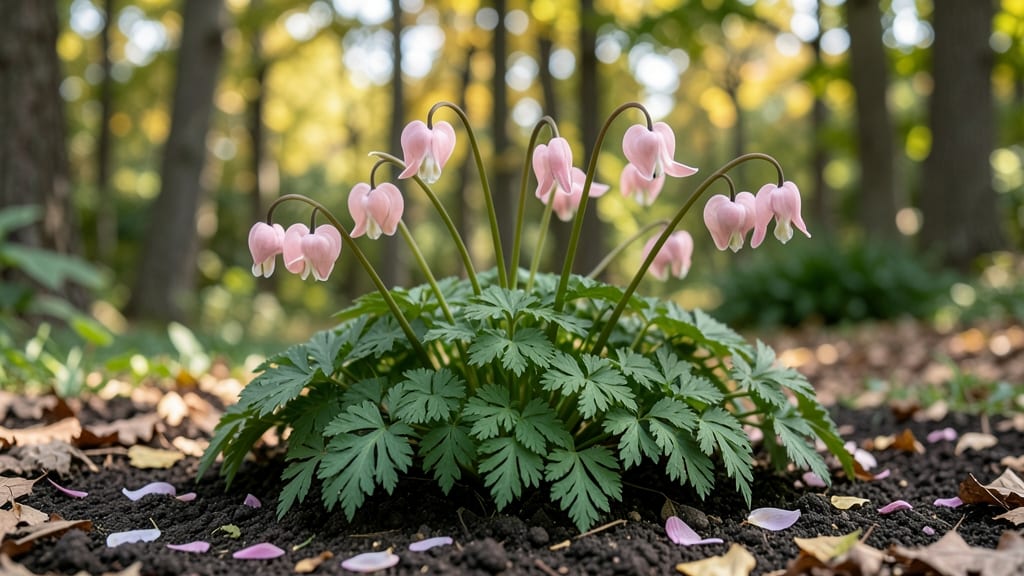
Bleeding hearts don't bloom all summer—they typically flower just once in spring for 4-6 weeks before going dormant. However, two special varieties (Dicentra spectabilis 'Gold Heart' and Dicentra eximia) can produce late-summer or fall blooms under ideal growing conditions.
Most bleeding hearts follow a strict seasonal bloom pattern because their energy focuses on developing lush foliage after flowering. 🌸 Once the spring blooms fade, the plant redirects resources to leaf growth and root strengthening, preparing for winter dormancy.
This natural cycle explains why you won't see continuous summer blooms unless you're growing one of the reblooming cultivars—even then, their second flush is often smaller and requires precise care to encourage.
What makes these two reblooming varieties special is their genetic adaptation to extend the flowering window. For example, 'Gold Heart' produces delicate pink blooms in late summer when other varieties have already finished, while Dicentra eximia (also called fringed bleeding heart) offers a second show in fall.
The key to getting these varieties to perform is maintaining consistent moisture and providing partial shade during their second bloom cycle—too much sun can stress the plant and reduce flowering.
💡 In This Article
- Why Most Bleeding Hearts Bloom Just Once
- How to Encourage Reblooming in Bleeding Hearts
Why most bleeding hearts bloom just Once
The natural bloom cycle of bleeding hearts (Dicentra spectabilis) is tied to their survival strategy. These shade-loving perennials allocate most of their energy to a single, spectacular spring display because their primary goal is to establish strong root systems and foliage for winter survival.
During the 4-6 week bloom period, the plant prioritizes flower production over leaf growth, creating that iconic heart-shaped display that gardeners love.
Once the blooms fade, the plant undergoes a physiological shift triggered by day length and temperature drops. As daylight hours shorten and temperatures stabilize in late spring, the plant's hormonal balance shifts from flowering to vegetative growth.
This transition is similar to how daylilies (Hemerocallis) or hostas (Hosta) focus on leaf development after their initial bloom.
The key difference is that bleeding hearts enter a deeper dormancy phase, where they store energy in their roots for next year's growth rather than producing continuous flowers.
This seasonal pattern is hardwired into the plant's genetics. Most bleeding heart varieties are adapted to temperate climates where summers are warm but not scorching.
The plant's natural habitat in woodlands and shaded areas means it evolved to bloom early when moisture is abundant and temperatures are moderate—ideal conditions that don't persist through summer's heat. 🌿 What's fascinating is how this cycle mirrors other woodland perennials like trilliums (Trillium), which also produce a single spring bloom before focusing on foliage.
Temperature plays a crucial role in this cycle. When spring temperatures hover around 50-60°F during blooming, the plant's metabolic processes are optimized for flower production. As temperatures rise above 75°F, the plant's energy shifts to maintaining its existing foliage rather than producing new blooms.
This explains why you won't see continuous summer blooms—even in ideal growing conditions, the plant's biology dictates this seasonal pattern.
There's also a fascinating connection between bloom time and soil nutrients. Bleeding hearts typically bloom when soil temperatures reach about 55°F, which coincides with the natural thawing of woodland soils in spring.
This timing ensures the plant has access to stored nutrients from the previous year while avoiding the nutrient competition of established summer perennials. The plant's deep roots (which can extend 12-18 inches down) help it access these nutrients efficiently during its critical bloom period.
What most gardeners don't realize is that this single-bloom strategy actually benefits the plant's long-term health. By dedicating all its energy to one spectacular display, the bleeding heart can produce flowers that are larger and more vibrant than what might be possible with continuous, smaller blooms.
This "all-in" approach is why bleeding hearts create such a dramatic visual impact in gardens during their 4-6 week bloom window.