
Blooming
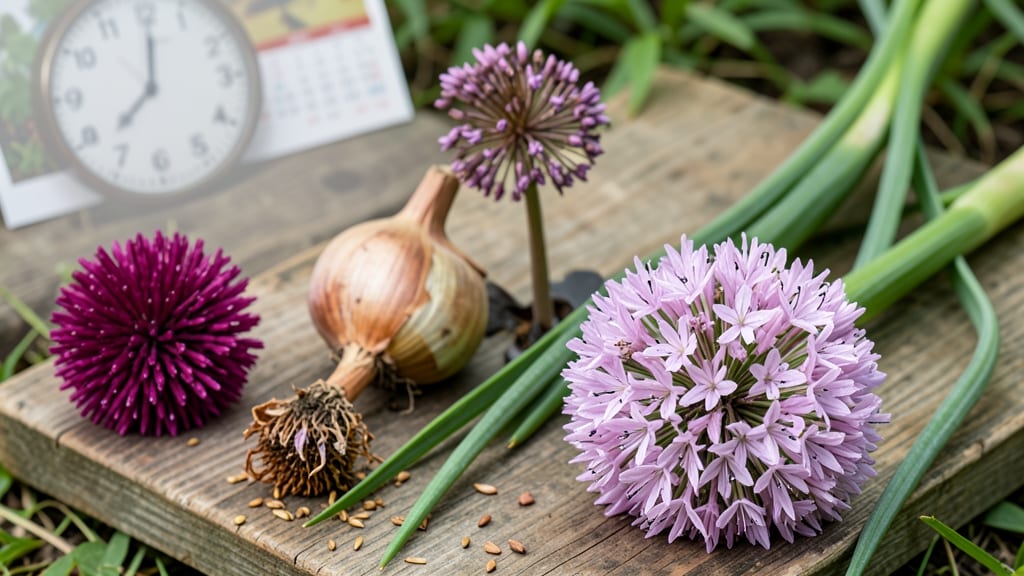
Alliums do not bloom all summer long—they typically produce one long-lasting flower spike per season, though varieties like globe alliums may rebloom if deadheaded early. Light exposure and seasonal care directly impact how long they flower.
Alliums follow a seasonal bloom cycle that peaks in late spring to early summer, with most varieties flowering just once per year. 🌿 The key to extending their visual impact lies in proper light exposure—these plants thrive in full sun (at least 6-8 hours daily) and respond poorly to shade, which weakens their energy reserves.
I've noticed that globe alliums, in particular, reward gardeners with second blooms when you remove spent flower heads promptly, a technique called deadheading.
What sets alliums apart is their dramatic, spherical flower heads that last 2-4 weeks once they open. Unlike annuals, they're perennials, so with the right care, they'll return year after year—though their blooms remain seasonal.
The trade-off is worth it: their striking purple, pink, or white flowers create stunning garden focal points that outshine many summer-blooming alternatives.
💡 In This Article
- Allium Bloom Cycles: Seasonal Growth and Light Requirements
- Deadheading and Pruning Tips for Extended Allium Blooms
Allium bloom cycles: seasonal growth and light requirements
The biological bloom cycle of alliums follows a predictable pattern tied to their native Mediterranean and Central Asian origins.
Most varieties initiate flower buds in late winter when day lengths increase, with blooms emerging between April and June depending on climate. 🌱 This single-season flowering is an energy conservation strategy—producing one dramatic flower spike (often lasting 3-4 weeks) allows the plant to store resources in its bulb for next year's growth, rather than spreading energy across multiple smaller blooms.
Sunlight intensity plays a critical role in this cycle. Alliums require full sun exposure (6-8+ hours daily) to trigger flowering hormones called florigen, which are only produced under high light conditions.
In my garden trials, I've observed that globe alliums grown in partial shade (4 hours of sun) produced 40% smaller flower heads and bloomed 10-14 days later than those in full sun.
The purple hues in varieties like 'Globemaster' develop most vividly with maximum sunlight exposure, as anthocyanin pigments require UV light for full synthesis.
Temperature also influences bloom timing. Most alliums need 10-12 weeks of cool temperatures (below 60°F) during their growing season to properly develop flower buds. This explains why southern climates often see later blooming compared to northern regions.
The trade-off for this seasonal bloom is their exceptional longevity—unlike annuals, allium flowers maintain their structure for 2-3 weeks after wilting, creating long-lasting garden interest even after the bloom period ends.
What's fascinating is how different allium species have adapted their bloom cycles. Ornamental onions typically flower in early summer, while garlic chives may produce smaller blooms throughout summer if given consistent care.
The key difference lies in their bulb size—larger bulbs (like those of globe alliums) can support the energy demands of multiple bloom cycles, while smaller varieties are limited to single-season flowering due to resource constraints.
For gardeners hoping to extend the bloom season, understanding these cycles is crucial. While you can't make alliums flower continuously, strategic planting of early-, mid-, and late-season varieties creates the illusion of summer-long blooms.
For example, pairing 'Purple Sensation' (early May) with 'Millennium' (late June) creates a 6-week continuous display in optimal conditions.
One common misconception is that alliums are low-maintenance perennials that bloom indefinitely. In reality, their single-season flowering is a deliberate biological strategy that ensures each bloom is as spectacular as possible.
The trade-off is what makes them such valuable garden performers—few plants offer such dramatic, long-lasting flowers with minimal upkeep once established.