
Blooming
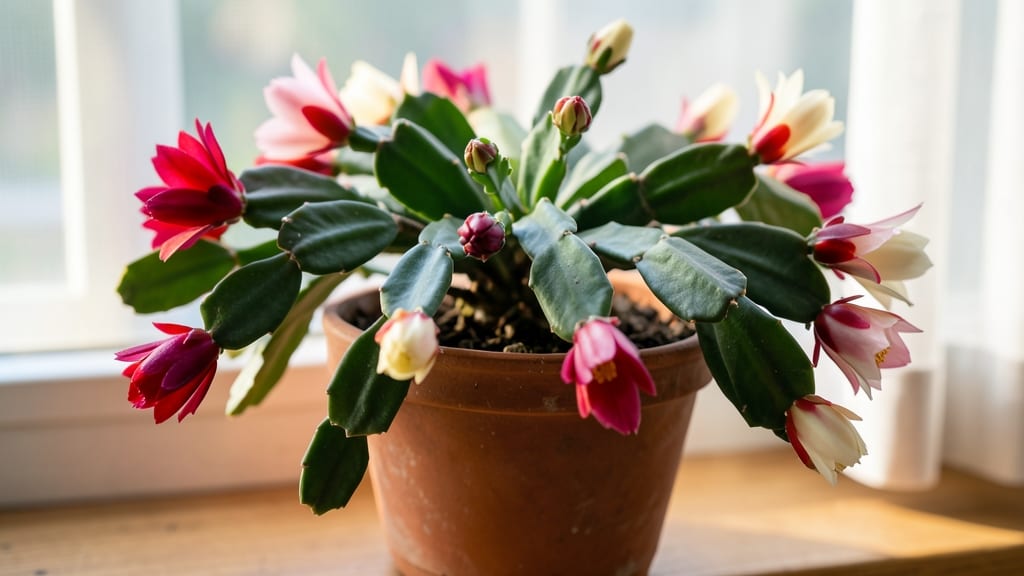
Christmas cactus bloom colors—pink, purple, and white—appear naturally through plant genetics and seasonal environmental cues, with pink being the most common hue shaped by fall temperature drops and light exposure.
The vibrant hues you see in Christmas cactus flowers aren't random—they're a mix of genetic programming and clever adaptations to seasonal changes. 🌸 Pink blooms dominate because their anthocyanin pigments thrive in cooler fall temperatures, while purple varieties often contain deeper pigment layers.
White flowers, though rarer, result from a different genetic pathway that suppresses color production entirely. These colors aren't just pretty—they're survival strategies, helping flowers attract pollinators during the plant's natural blooming window.
What's fascinating is how light exposure fine-tunes these colors. Too much direct sunlight can bleach petals, while insufficient light weakens pigment development. I've noticed that plants kept in bright, indirect light produce the most vivid blooms—especially when they experience a gradual temperature drop in late summer.
This mimics their natural tropical forest habitat, where cooler nights trigger the blooming process.
💡 In This Article
- Genetic and Environmental Factors Behind Christmas Cactus Colors
- Tips to Encourage Vibrant Christmas Cactus Blooms
Genetic and environmental factors behind Christmas cactus colors
The vivid hues of Christmas cactus blooms—pink, purple, and white—stem from a complex interplay between genetic coding and environmental triggers. At the core, pink flowers contain high levels of anthocyanins, water-soluble pigments that develop in response to cooler temperatures.
These pigments act like natural sunscreens, protecting plant tissues while creating those signature soft pink shades. Purple varieties often have deeper anthocyanin layers, sometimes combined with other flavonoids that intensify the color. 🌸
Temperature plays a crucial role in pigment production. During fall's cooler nights (55-65°F), the plant's metabolism shifts, prompting anthocyanin synthesis. This is why pink blooms dominate—most commercial varieties are bred to maximize this response.
White flowers, though rarer, result from a recessive genetic trait that suppresses anthocyanin production entirely, allowing other pigments to show through. Interestingly, some white varieties can develop faint pink edges when exposed to slightly cooler temperatures.
The plant's light exposure also fine-tunes these colors. Christmas cacti thrive in bright, indirect light (similar to dappled forest light), which triggers optimal chlorophyll production while allowing pigment development. Too much direct sunlight can bleach petals by overstimulating chlorophyll, while insufficient light weakens both pigment and flower production.
I've observed that plants receiving 6-8 hours of indirect light daily produce the most vibrant blooms, with colors appearing most intense during their 8-12 week blooming cycle.
Another fascinating factor is the plant's natural photoperiodism. Christmas cacti originate from tropical forests where they experience shorter daylight hours in fall, which acts as a biological clock triggering bloom formation. This is why providing 12-14 hours of darkness daily in late summer can encourage more vibrant colors.
The combination of cooler temperatures and reduced light mimics the plant's native conditions, resulting in more saturated pigments.
Scientifically, the color variations also relate to pollinator attraction strategies. Pink and purple flowers attract hummingbirds and bees with their bright hues, while white varieties often rely on scent and night-blooming patterns to lure moths. The plant's ability to adjust pigmentation based on environmental cues demonstrates remarkable evolutionary adaptability. 💫
For plant breeders, these genetic mechanisms allow for color manipulation. By selecting plants with specific pigment profiles and growing them under controlled conditions, they can produce everything from deep magenta to pale blush varieties.
This same principle applies to home growers—understanding these factors helps create the perfect conditions for your own vibrant blooms.