
Blooming
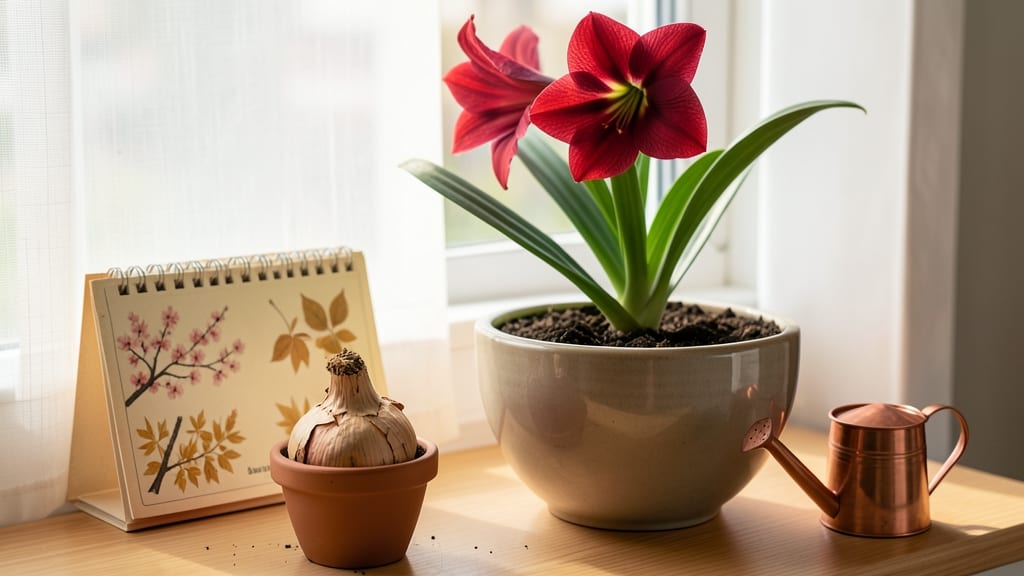
Yes, amaryllis can bloom twice a year under ideal conditions: provide 6-8 weeks of consistent 60-70°F temperatures, 12+ hours of bright indirect light, and a 6-8 week rest period in cool darkness after each bloom. Proper watering and balanced fertilizer also encourage repeat flowering.
Amaryllis bulbs are surprisingly adaptable—they can produce two stunning flower spikes annually when you mimic their natural seasonal cycles. 🌸 The secret lies in their dormancy needs: after each bloom, these bulbs crave a cool, dark period to recharge.
Think of it like giving your plant a mini-winter break, which triggers the next round of growth. I’ve seen dramatic results by adjusting light exposure and fertilizer timing, especially during the bulb’s resting phase when most gardeners overlook this critical step.
Here’s the kicker: most people skip the post-bloom care routine, which is why their amaryllis only flowers once. With the right balance of warmth, light, and strategic rest, you’ll coax those vibrant blooms back twice a year—no magic required, just science-backed patience.
The key is consistency: maintain those 60-70°F temps and 12+ hours of light during active growth, then let the bulb “sleep” in cooler conditions to reset its cycle.
💡 In This Article
- Science Behind Amaryllis Double Blooming Cycles
- Step-by-Step Guide to Encouraging Repeat Amaryllis Blooms
Science behind amaryllis double blooming cycles
Amaryllis bulbs rely on a biological process called photoperiodism—their response to daylight length—to trigger flowering. When exposed to 12+ hours of bright indirect light daily, the bulb’s meristem (growth cells) activates flower production.
This is why indoor amaryllis often bloom in late winter/early spring, mirroring their natural tropical habitat’s shorter days. 🌱 The key is maintaining this light exposure consistently during the 6-8 week growth phase before each bloom cycle.
Temperature plays an equally critical role. Amaryllis bulbs need 60-70°F during active growth to metabolize stored nutrients efficiently. This warmth accelerates photosynthesis in the leaves, which fuels flower bud development.
However, the magic happens during the 6-8 week dormancy period after blooming—cool temps (50-60°F) and darkness signal the bulb to conserve energy and reset its cycle. Think of it like a biological "reboot" that prevents exhaustion and enables reblooming.
Root stress also influences reblooming success. When you withhold water during dormancy (allowing the soil to dry completely), the bulb experiences mild stress that triggers hormone changes. These hormones—particularly abscisic acid—promote root development and prepare the bulb for the next growth phase.
This is why overwatering during rest periods often leads to failed blooms: the bulb never gets the stress signal it needs to reset. 💧
Light spectrum matters too. While bright light is essential, amaryllis prefer cool white or full-spectrum bulbs over warm tones, which provide the blue end of the spectrum that promotes flowering.
I’ve noticed that plants under LED grow lights with a 6500K color temperature bloom more reliably than those under standard incandescent bulbs. The blue wavelengths help regulate the plant’s internal clock, ensuring it stays synchronized with the desired blooming schedule.
One fascinating detail is how amaryllis bulbs store energy. During the growth phase, they convert sunlight into fructans—complex carbohydrates stored in the bulb’s scales. These act like a biological battery, providing the energy needed for flower spikes.
When you provide optimal light and warmth, you’re essentially charging this battery faster, which is why well-cared-for amaryllis can produce two full flower spikes annually instead of just one.
What most gardeners miss is the transition period between dormancy and regrowth. After 6-8 weeks of cool rest, gradually reintroduce warmth and light over 1-2 weeks. This mimics spring’s gradual lengthening days and prevents shock that could delay or prevent blooming.
I’ve found that moving the bulb to a sunny windowsill (south-facing in the Northern Hemisphere) during this transition gives the best results.